Things to do in Oman: the best places to visit, region by region
By Lars Janssen · Co-Founder & CEO ·
The top things to do in Oman are visiting the Sultan Qaboos Grand Mosque and Muttrah Souq in Muscat, exploring the fort and souq of Nizwa, hiking on Jebel Shams and Jebel Akhdar, spending a night in the dunes of the Wahiba Sands and swimming in Wadi Shab and Wadi Bani Khalid. With two weeks or more, add Salalah in the south and the nesting turtles at Ras al Jinz. Apart from Salalah and Musandam, everything is within about three hours' drive of Muscat.
We travel to Oman regularly and work with a trusted local partner. Drive times and tips come from our own routes.
In short: the top 5 things to do in Oman
- Sultan Qaboos Grand Mosque and Muttrah in Muscat. The country's showpiece and its most atmospheric old quarter.
- The fort and souq of Nizwa. A 17th-century fort, a silver and pottery souq and the Friday goat market.
- Jebel Shams and Jebel Akhdar. A canyon-rim walk above a 1,000-metre drop and terraced villages at 2,000 metres.
- Wahiba Sands. Dunes up to 100 metres high and a night in a desert camp.
- Wadi Shab and Wadi Bani Khalid. Swimming in turquoise pools between rocks and palms.
Oman's main sights at a glance: drive times and best time to go
October to April is the best time to visit Oman, ideally November to March. You fly to Salalah and Musandam and drive everywhere else. Drive times exclude stops.
| Place | Region | From Muscat | Time needed | Best time |
|---|---|---|---|---|
| Grand Mosque | Muscat | in the city | 1 to 1.5 hrs | Sat to Thu, 8am to 11am |
| Muttrah and Old Muscat | Muscat | in the city | half day | late afternoon |
| Daymaniyat Islands | Muscat | 1 hr by boat | half day | October to May |
| Nizwa | interior | 1.5 hrs | 1 to 2 days | Friday morning |
| Bahla and Jabreen | interior | 2 hrs | half day | morning |
| Jebel Akhdar | mountains | 2 hrs, 4x4 only | half day | roses late March to mid-April |
| Jebel Shams | mountains | 3 hrs | 1 day or 1 night | sunrise |
| Misfat al Abriyeen | mountains | 2 hrs 15 min | 1 hr | morning |
| Wahiba Sands | desert | 2 to 2.5 hrs | 1 night | sunset |
| Wadi Bani Khalid | desert edge | 3 hrs | 2 to 3 hrs | weekdays before 10am |
| Wadi Shab | east coast | 1 hr 45 min | 3 to 4 hrs | early morning |
| Bimmah Sinkhole | east coast | 1 hr 15 min | 1 hr | morning |
| Sur and Ras al Jinz | east coast | 2 hrs 15 min to 3 hrs | 1 night | turtles June to September |
| Salalah and Dhofar | south | 1.5 hr flight | 3 to 4 nights | October to April |
| Musandam | north | 1 hr flight | 2 to 3 nights | see travel advice |
Muscat and the coast: mosque, souq and the Daymaniyat Islands
Muscat starts and ends almost every tour. The things to do in Muscat fill two full days: one for the mosque, opera house and Muttrah, one for the sea or Old Muscat.
Sultan Qaboos Grand Mosque
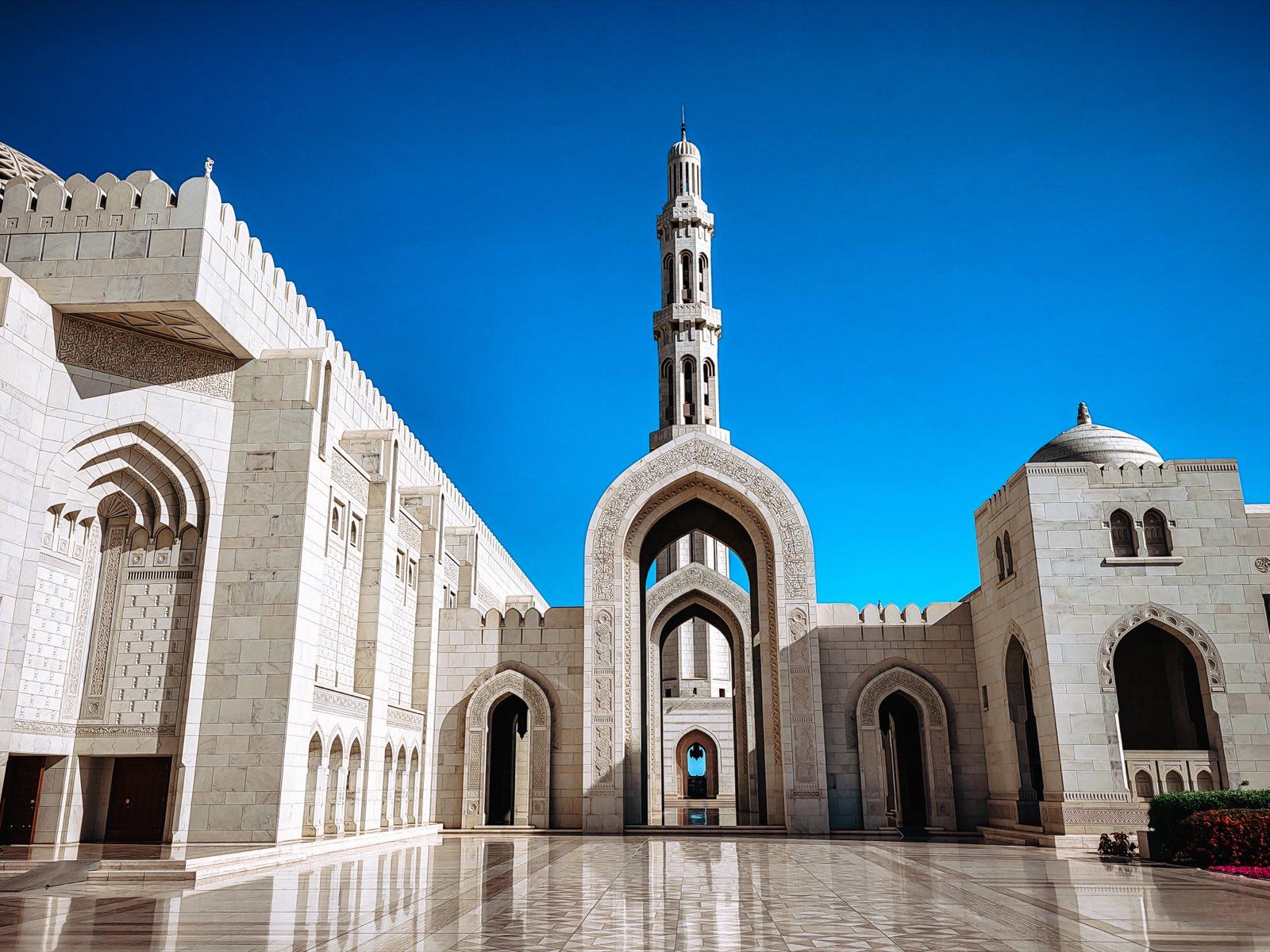
Opened in 2001, the Grand Mosque holds 20,000 worshippers and has a hand-knotted carpet of more than 4,000 m² and a 14-metre chandelier. Time needed: 1 to 1.5 hours. Best time: 8am, when it opens. Tip: non-Muslims are welcome Saturday to Thursday, 8am to 11am. Cover shoulders and knees, and women also cover their hair. Since early 2025 there has been an entry fee: OMR 8 according to Experience Oman (as of October 2026).
Muttrah, Old Muscat and the Royal Opera House
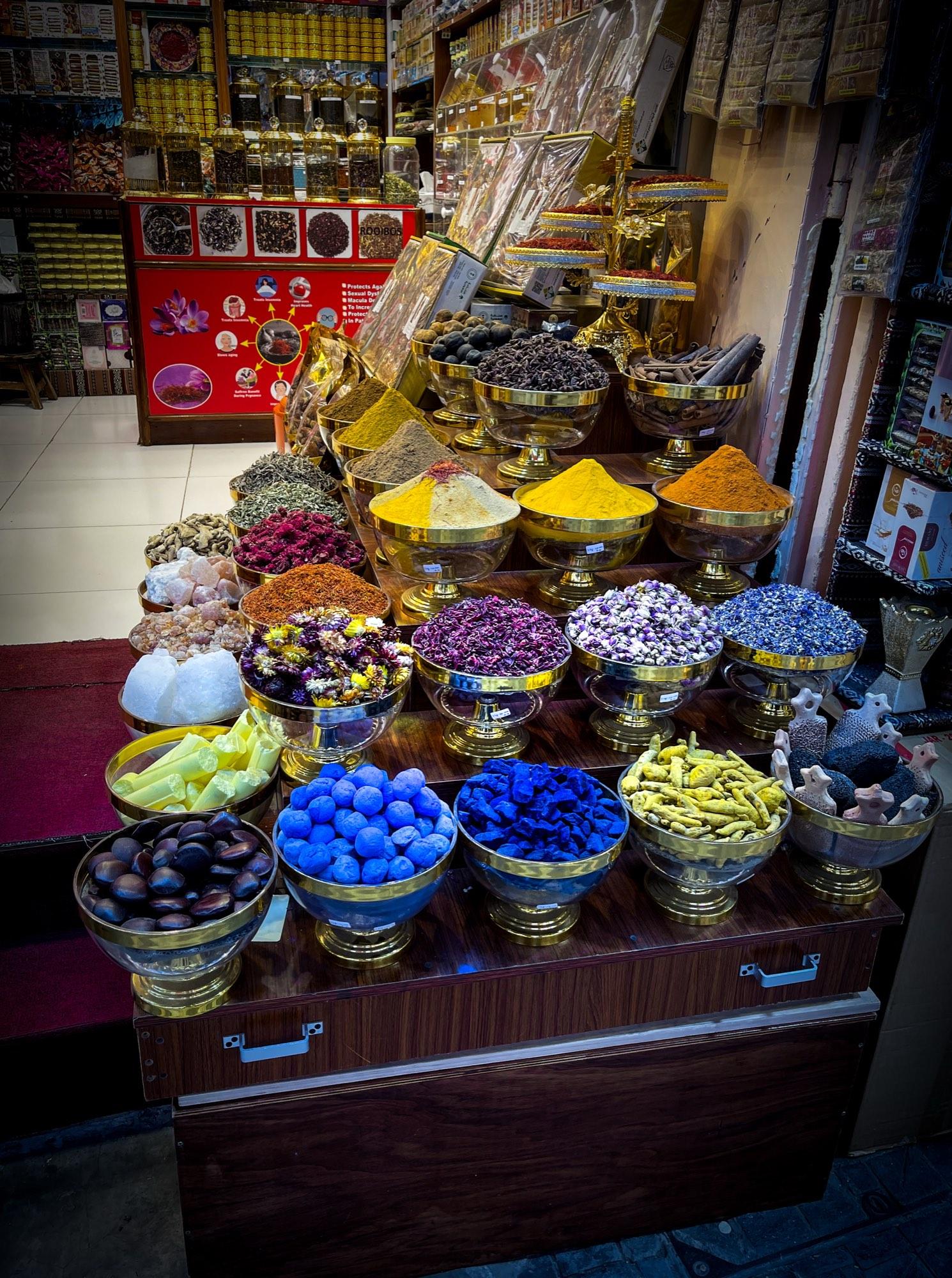
Muttrah, the old harbour district, has the dhow-lined Corniche and a covered souq full of frankincense, silver and spices. In Old Muscat, Al Alam Palace stands between the Portuguese-era forts of Al Jalali and Al Mirani. The Royal Opera House (2011) in Qurum can be seen on a guided tour, even without a performance ticket. Time needed: 2 to 3 hours for Muttrah, half a day for Old Muscat and the National Museum. Best time: late afternoon, when the souq reopens after the midday break. Tip: the fish market on the Corniche is liveliest in the morning.
Daymaniyat Islands
The nine uninhabited islands form a nature reserve just under an hour by boat from Al Mouj, with coral, sea turtles and reef sharks. Time needed: half a day. Best time: October to May, for the best visibility. Tip: landing is not allowed in the nesting season from May to October, but you can snorkel all year.
The interior and mountains: Nizwa, Jebel Akhdar and Jebel Shams
Oman's cultural heartland: forts, mud-brick villages and palm oases at the foot of the Hajar Mountains, with Nizwa as your base.
Nizwa: fort, souq and goat market
Nizwa is the main town of the interior. Its 17th-century fort with a round tower overlooks a souq selling silver, pottery and halwa. Time needed: a full day. Best time: Friday between about 7am and 9am, for the goat market. Tip: head to the fort straight after, before the heat builds. Foreign adults pay about OMR 5 (2025 prices).
Bahla, Jabreen and the Oman Across Ages Museum
About 40 kilometres from Nizwa are Bahla Fort, a UNESCO World Heritage Site since 1987, and Jabreen Castle with its painted wooden ceilings. The interactive Oman Across Ages Museum in Manah is 20 minutes from Nizwa. Time needed: half a day for the forts, two hours for the museum. Tip: combine them in one day, as our 14-day tour does.
Jebel Akhdar: terraced villages and roses
Jebel Akhdar, the Green Mountain, is a plateau at around 2,000 metres with terraced gardens on the canyon edge. The Three Village Walk through Al Aqr, Al Ayn and Ash Shirayjah is about 4 kilometres and takes 1.5 to 2 hours. Time needed: half a day or one night. Best time: late March to mid-April, when the roses bloom. Tip: cars without four-wheel drive are turned back at the police checkpoint at the foot of the mountain. Bring a warm layer, as it is 10 to 15 degrees cooler than on the coast.
Jebel Shams and the Balcony Walk
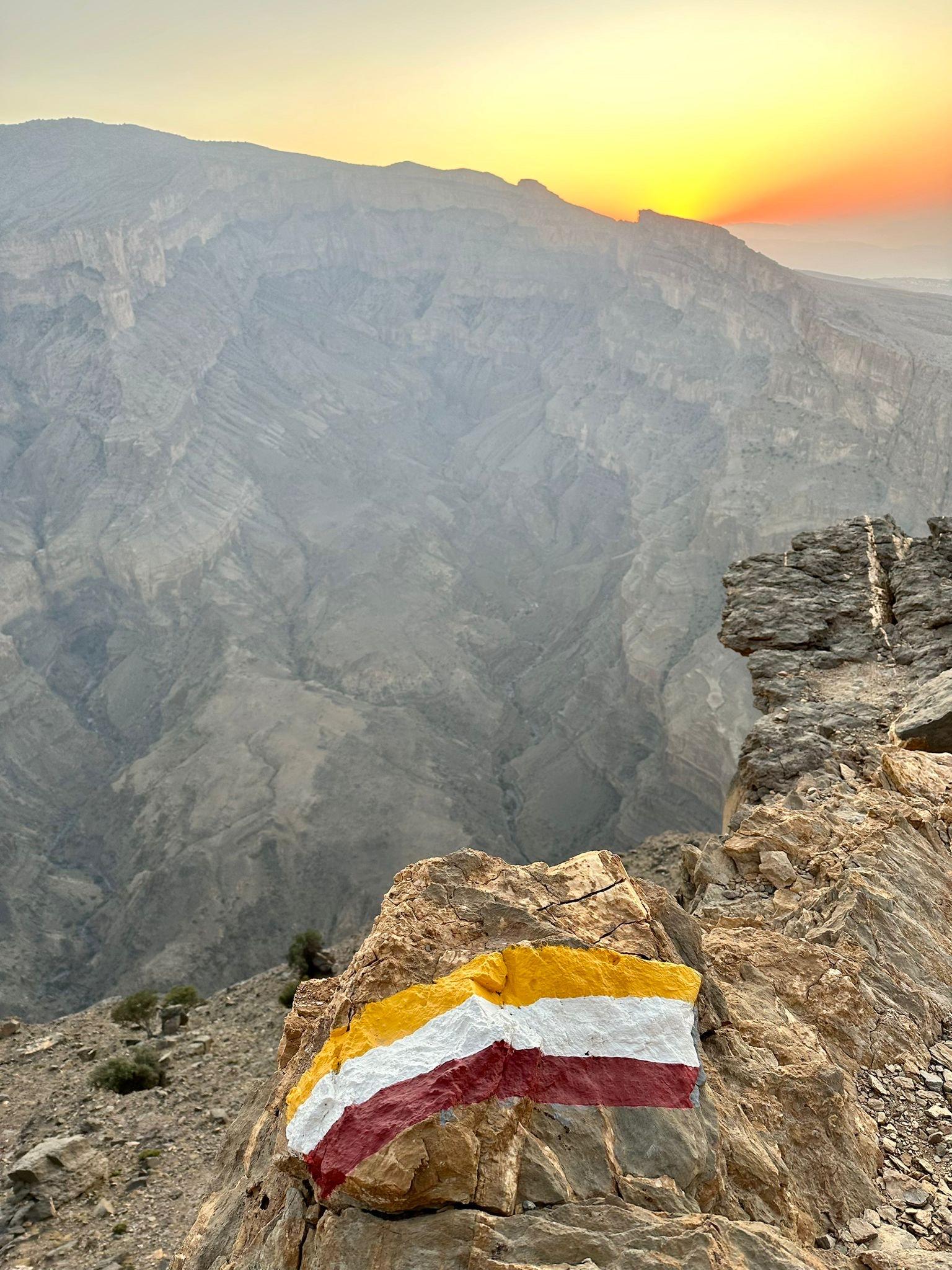
At 3,009 metres, Jebel Shams is Oman's highest mountain. The draws are Wadi Ghul, a canyon about 1,000 metres deep, and the Balcony Walk (W6) along its rim to the abandoned village of As Sab, about 3.5 kilometres each way. Time needed: a day trip from Nizwa or a night on the plateau. Best time: sunrise, setting off before 8am. Tip: the path has no railings, so skip it if you suffer from vertigo. A 4x4 is strongly recommended for the final gravel stretch up to the plateau.
Misfat al Abriyeen and Al Hamra
In the mud-brick village of Misfat al Abriyeen a falaj, an ancient irrigation channel, runs through the lanes past date palms and banana plants. Al Hamra has an old quarter of multi-storey mud-brick houses. Time needed: an hour per village. Tip: both villages are lived in, so cover shoulders and knees and ask before photographing people.
The desert: Wahiba Sands and Wadi Bani Khalid
The Wahiba Sands are Oman's most accessible sand desert, 2 to 2.5 hours from Muscat. Wadi Bani Khalid lies in the hills to the north, 50 minutes from Bidiyah on the edge of the dunes.
Wahiba Sands
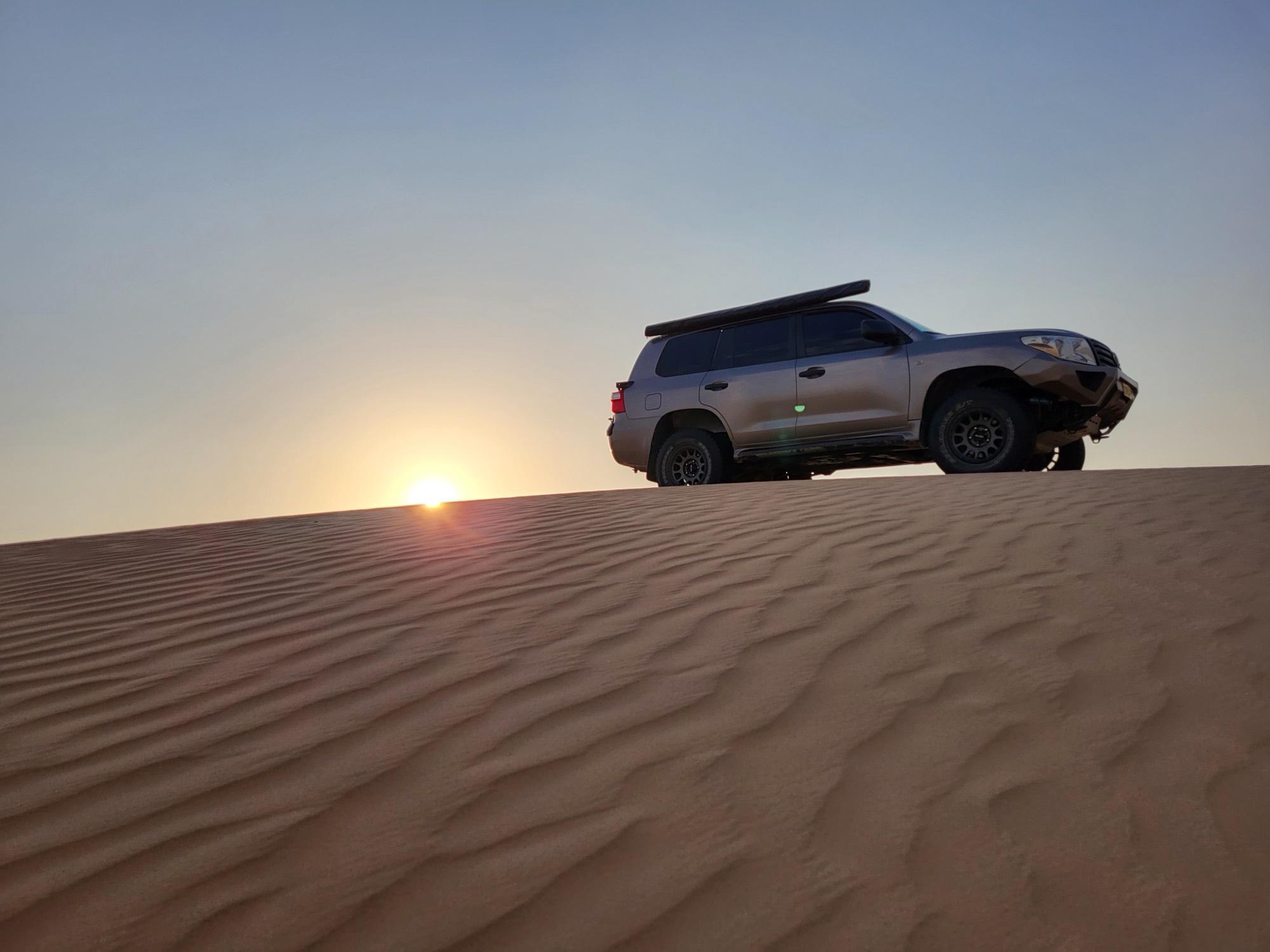
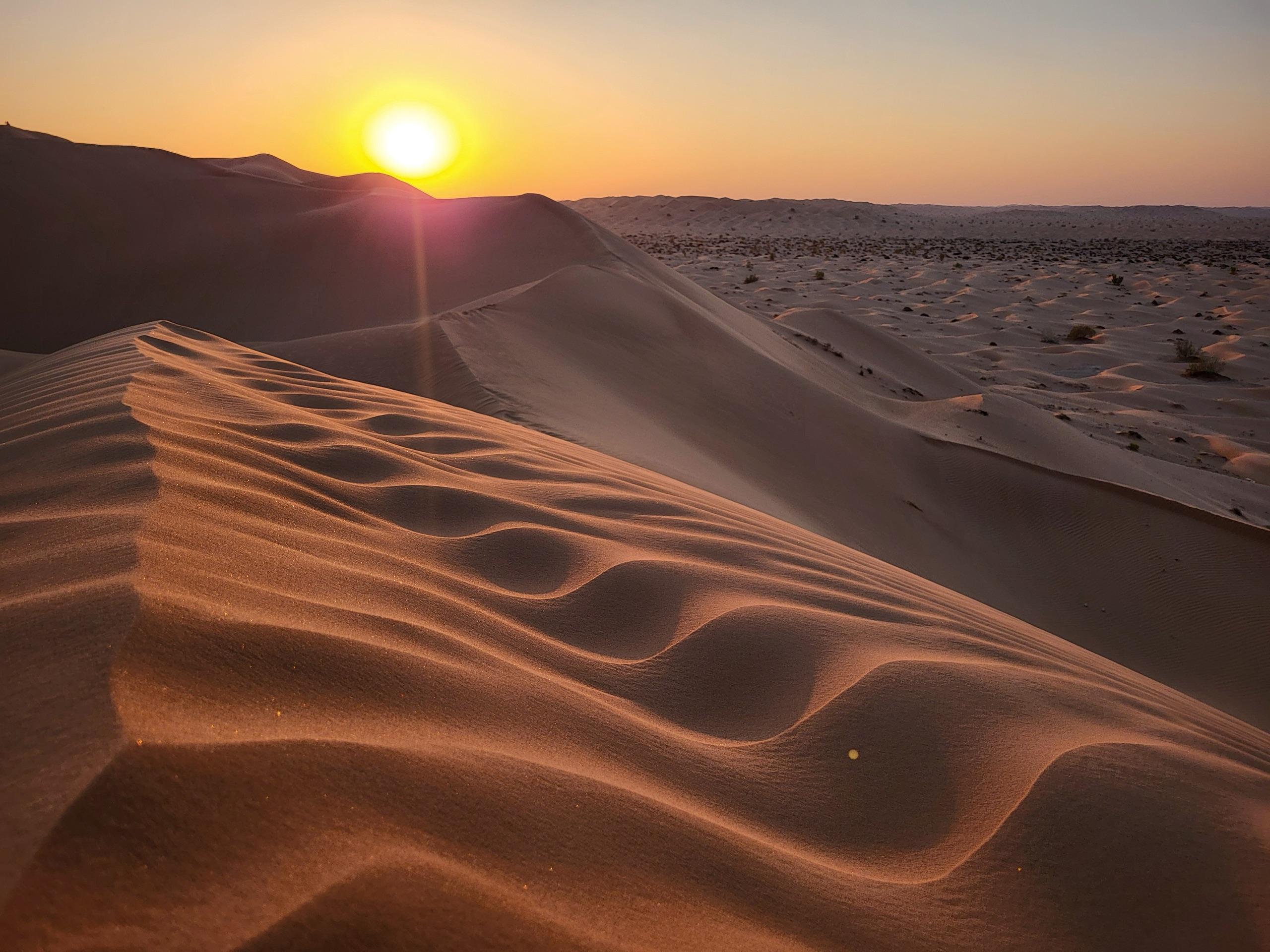
The Wahiba Sands, officially the Sharqiya Sands, cover around 180 by 80 kilometres, with dunes up to 100 metres high. You sleep in a camp 10 to 20 kilometres into the dunes. Time needed: one night. Best time: sunset from a dune top, October to April. Tip: self-drivers leave the car at the edge of the dunes, where the camp picks them up. In December and January nights drop to 10 °C or below. More in desert nights in Oman.
Wadi Bani Khalid
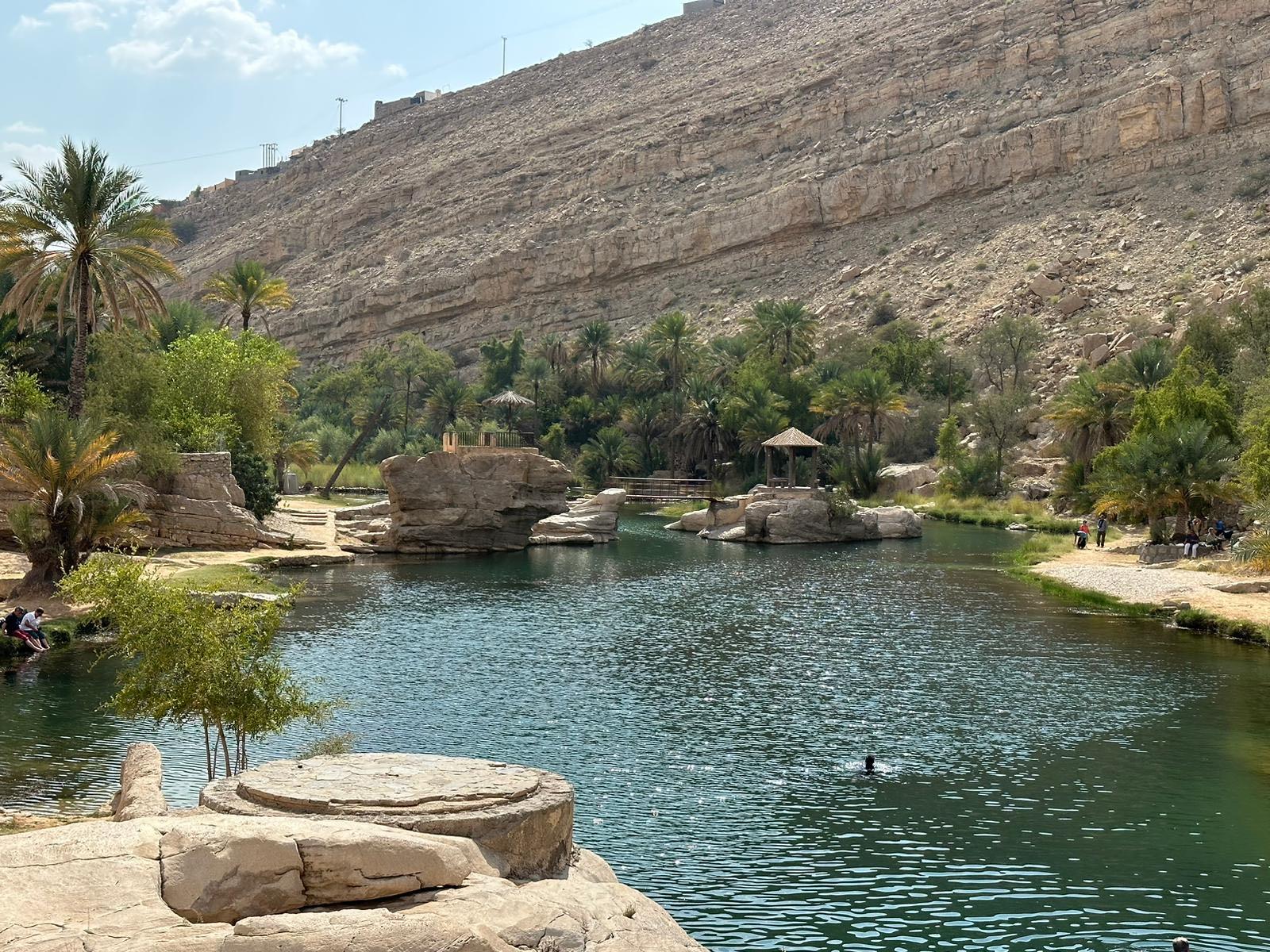
Wadi Bani Khalid has water all year round: green pools between palms and boulders, a five-minute walk from the car park. Time needed: 2 to 3 hours. Best time: weekdays before 10am. Friday and Saturday, the Omani weekend, are busy. Tip: swim in a T-shirt and shorts that cover the knee, as a bikini is not appropriate here.
The east coast: Wadi Shab, Sur and Ras al Jinz
The coast road from Muscat to Sur passes Oman's best-known wadis and ends near the turtles of Ras al Jinz.
Wadi Shab
Wadi Shab is Oman's best-known wadi: a short boat crossing, a 45-minute walk through a gorge and then a swim into a cave with a waterfall. Time needed: 3 to 4 hours. Best time: early morning on a weekday. Tip: bring water shoes, a dry bag and a T-shirt to wear over your swimwear. The boat costs about OMR 1 per person return (2025 prices). Never enter a wadi when rain is forecast.
Bimmah Sinkhole, Fins Beach and Wadi Tiwi
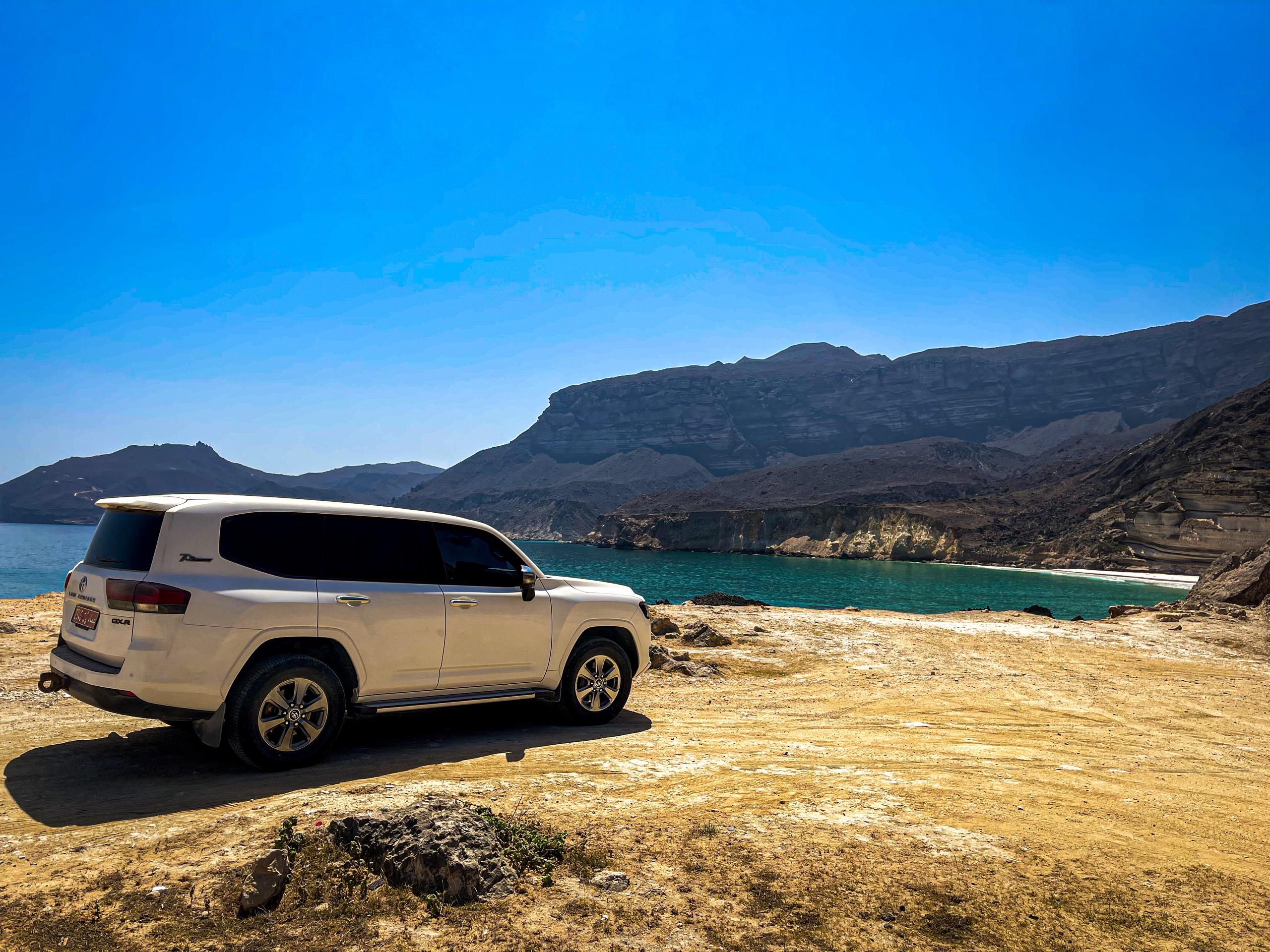
On the way are Bimmah Sinkhole, a turquoise limestone pool you can swim in, and the white beach at Fins. Wadi Tiwi, next to Wadi Shab, is greener and quieter, with villages and banana plantations. Time needed: an hour for Bimmah, half a day for Wadi Tiwi. Tip: stay at a guesthouse in Tiwi to be first into the wadi in the morning.
Sur and Ras al Jinz
In Sur, wooden dhows are still built by hand at the boatyard. Forty-five minutes on, at Ras al Jinz, green turtles nest all year, most of all from June to September. Time needed: half a day for Sur and a night near the reserve. Best time: the guided visit in the evening or just before sunrise. Tip: beach visits are guided only. Book ahead, especially in the summer months.
Dhofar and Salalah: frankincense, khareef and baobabs
Salalah is around 1,000 kilometres from Muscat by road, a 1.5-hour flight. From October to April it is sunny, with daytime highs of 27 to 32 °C. During the khareef, from 21 June to 21 September, mist and drizzle turn the mountains green at 27 to 29 °C, but the sea is too rough for swimming. Plan 3 to 4 nights for the things to do in Salalah.
Wadi Darbat, Jebel Samhan and the baobabs
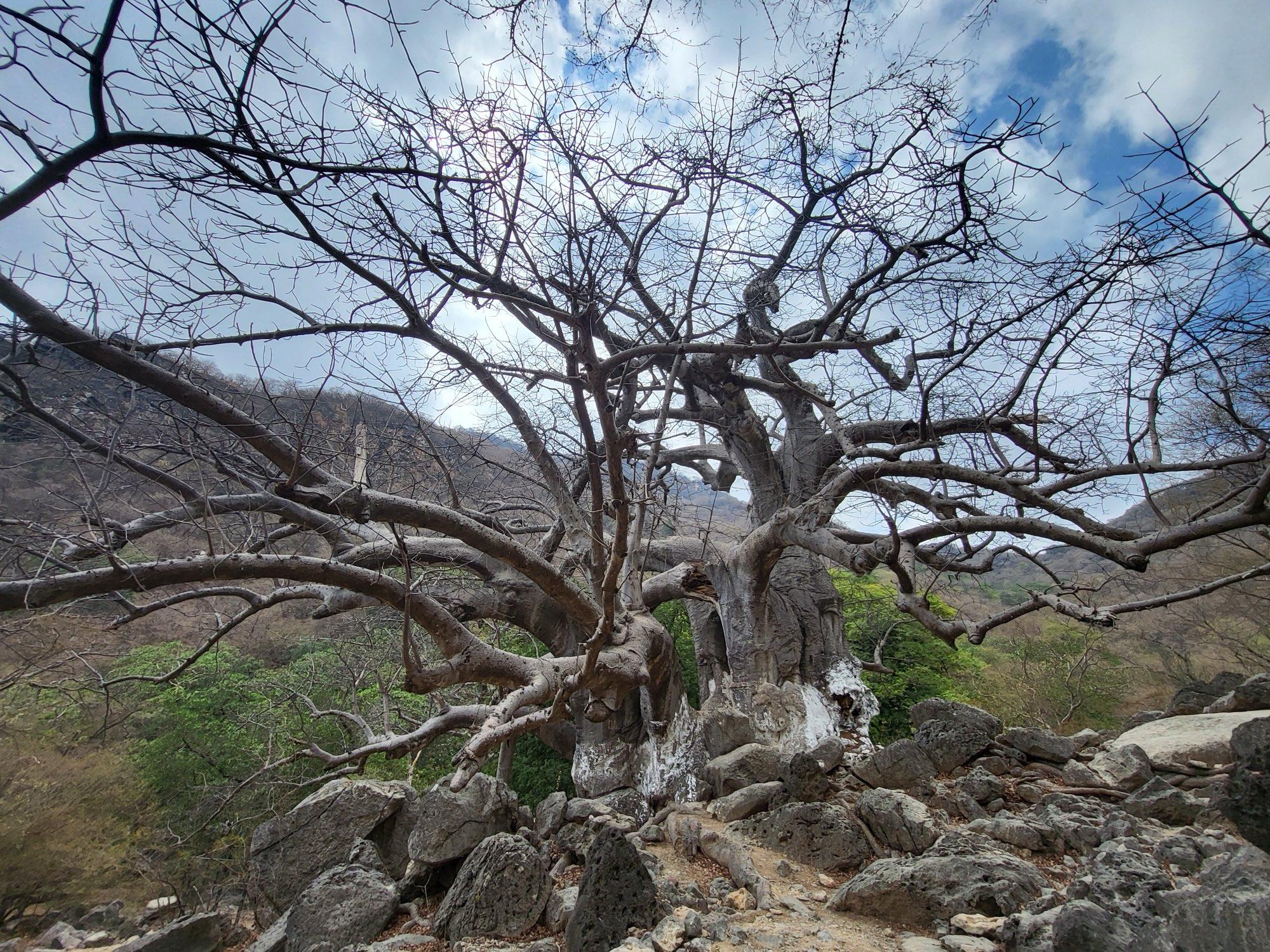
Wadi Darbat is an oasis with a lake, camels and a waterfall that flows mainly during and just after the khareef. Jebel Samhan looks out over the coastal plain, and Wadi Hinna has baobab trees, which you would sooner expect in Africa. Time needed: a day. Tip: outside the khareef the waterfall is often dry, but the lake holds water all year.
Mughsail and Fazayah
West of Salalah, blowholes in the cliffs at Mughsail shoot seawater into the air, highest in a big swell. Beyond them lie the quiet coves of Fazayah Beach. Time needed: half a day. Tip: the last 6 kilometres to Fazayah are a steep gravel track, so take a 4x4. Only swim in sheltered coves, and not at all during the khareef.
Al Baleed, Ubar and the Rub al Khali
Al Baleed, the ruins of a medieval port with a frankincense museum, belongs to the UNESCO-listed Land of Frankincense, along with Sumhuram, Wadi Dawkah and Shisr. Via Shisr, often identified with the legendary Ubar, it is a 2.5 to 3-hour drive to the edge of the Rub al Khali, the largest continuous sand desert in the world. Time needed: half a day for Al Baleed, a day for the desert.
Musandam: only when travel advice allows
Musandam is Oman's fjord region, but as of October 2026 the Dutch government advises against all but essential travel there and the German Foreign Office advises against travelling there at all. We only plan Musandam again once official advice allows it. UK and US travellers should also check FCDO and State Department advice.
The peninsula sits on the Strait of Hormuz, separated from the rest of Oman by the UAE. Once travel there is advisable again, a dhow cruise takes you through Khor Sham, a fjord 17 kilometres long, often with dolphins alongside. See Is Oman safe? for the latest situation.
Where to go in Oman in 7, 10 or 14 days
Seven days cover Muscat, the desert and the mountains, ten add the east coast and fourteen add Salalah. Prices are per person based on two sharing, excluding international flights.
7 days: Muscat, desert and mountains
Our 7-day Oman tour runs from Muscat to the Wahiba Sands, via Jebel Akhdar to Nizwa and, after the Balcony Walk on Jebel Shams, back to Muscat. From €999 self-drive, €1,749 with a driver-guide.
10 days: plus the east coast
The 10-day Oman tour adds Bimmah, Fins Beach, Wadi Tiwi and Sur, plus a snorkelling day at the Daymaniyat Islands. From €1,449 self-drive, €2,499 with a driver-guide.
14 days: north and south
The 14-day Oman tour allows more time for Bahla, Jabreen, Misfat and a night on Jebel Shams, then flies to Salalah for three days in Dhofar. From €2,099 self-drive, €3,899 with a driver-guide. Day-by-day details are in our Oman itinerary for 14 days.
Everything, including Wadi Bani Khalid, Ras al Jinz and the coast road south, fits into the 18-day Oman tour, from €2,799 self-drive, €4,999 with a driver-guide. To drive yourself, see our self-drive tour of Oman and the international driving permit for Oman.
How this fits into our tours
Every trip is private: you drive yourself in an insured 4x4 or travel with an English-speaking Omani driver-guide, and we tailor pace, order and accommodation to you. Muscat, Nizwa, the mountains and the Wahiba Sands feature in all four sample tours, Wadi Shab, Wadi Bani Khalid and Ras al Jinz in the 18-day tour, and Musandam in none while official advice is against it.
Want Wadi Bani Khalid on a shorter trip, or unsure what fits your time? Book a free consultation for a tailor-made Oman tour or browse all our Oman tours.