Things to do in Muscat: 13 sights and the best day trips
Capital on the Gulf of Oman · 30 minutes from the airport
Muscat, the capital of Oman, stretches for some fifty kilometres along the coast, between the Gulf of Oman and the Hajar Mountains. The top things to do in Muscat are the Sultan Qaboos Grand Mosque, the Royal Opera House, Muttrah Souq and Corniche, and Old Muscat with Al Alam Palace and the Al Mirani and Al Jalali forts. Two full days cover the highlights and a dolphin trip. To snorkel at the Daymaniyat Islands as well, plan a third day.
Compiled by Lars Janssen · updated 10 October 2026
At a glance
- Region
- Muscat Governorate, north coast
- From the airport
- 20 to 30 minutes to most hotels
- Best time
- October to April
- Temperature
- winter 25 to 30 °C, summer 36 to 40 °C
- Length of stay
- 2 to 3 nights, ideally split between start and end
- Grand Mosque
- Sat to Thu 8am to 11am, OMR 8 entry (October 2026)
- Don't miss
- Muttrah Corniche in the late afternoon
Free consultation, reply within 24 hours
Muscat is more than the city you fly into. Since 1970 the capital has been built low, with white and sand-coloured facades and no skyscrapers, which makes it calmer than other Gulf cities. Muscat's main tourist attractions sit in three clusters along the coast: the Grand Mosque and the opera house in the west, Muttrah in the middle and Old Muscat in the east.
The 13 best things to do in Muscat
If you are short on time, pick the Grand Mosque, Muttrah and Old Muscat. We checked opening hours and prices with official sources in October 2026. They change regularly, and Ramadan often brings different hours.
1. Sultan Qaboos Grand Mosque
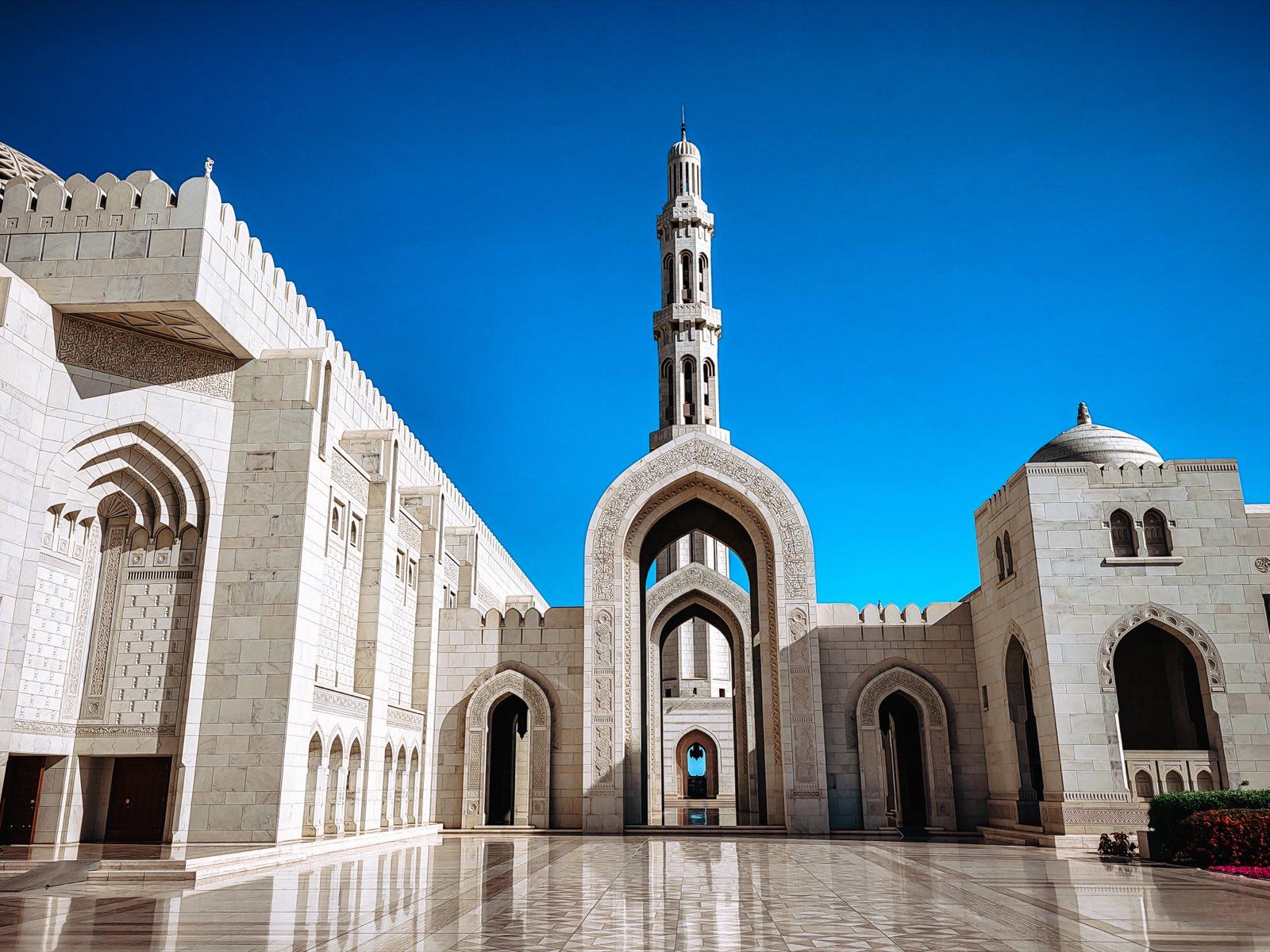
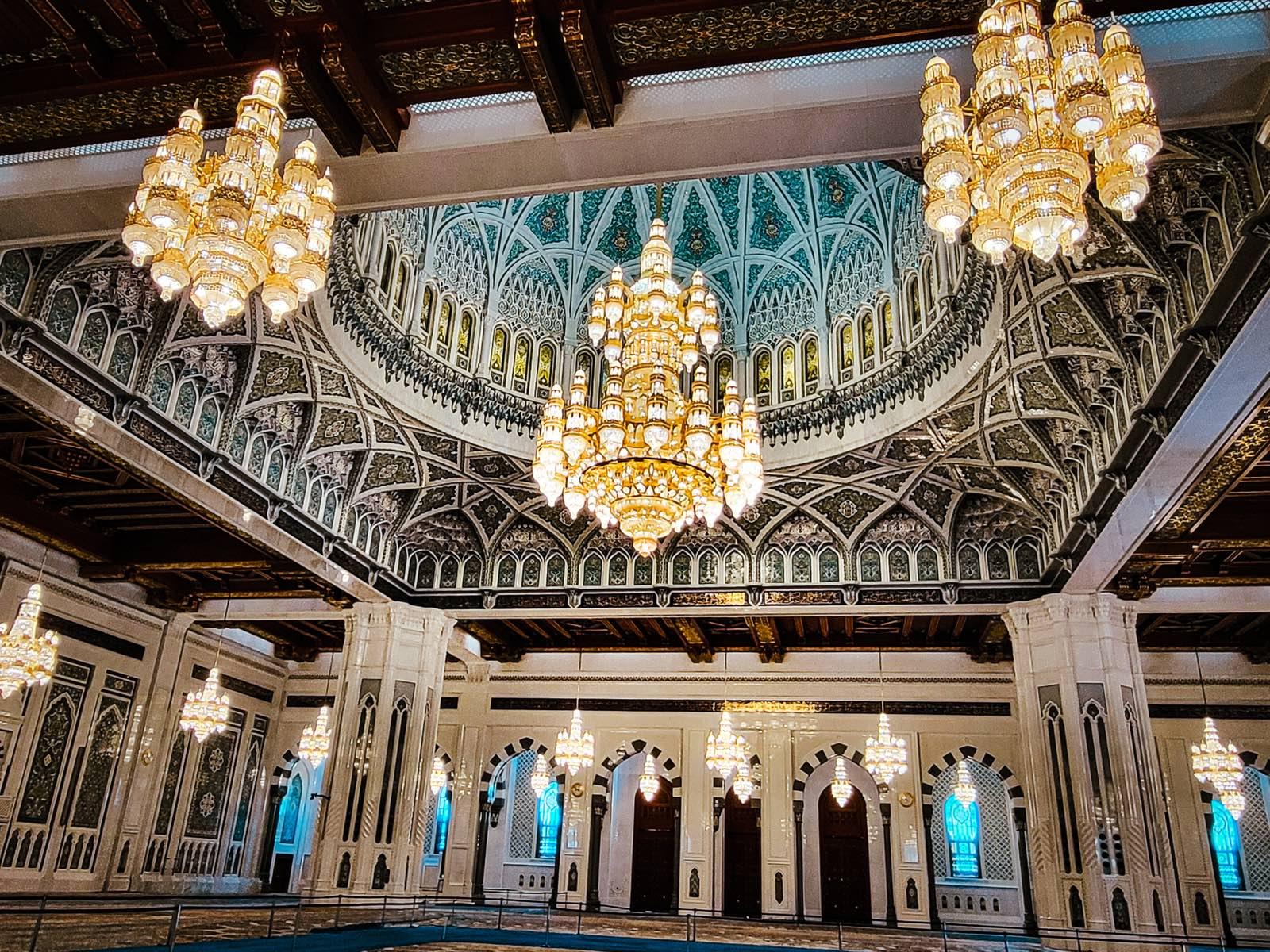
The Grand Mosque is open to non-Muslim visitors from Saturday to Thursday, 8am to 11am, and closed to visitors on Fridays. Since early 2025 there has been an entry fee of OMR 8, about US$21 at the fixed exchange rate (as of October 2026, according to Experience Oman). Opened in 2001, the mosque holds around twenty thousand worshippers. Its prayer hall has a hand-knotted Persian carpet of more than four thousand square metres beneath a fourteen-metre chandelier.
Cover your shoulders and knees, ideally with long sleeves and long trousers or a long skirt. Women also cover their hair, and abayas and headscarves are available at the entrance. Allow an hour to an hour and a half and arrive at 8am, when it is still cool and quiet.
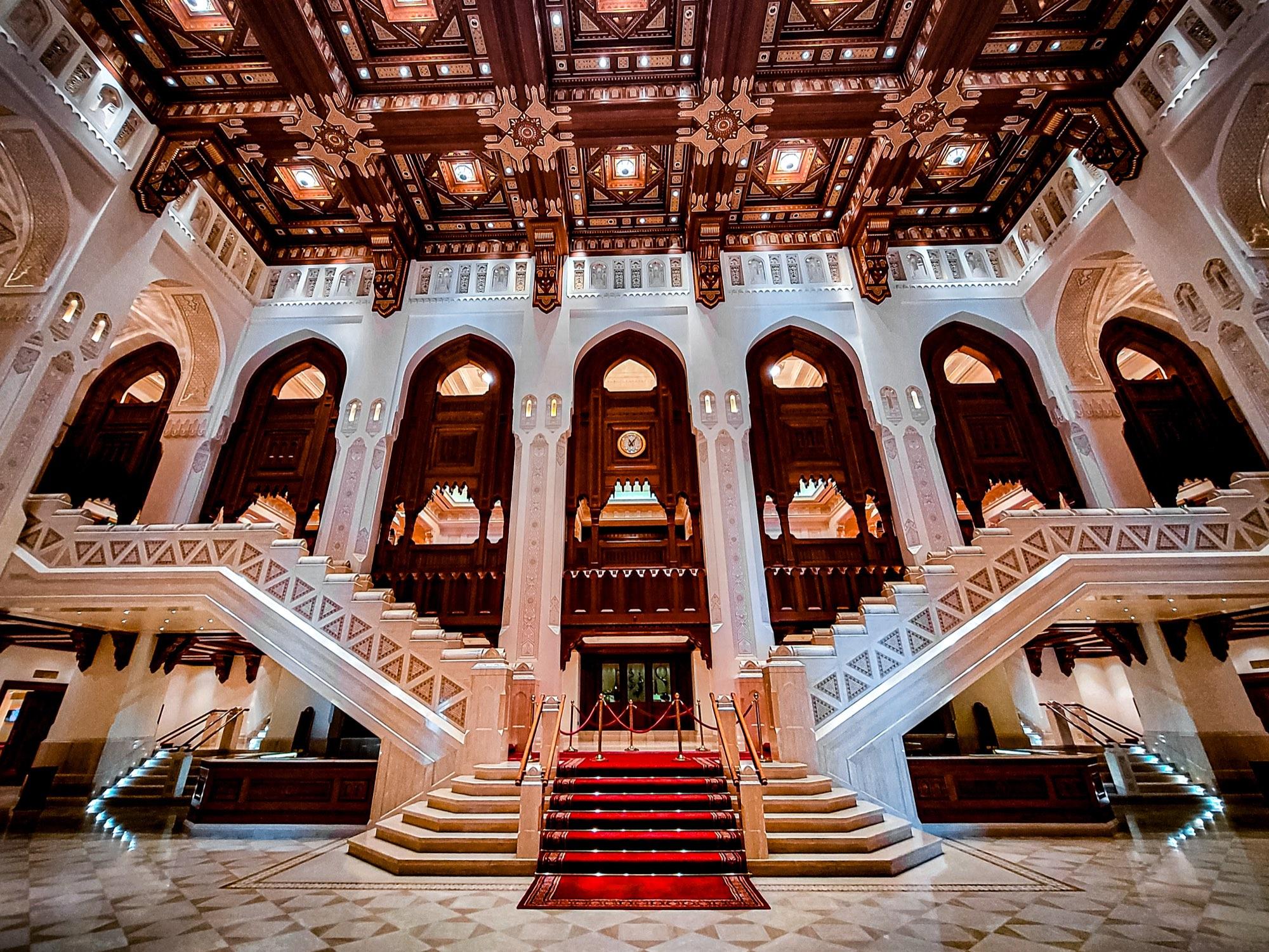
2. Royal Opera House Muscat
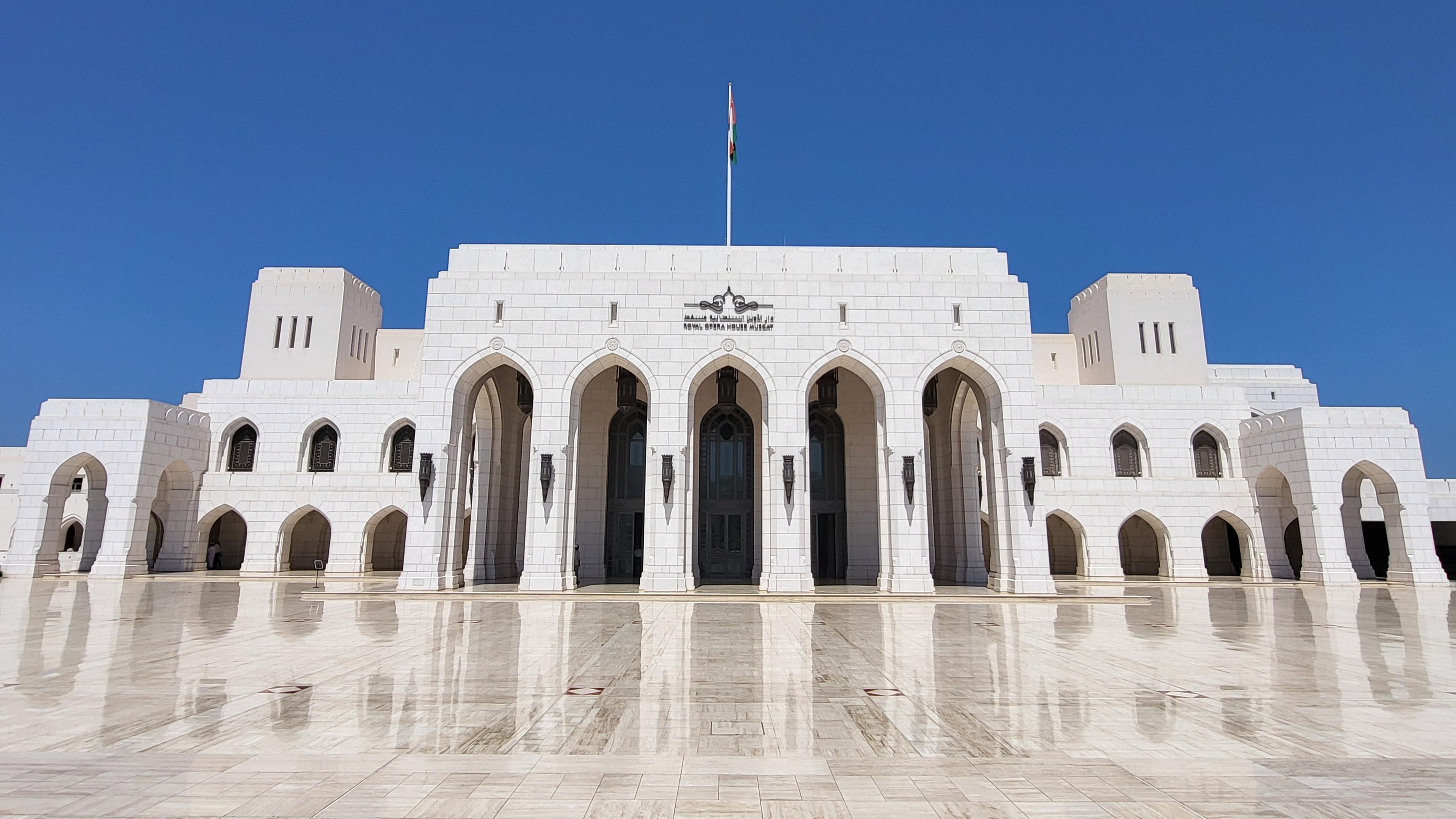
The opera house in Shatti Al Qurum opened in 2011 and is worth seeing even without a performance. A guided tour of about half an hour takes in the foyer, an exhibition of musical instruments and the main auditorium, which converts from a theatre into a concert hall. According to the opera house website, tours run from Saturday to Thursday between 8.30am and 5.30pm and cost OMR 3.15 (as of October 2026). Rehearsals and events can close the auditorium, so check ahead. Opera, ballet and concerts usually run from September to May.
3. Muttrah Corniche
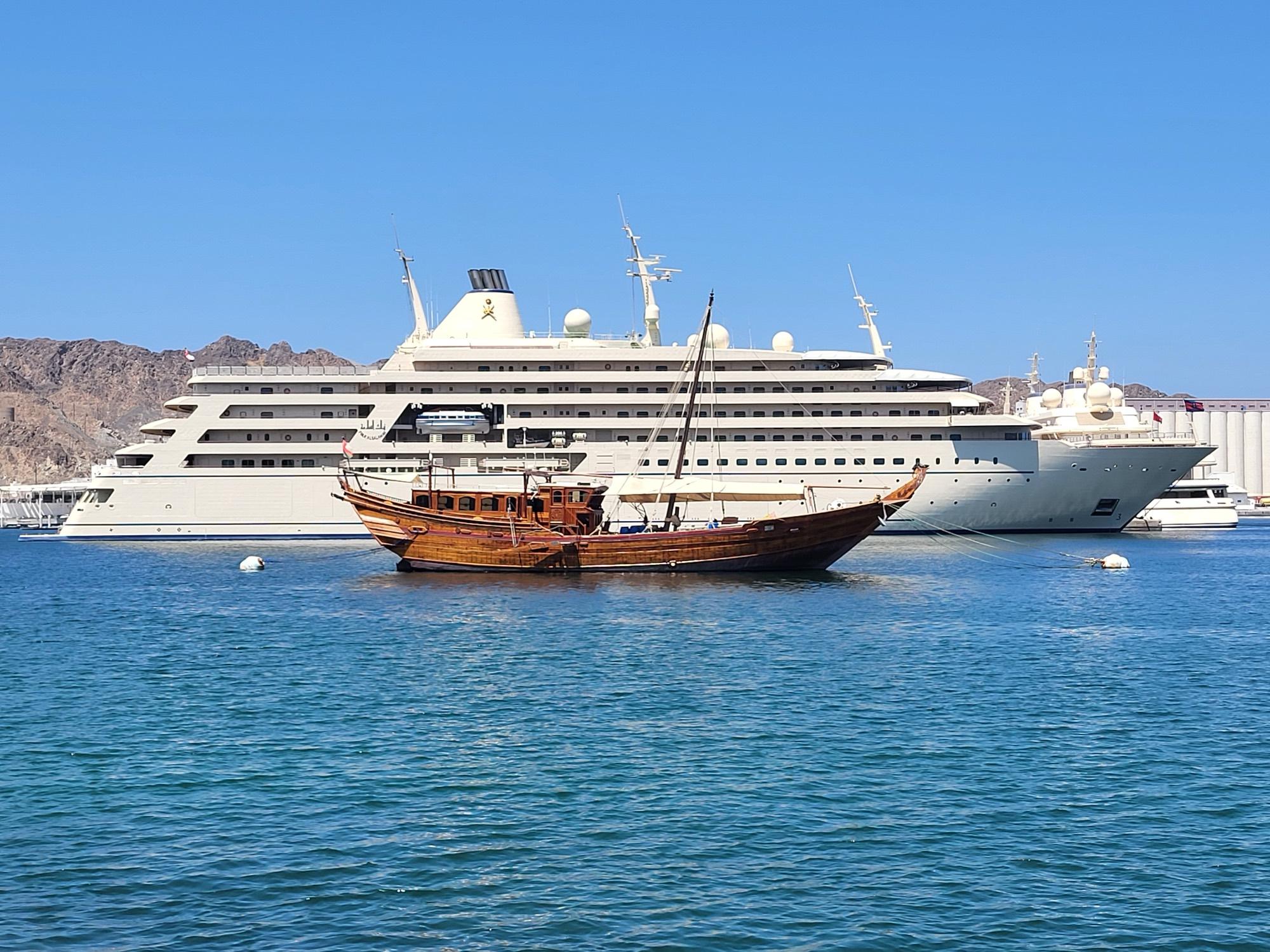
The promenade along Muttrah harbour is at its best in the late afternoon, when the light softens and families come out to stroll. You look out over wooden dhows and fishing boats, with bare rock and watchtowers behind. At the eastern end, Riyam Park has a large monument shaped like a frankincense burner on its hill.
4. Muttrah Souq
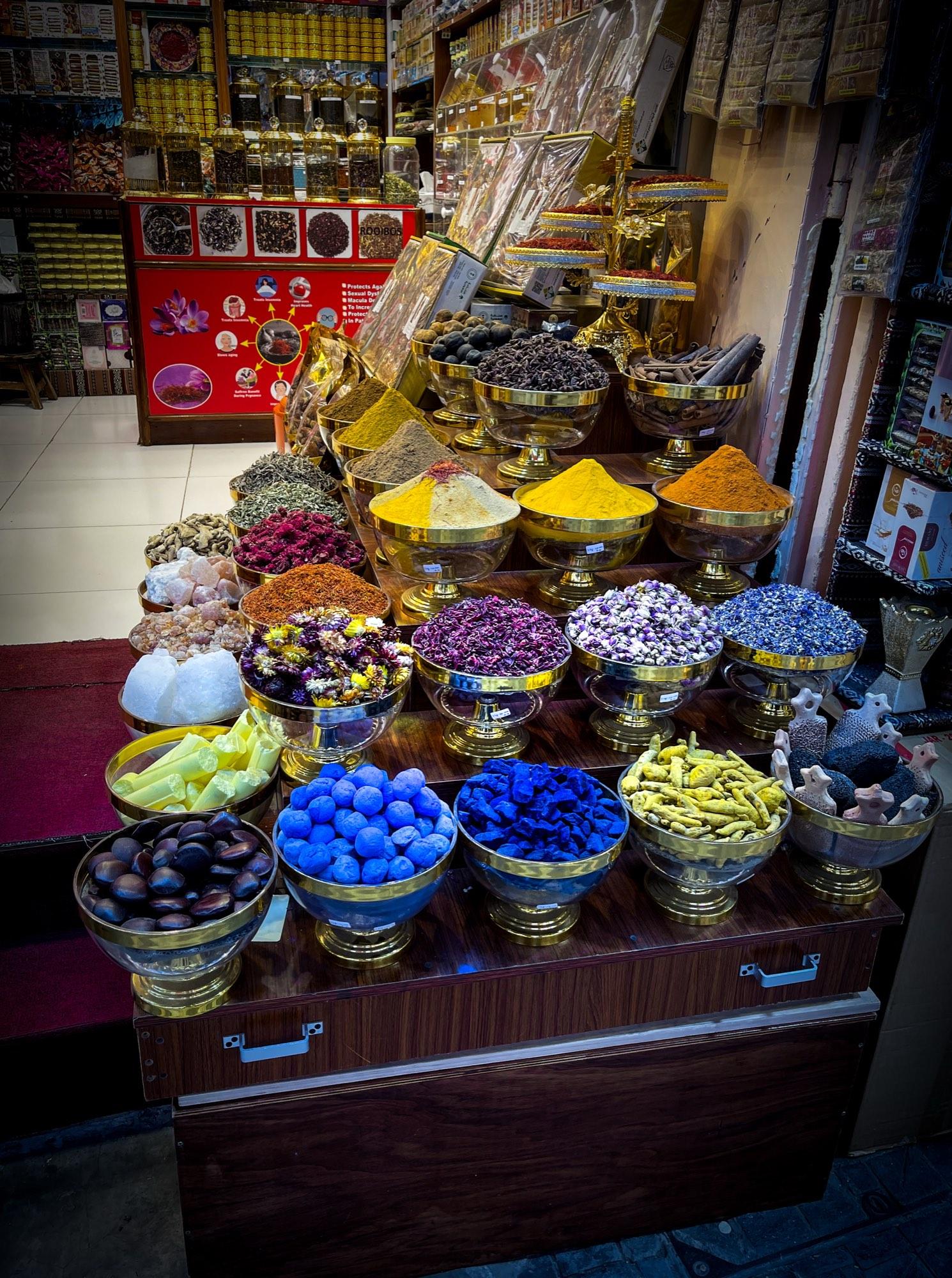
Behind the Corniche lies the souq, a covered maze of alleys selling frankincense, silver, Omani khanjar daggers, fabrics, saffron and spices. Shops open in the morning until about 1pm and again from about 4pm until late in the evening, and many stay closed on Friday mornings. Bargaining is expected, so keep it friendly and patient. The classic souvenir is frankincense from Dhofar with a small burner.
5. Muttrah Fish Market
At the western end of the Corniche, the fish market occupies a striking building by the Norwegian architects Snøhetta, completed in 2018. Go early in the morning while the catch comes in, as the bustle is over by midday.
6. Muttrah Fort
The Portuguese built the fort on the rock above the Corniche in the 1580s. From its towers you look out over the old harbour and the lanes around it. According to Experience Oman it is open daily from 8am to 11pm, and non-resident adults pay OMR 3 (October 2026).
7. Al Alam Palace in Old Muscat
Old Muscat sits in a small cove between rocky headlands, a few kilometres east of Muttrah. At its centre stands Al Alam Palace with its gold and blue columns, the Sultan's ceremonial palace. You cannot go inside, but the square in front of the gates gives the best view, with a fort on the rocks on either side.
8. Al Mirani and Al Jalali forts
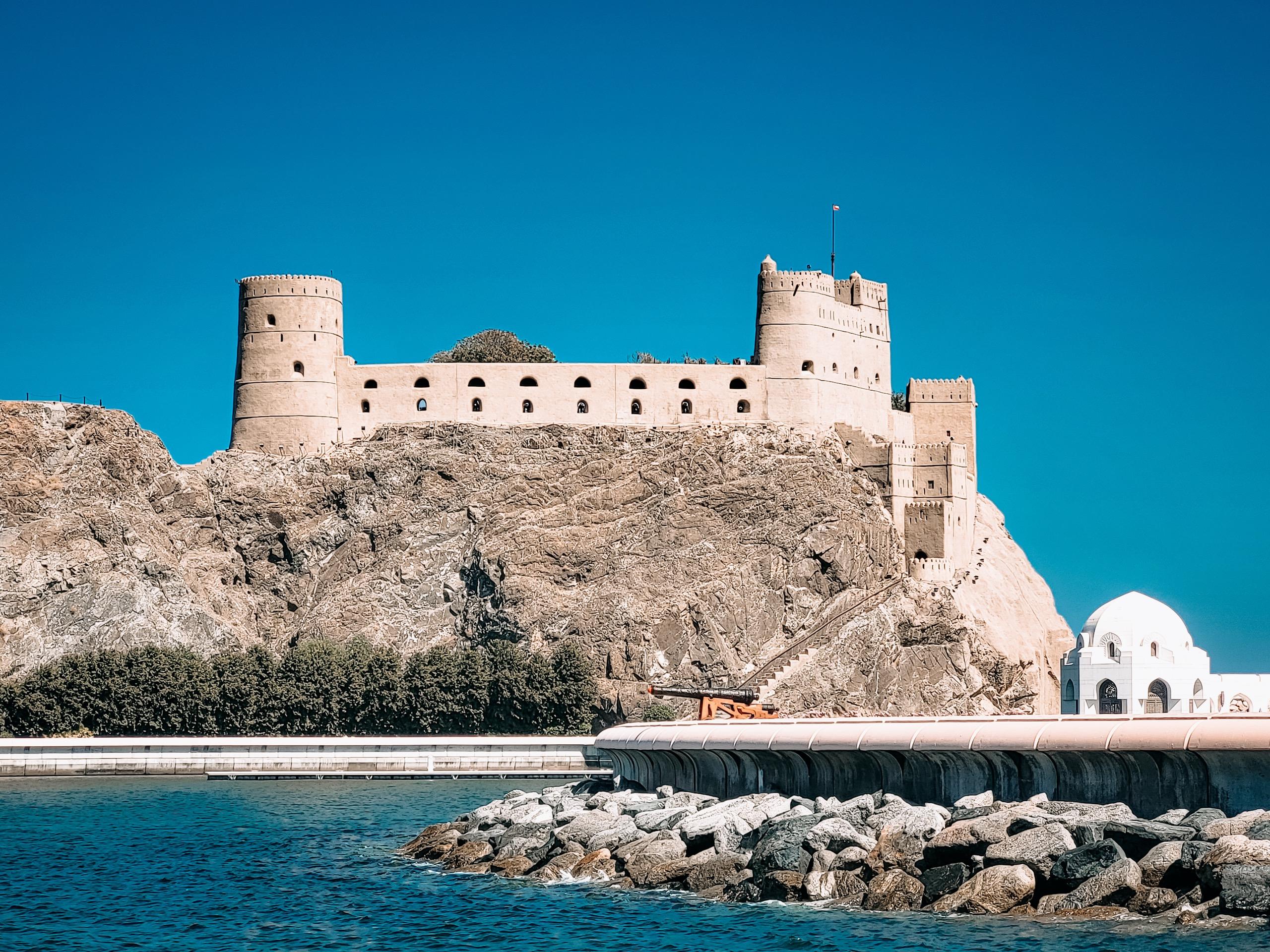
The Portuguese rebuilt Al Mirani in 1588, and since its restoration it has been open to visitors, with a weapons museum, digital exhibits, a café and telescopes trained on the watchtowers and the ship names carved into the harbour rocks. According to Experience Oman it is open daily from 8am until midnight, with tickets sold at the entrance (October 2026). Al Jalali, across the cove, is not open to the general public. An operator was appointed in March 2026, but no opening date has been announced (as of October 2026).
9. National Museum of Oman
Opposite the palace, the National Museum opened in 2016 and tells the country's story through more than 7,000 objects, from navigation instruments to early Islamic manuscripts. It is open Saturday to Thursday from 10am to 5pm and on Fridays from 2pm to 6pm. Foreign visitors pay OMR 5 (Experience Oman, October 2026). Allow an hour and a half to two hours.
10. Bait Al Zubair
This private museum in Old Muscat is spread over several houses with a garden and a café. It shows Omani daggers, jewellery, costume and household objects, a good introduction to Omani culture in about an hour. Opening hours and entry fees vary, so check both shortly before you go.
11. Qurum Beach and the coves
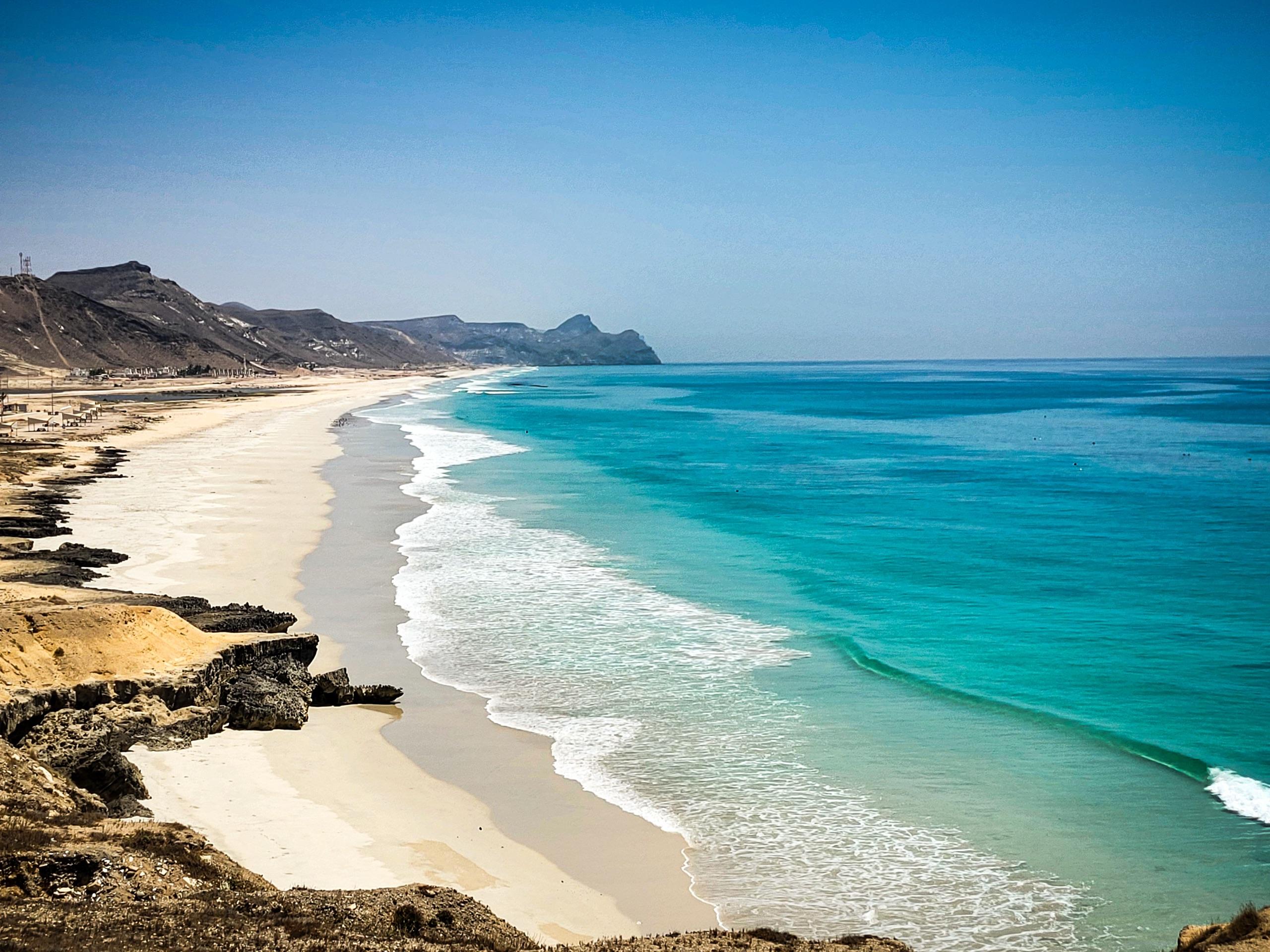
Qurum Beach is Muscat's city beach, a wide strip of sand with a promenade and restaurants, busy with walkers in the late afternoon. Swim in modest swimwear here, as bikinis belong on hotel beaches. Quieter coves such as Bandar Al Khairan lie south-east of the city and are best reached by boat. Our guide to a beach holiday in Oman covers the rest of the coast.
12. Dolphin watching by boat
Dolphin trips usually leave in the morning from Marina Bandar Al Rowdha on the east side of the city and take about two hours. Spinner dolphins live here all year, often together with common dolphins. From October to May the sea is usually at its calmest. Sightings are not guaranteed, but the chances are good. Choose a skipper who keeps a respectful distance.
13. Daymaniyat Islands
The nine uninhabited Daymaniyat Islands off the coast of Seeb and Barka form a protected nature reserve, with coral, turtles, reef sharks and shoals of fish in clear water. The boat from the marina at Al Mouj takes just under an hour, and you stay for most of the day. From early May to the end of October, landing on the islands is prohibited according to the Environment Authority. The rule protects a reserve where sea turtles lay their eggs on the beaches and seabirds breed in colonies. Snorkelling from the boat remains possible, and visibility is usually best from October to May.
Muscat in one or two days: a city tour plan
With one day you see the Grand Mosque, the opera house and Muttrah. A second day adds Old Muscat, the museums and the sea. The plan follows the geography: day one runs from west to east, day two stays in the east of the city.
| Time | Day 1: mosque and Muttrah | Day 2: Old Muscat and the sea |
|---|---|---|
| 8am | Grand Mosque (entry until 11am) | Dolphin trip from Marina Bandar Al Rowdha |
| 10.30am | Guided tour of the Royal Opera House | National Museum |
| 1pm | Lunch and a break in the hottest hours | Lunch, then Bait Al Zubair |
| 4pm | Muttrah Fort, then the souq | Al Alam Palace and Al Mirani Fort |
| Evening | Corniche at sunset, dinner in Muttrah | Qurum Beach or a performance at the opera house |
Prefer snorkelling? Make day two a Daymaniyat day and see Old Muscat at the end of day one instead of Muttrah Fort.
Day trips from Muscat
The best day trips from Muscat go to Bimmah Sinkhole and Wadi Shab on the east coast and to Nizwa inland, both 1.5 to 2 hours' drive away. Driving times exclude stops and depend on where in Muscat you start. Beyond three hours each way, a day tour from Muscat becomes mostly a day in the car.
| Day trip | Distance and driving time | What you do |
|---|---|---|
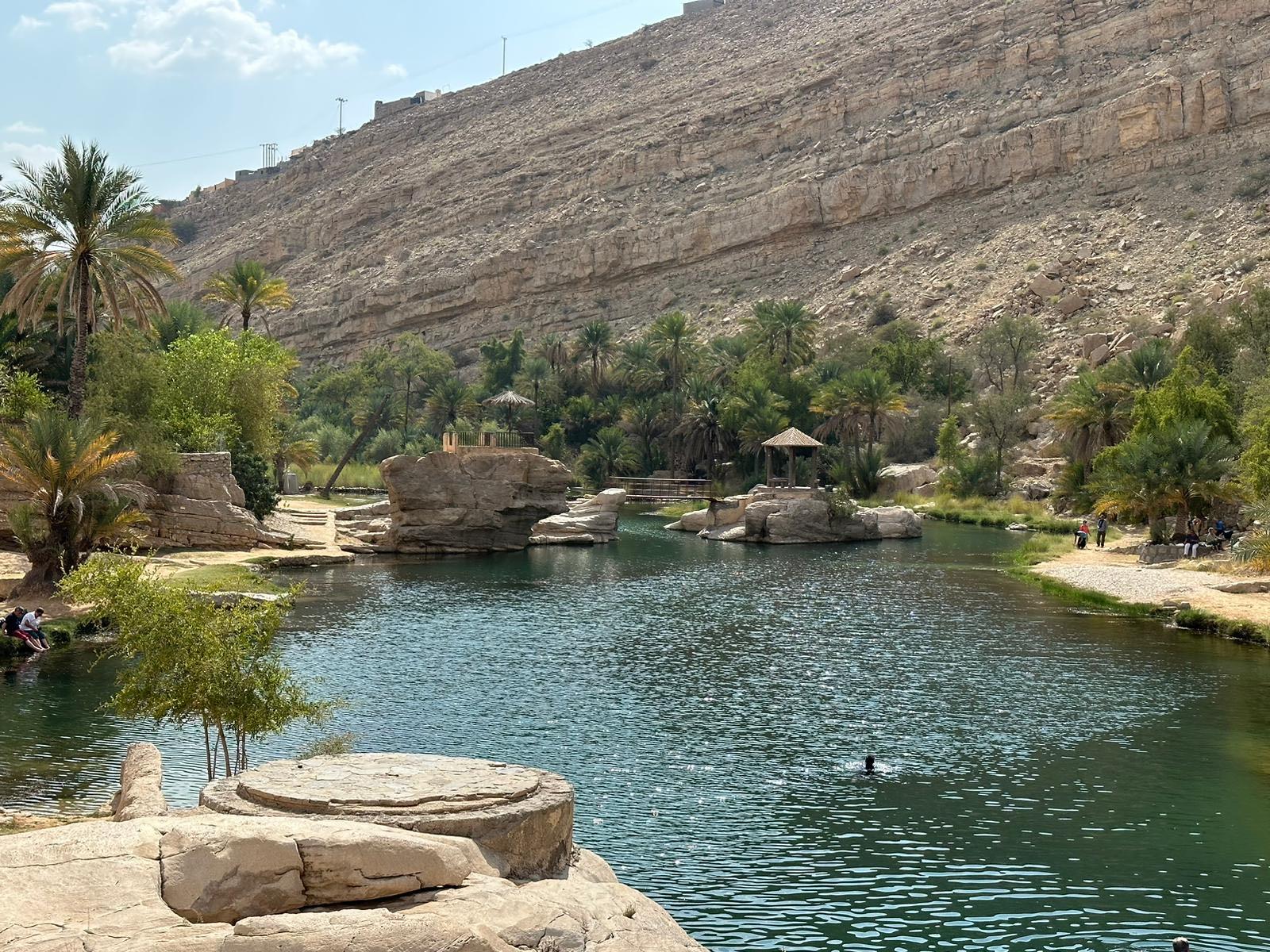
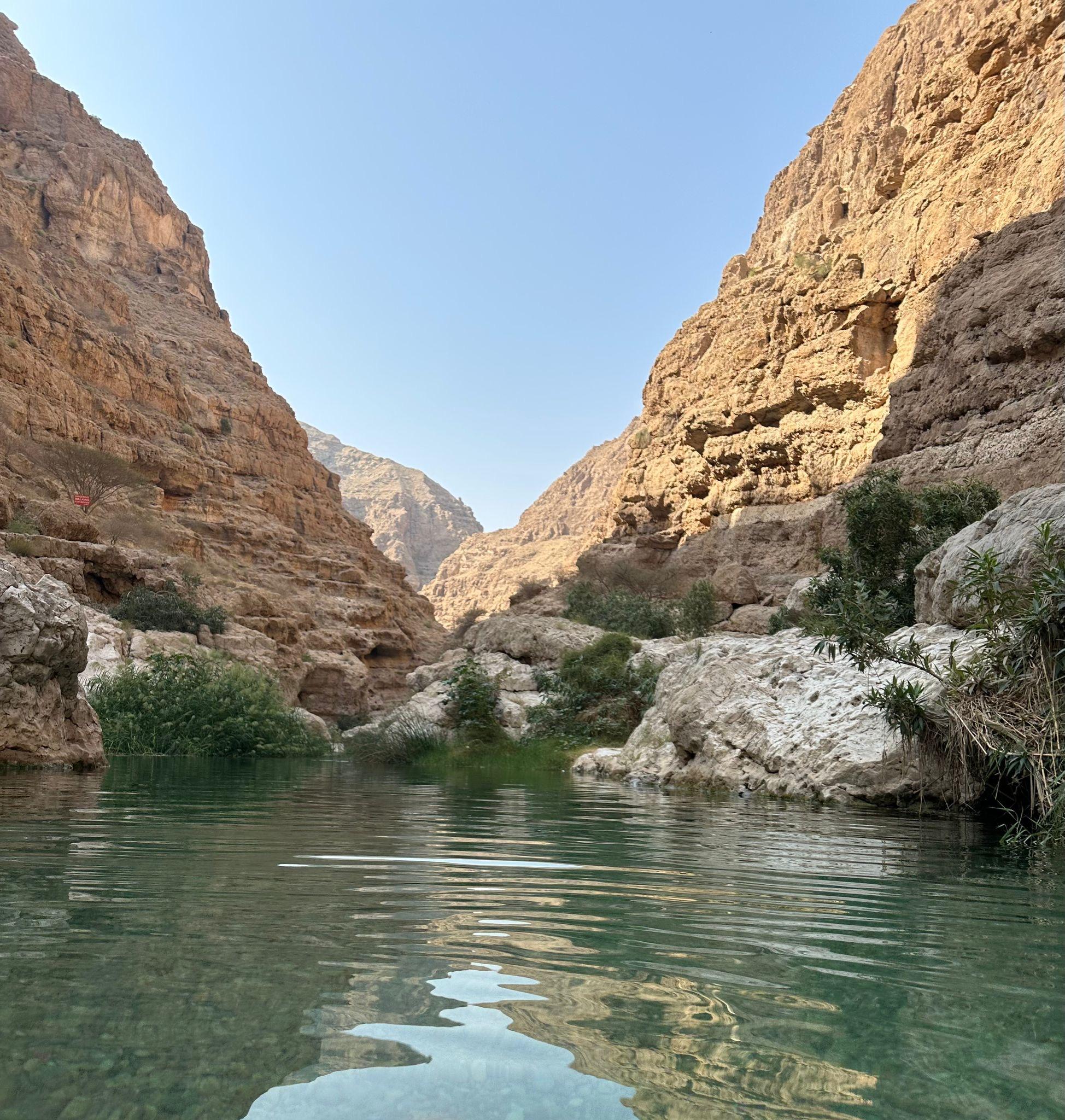
| Wadi Shab and Bimmah Sinkhole | approx. 150 km, 1 hour 45 to 2 hours (Bimmah approx. 130 km) | swim in a turquoise sinkhole, hike and swim through a gorge |
| Nizwa | approx. 150 km, 1.5 to 2 hours | fort, souq and the Friday morning goat market |
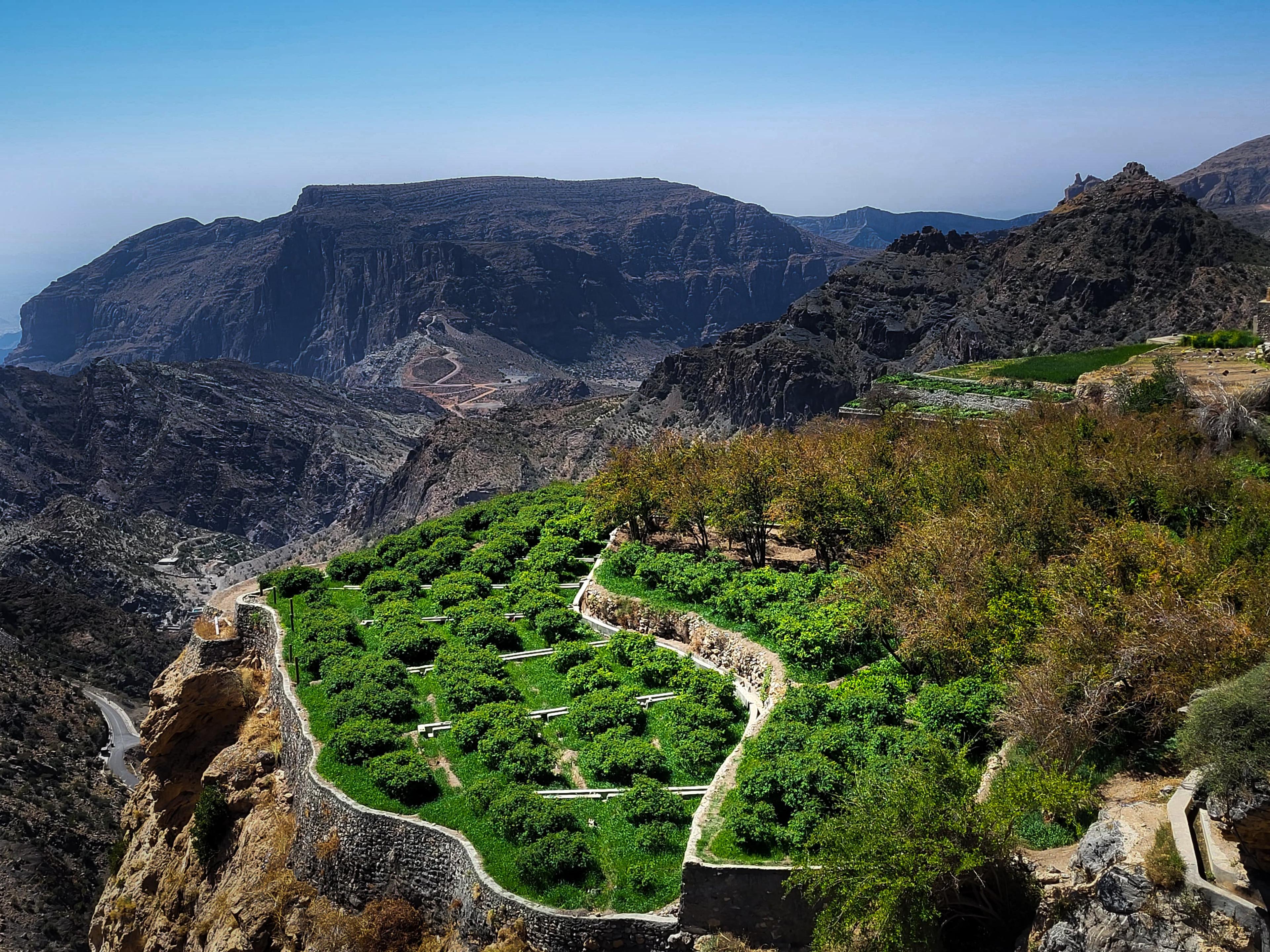
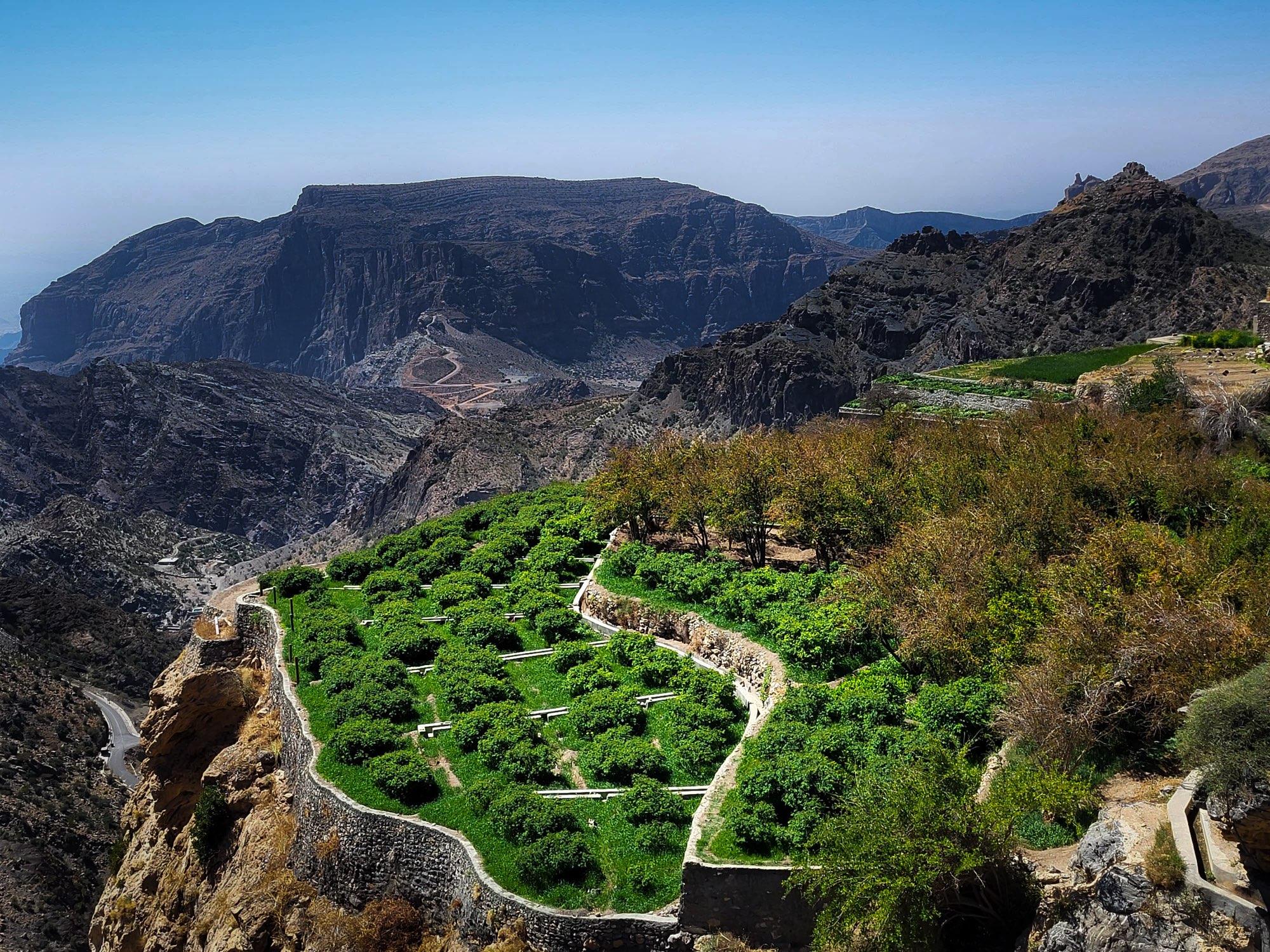
| Jebel Akhdar | approx. 160 km, 2 to 2.5 hours | terraced villages at 2,000 metres, 4x4 only |
| Wahiba Sands | approx. 200 km, 2 to 2.5 hours | dunes, better with a night in a desert camp |
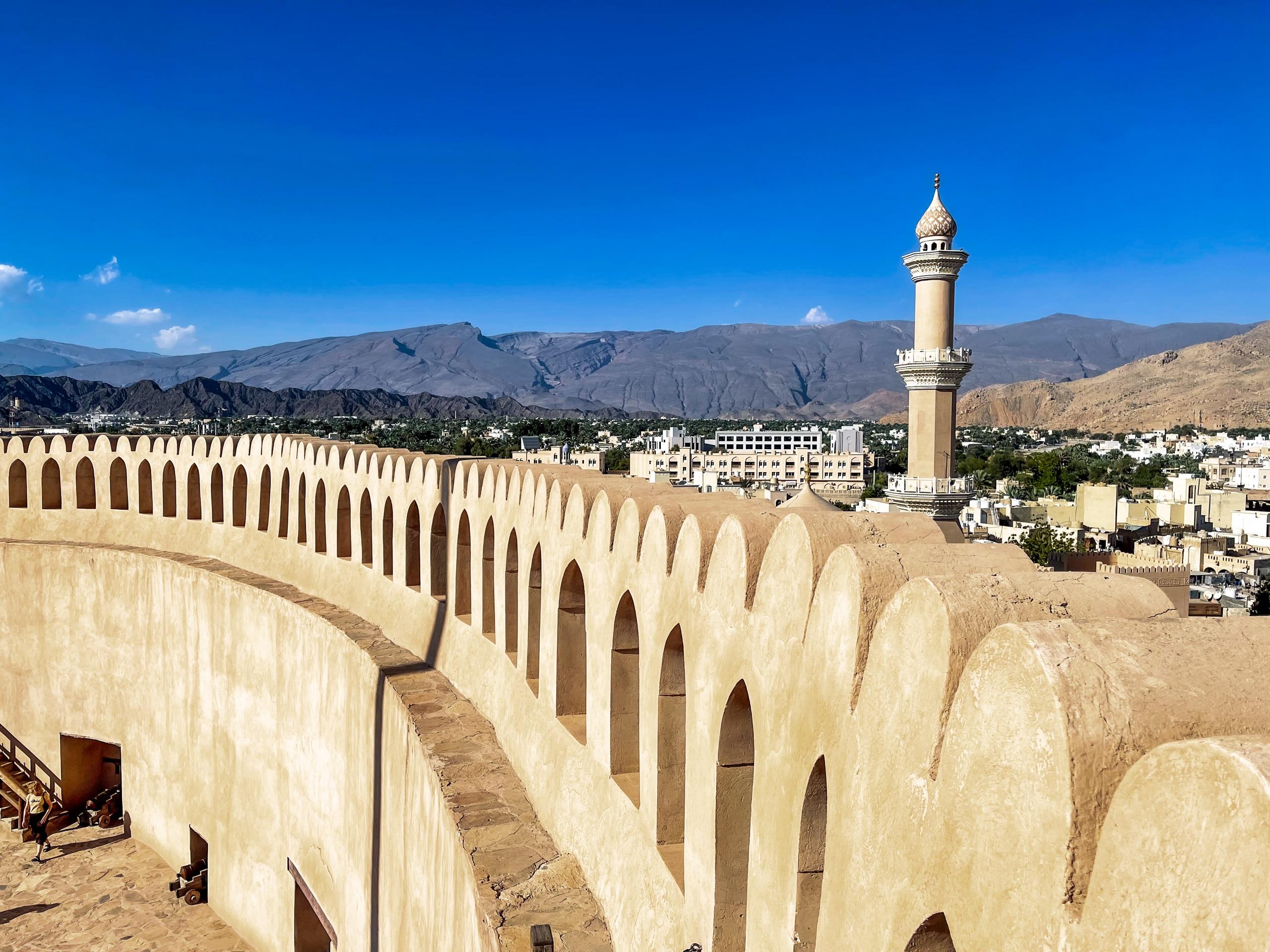
| Wadi Bani Khalid | approx. 250 km, about 3 hours | palms and green pools, better combined with the desert |
Bimmah Sinkhole, in Hawiyat Najm Park, is free to enter and half an hour's drive from Wadi Shab. West of Muscat stand the forts of Nakhal and Rustaq, a stop on the way to the mountains on our 18-day tour. Jebel Shams is just over three hours away and deserves a night. For the bigger picture, see our guide to things to do in Oman.
Where to stay in Muscat
For atmosphere choose Muttrah, for beach and restaurants Qurum, and for peace a resort in the coves south-east of the city.
- Muttrah. The Corniche, souq and fort within walking distance and the liveliest evenings, mostly in smaller hotels.
- Qurum and Shatti Al Qurum. Central between Muttrah and the airport, on the city beach and close to the opera house, with plenty of restaurants.
- Al Khuwair and Al Ghubra. Business districts near the Grand Mosque, with hotels in every price range.
- Al Mouj and Seeb. By the airport and the marina where boats leave for the Daymaniyat Islands. Handy for a late arrival or early flight, but far from the old town.
- Al Bustan and Bandar Jissah. Beach resorts in rocky coves south-east of the city, quiet and beautifully set, but every outing needs transport.
Getting around Muscat
Between districts you take a taxi, because Muscat is built for cars. Muttrah, the Corniche and Old Muscat are best explored on foot, early in the morning or after sunset in the hot months.
- Taxi. The easiest option is a licensed app such as OTaxi or Marhaba, which shows the fare before you book. Since April 2025 white and orange street taxis are also meant to run through such an app, but not all do yet. If yours does not, agree the fare before you set off.
- Bus. Mwasalat city buses mainly link residential areas and shopping centres and are of limited use to visitors.
- Driving. Roads are wide and good, with plenty of speed cameras. You hardly need a car in the city, but you do outside it. Read about driving licence rules in Oman and our self-drive tour.
Practical information
Visit Muscat between October and April, ideally from November to March, and dress modestly in the city.
Best time to visit. From November to March daytime temperatures are 25 to 30 °C and evenings are mild, while October and April reach around 35 °C. From May to September days are 36 to 40 °C and often humid, so you see the city early in the morning and in the evening. More in our guide to the best time to visit Oman.
Dress and Ramadan. In the city, covered shoulders and knees are the norm for men and women. During Ramadan museums and shops keep shorter hours, and you do not eat or drink in public during the day.
Safety. Muscat is a calm, orderly city. For current travel advice, see our article on safety in Oman.