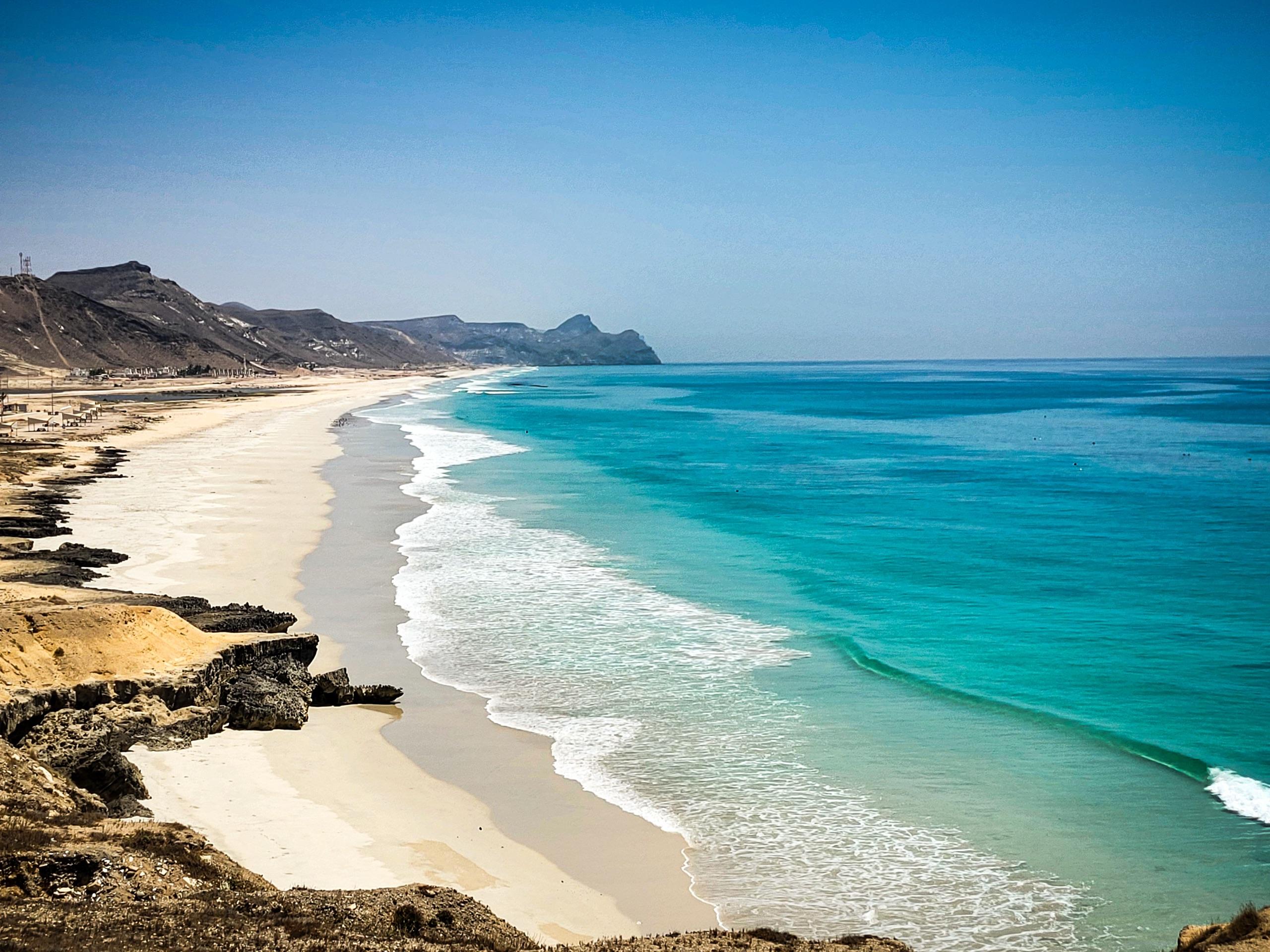
Beach holiday in Oman: beaches, best time to go and beach days after your tour
By Franziska Palgen · Oman travel specialist ·
Oman has more than 3,000 kilometres of coastline, yet most people picture desert, wadis and mountains when they think of a trip to Oman. Rightly so: that is the heart of every tour. But if you add three or four days by the sea after a week in the 4x4, the country really comes together. This article shows where a beach holiday in Oman is at its best, when the sea is pleasant, what to know about dress and etiquette, and how to combine beach days with a tour in a way that makes sense.
In short
The best time for a beach holiday in Oman is October to April: daytime temperatures of 25 to 30 °C, sea temperatures of 24 to 28 °C, hardly any rain. The finest spots are around Muscat, along the coast road to Sur, at the Daymaniyat Islands and in the south near Salalah. A beach-only trip is less rewarding than the combination: tour first, then the sea.
The best beaches and coastal regions
Muscat and surroundings
The capital sits right on the Gulf of Oman. The long Qurum Beach is the classic city beach where families stroll in the evening. The prettiest bays lie east of the city, wedged between mountains and sea, where a handful of resorts have their own sheltered beaches. Boats to the Daymaniyat Islands, dolphin-watching trips and dive excursions all leave from Muscat. If your tour starts or ends in the capital, the beach is right on your doorstep.
Daymaniyat Islands
About an hour by boat north of Muscat lies the Daymaniyat Islands nature reserve: nine small islands with coral reefs, sea turtles, rays and, in late summer, the occasional whale shark. It is the best snorkelling spot in the country. During turtle nesting season the islands themselves are off limits, but snorkelling and diving continue year-round. Our 10-day Oman tour includes the snorkelling excursion as standard.
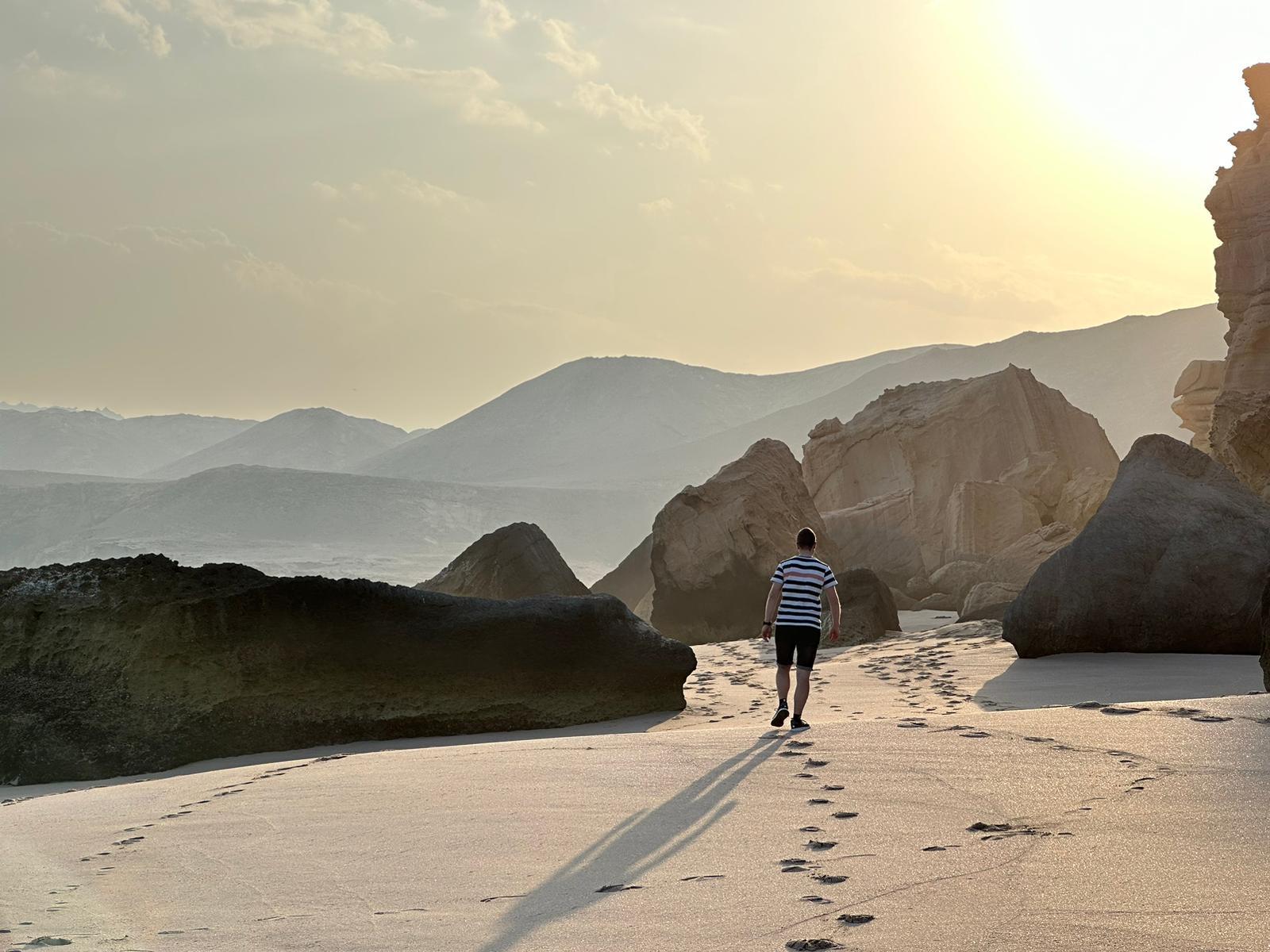
The coast road from Muscat to Sur
The drive from Muscat to Sur is the most beautiful coastal road in Oman. Along the way you pass the Bimmah Sinkhole, a turquoise limestone pool you can swim in, the white beaches near Fins, the fishing village of Tiwi with Wadi Shab, and finally Sur with its dhow shipyard. Small guesthouses on the coast are the typical place to stay here: simple, warm-hearted and with a sea view. Further east, at Ras al Jinz, green sea turtles come ashore to lay their eggs, most impressively between July and September but visible all year.
Salalah and the southern coast
Southern Oman is a destination in its own right. From October to April the beaches around Salalah are dry, warm and largely empty: Mughsail with its blowholes in the cliffs, the deserted bays of Fazayah Beach, and banana plantations, frankincense trees and Wadi Darbat inland. In summer, during the khareef monsoon from June to early September, the region turns green and misty, but the sea is rough and not suitable for swimming. That makes Salalah the ideal place for winter beach days and a fixed part of our 14-day and 18-day tours.
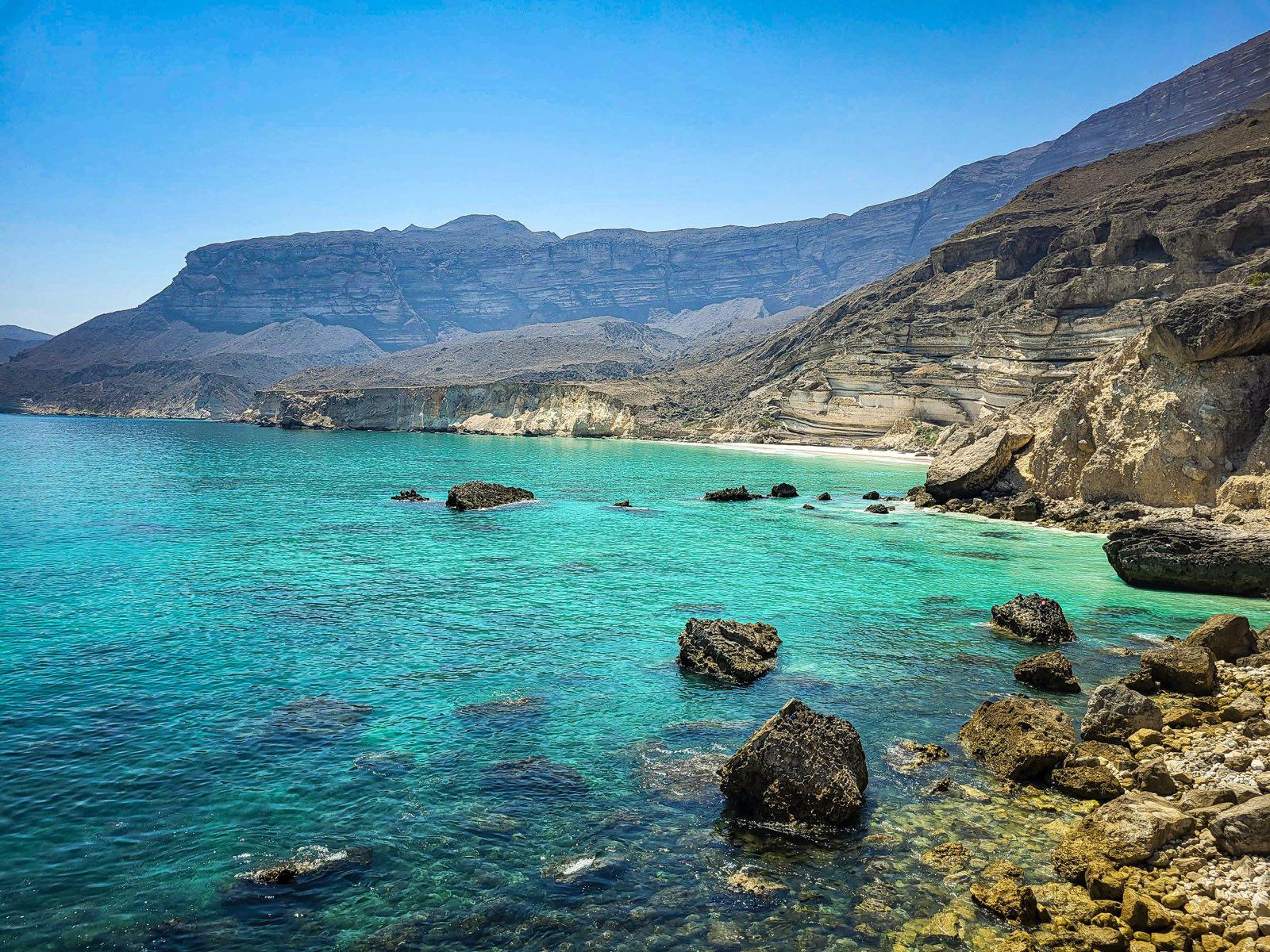
Musandam
The Musandam peninsula sits at the far north, separated from the rest of the country by the Emirates. Fjord-like inlets, dhow cruises, dolphins and snorkelling in clear water make it a special beach destination, usually as an extension from Dubai or as a short trip on its own.
Best time for swimming
| Region | Best beach season | Sea temperature | Note |
|---|---|---|---|
| Muscat and the coast to Sur | October to April | 24 to 28 °C | May to September very hot, often above 40 °C |
| Daymaniyat Islands | October to April | 24 to 28 °C | Snorkelling year-round, islands closed in nesting season |
| Salalah | October to April | 25 to 28 °C | Khareef June to September: green, but rough sea |
| Musandam | November to March | 23 to 27 °C | Hot and humid in summer |
So a beach holiday in Oman follows the same calendar as the tour itself. That is convenient: November to March is the most pleasant time for both. For a longer winter stay, Muscat and Salalah are the most popular bases, with a steady 25 to 30 °C while northern Europe is grey.
Dress and etiquette on the beach
Oman is welcoming but conservative. On hotel beaches, bikinis and swimming trunks are perfectly normal. On public beaches, keep it modest: a T-shirt and shorts over your swimwear, especially for women. Going topless is not allowed anywhere. Alcohol is only served in licensed hotels, never on public beaches. Friday and Saturday are the weekend, when city beaches are busier and livelier.
Two practical notes: the sun is strong even in winter, and the surf on the open coast near Sur and Salalah can be powerful. Swim where hotels or locals do, and take your rubbish back with you, especially on the remote beaches.
Combining a tour with beach days
The classic split that works well for our travellers: seven to ten days touring, then three to four days by the sea. Three variations:
- Northern tour, beach days in Muscat: end the route in the capital and move into a beach resort. Short distances, airport nearby, boat trips to the Daymaniyat Islands.
- Northern tour, beach days on the coast near Tiwi or Sur: quieter and more authentic, in small guesthouses with sea views, with Wadi Shab and the turtles within reach.
- Grand tour including Salalah: north and south in two to three weeks, with the beach days in the south, where the sea is at its most pleasant in winter.
Because we only plan private tours, you decide how many beach days you want and where. If you like extra comfort, the luxury Oman tour page shows the resorts and desert camps we work with.
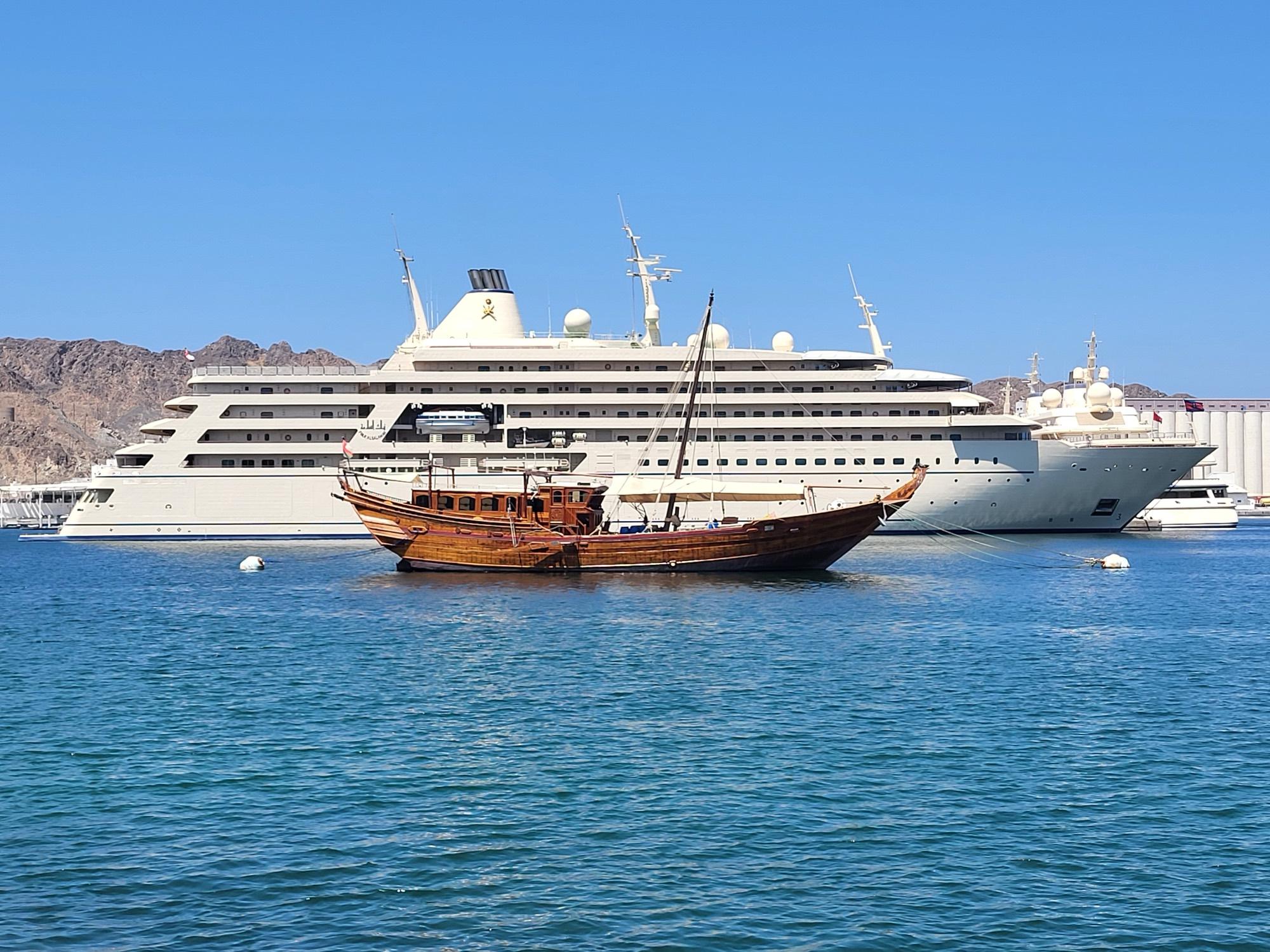
Is a beach-only holiday in Oman worth it?
Honestly: only partly. The beaches are beautiful, but if you only lie by the pool you miss the best of the country. The desert, the mountain villages of Jebel Akhdar, the souks of Nizwa and the wadis are exactly why Oman feels so different from other beach destinations on the Gulf. As the finale of a tour, though, beach days are just right: time to let it all sink in and a gentle landing before heading home.