Salalah: things to do, beaches, weather and when to go
Dhofar, the south · 1.5 hours' flight from Muscat
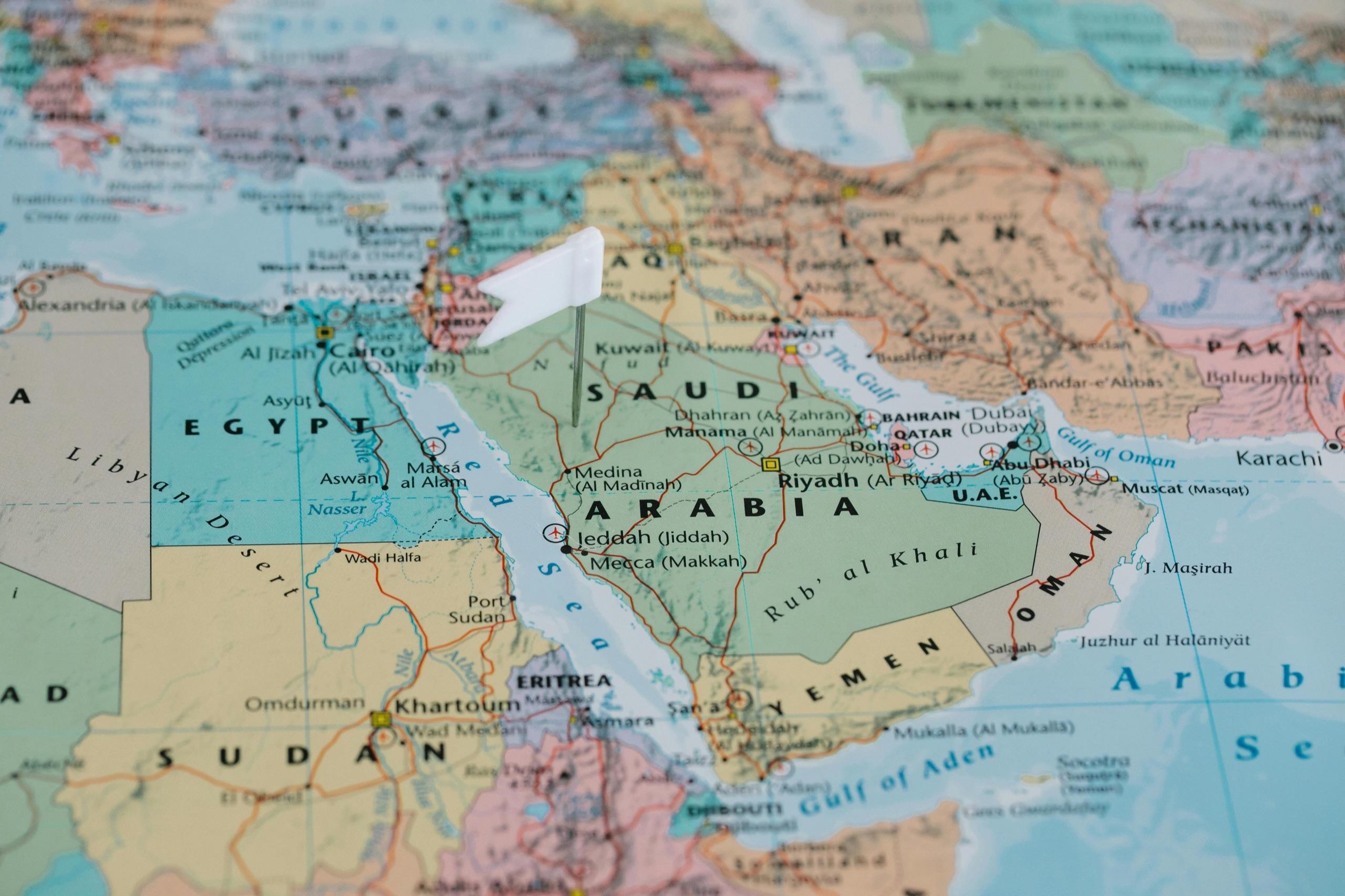
Salalah is the capital of Dhofar in the far south of Oman, about 1,000 kilometres or an hour and a half by air from Muscat. It is known for empty beaches lined with coconut palms, for its UNESCO-listed frankincense sites and for the khareef: the monsoon wraps the mountains in mist and turns them green in summer, and the official khareef season runs from 21 June to 21 September. For sun and beaches, go between October and April, and for the green landscape in July or August.
Compiled by Lars Janssen · updated October 2026
At a glance
- Region
- Dhofar, far south of Oman
- From Muscat
- approx. 1,000 km, 1.5 hours by air or 10 to 12 hours by road
- Best time
- October to April, July and August for the green
- Khareef
- officially 21 June to 21 September
- Temperature
- winter 27 to 32 °C, khareef 27 to 29 °C
- Length of stay
- at least 3 full days, 3 to 4 nights
- Don't miss
- Wadi Darbat, Mughsail and Al Baleed
Free consultation, reply within 24 hours
Salalah and Dhofar: why the south is different
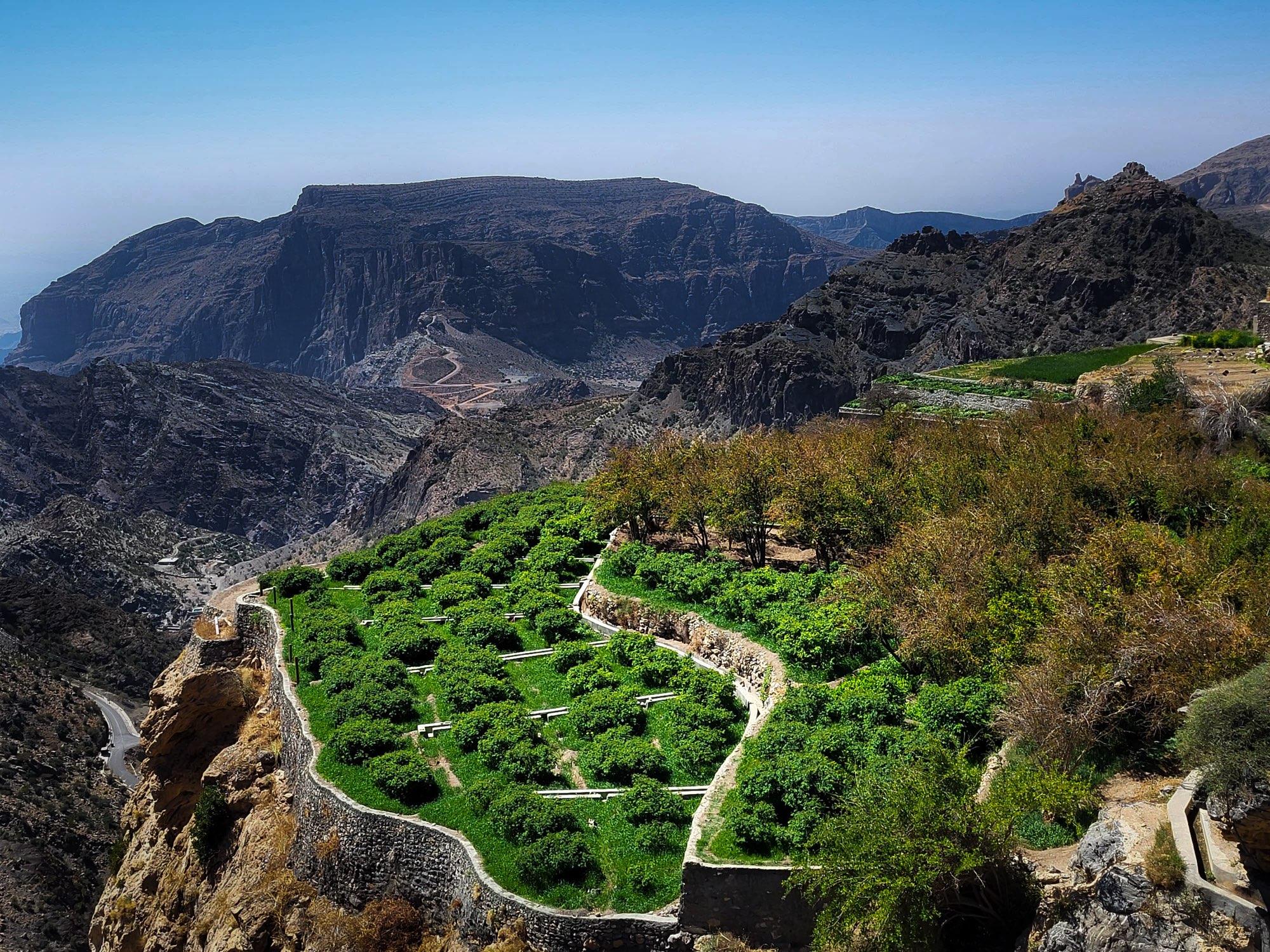
Add Salalah to a tour and you see two countries. The north is rock, desert and oasis, the south is coast, pasture and frankincense. The reason is the khareef, the tail end of the south-west monsoon, whose mist and drizzle turn the bare slopes of Dhofar green in summer. Winter is dry and sunny, the season for beaches and touring.
Frankincense from Dhofar was traded as far as Egypt and Rome more than 2,000 years ago, and four sites of that trade have been UNESCO-listed as the Land of Frankincense since 2000: Al Baleed, Sumhuram at Khor Rori, Wadi Dawkah and Shisr.
Things to do in Salalah: east, west and inland
The sights around Salalah lie in three directions, each a day trip: east to Wadi Darbat, Jebel Samhan and Mirbat, west to Mughsail and Fazayah Beach, north to Wadi Dawkah, Shisr and the Rub al Khali. For the rest of Oman, see things to do in Oman.
| Sight | Location | Drive from Salalah | Good to know |
|---|---|---|---|
| Al Baleed and the Museum of the Frankincense Land | in the city | 10 to 20 minutes | UNESCO, by the sea |
| Taqah | 30 km east | 30 minutes | castle museum, harbour |
| Wadi Darbat | 40 km east | 45 minutes | lake, khareef waterfalls |
| Sumhuram (Khor Rori) | 40 km east | 45 minutes | ancient port, UNESCO |
| Jebel Samhan | 70 km north-east | 1 to 1.5 hours | viewpoint high above the coast |
| Mirbat | 70 km east | 1 hour | harbour, Bin Ali tomb |
| Mughsail and blowholes | 40 km west | 40 minutes | highest jets in heavy swell |
| Fazayah Beach | 60 km west | 1 to 1.5 hours | steep final track, 4x4 |
| Wadi Dawkah | 40 km north | 40 minutes | frankincense trees, UNESCO |
| Shisr (Ubar) and Rub al Khali | 150 to 170 km north | 2.5 to 3 hours | caravan post, dunes beyond |
Rounded figures, from the city centre.
Wadi Darbat
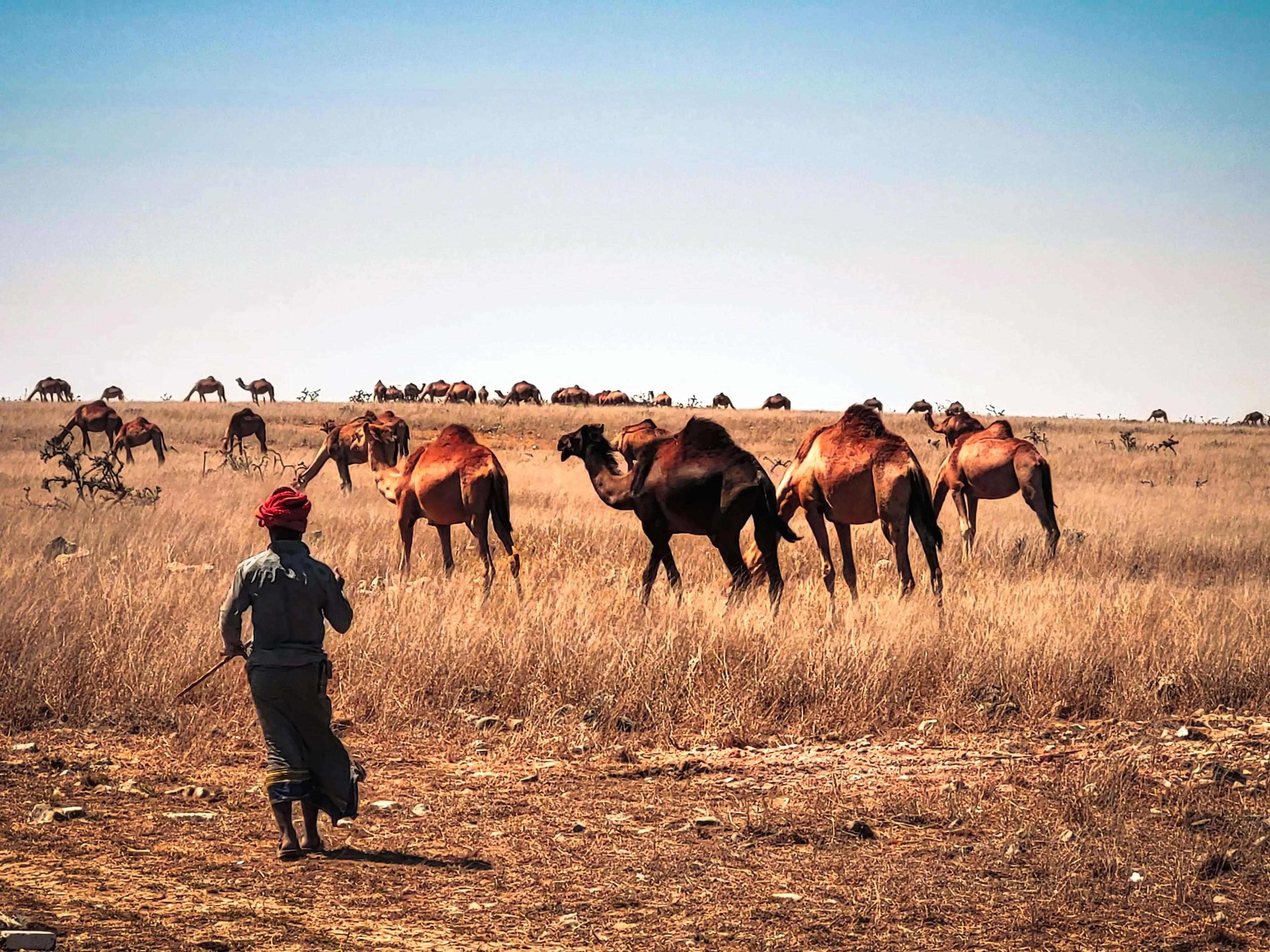
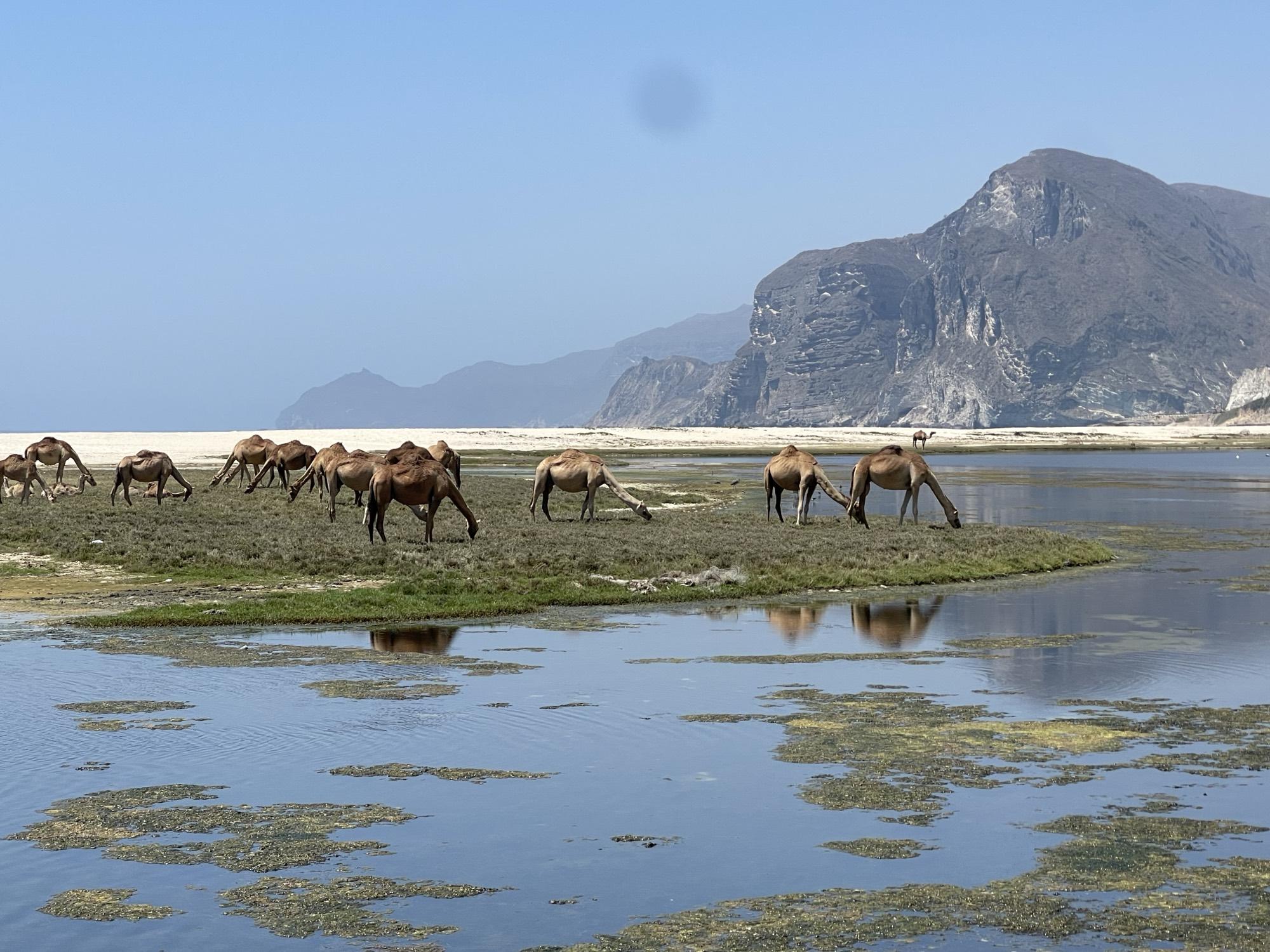
Dhofar's best-known valley lies about 40 kilometres east, just past Taqah. Camels graze around its lake. The waterfalls run during and just after the khareef, when boat trips on the lake are also on offer. In winter it is a quiet spot for a walk.
Taqah and Sumhuram
Taqah is a fishing town with a long beach and a castle that is now a small museum. About ten kilometres further on, above the Khor Rori lagoon, lie the ruins of Sumhuram, a frankincense port over 2,000 years old with an excavated city wall and gate.
Jebel Samhan, Tawi Attair and the baobabs
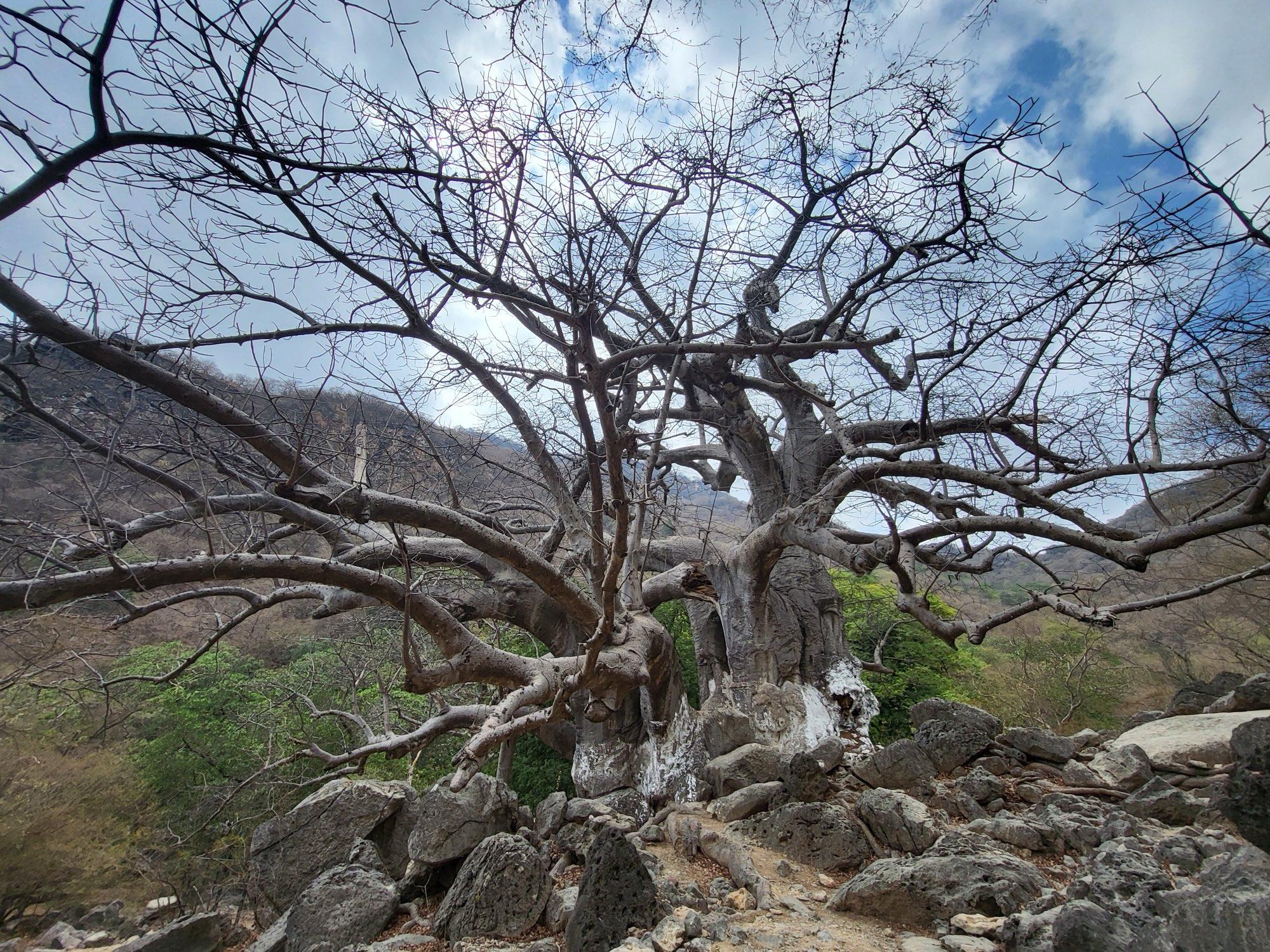
Jebel Samhan is a limestone massif of almost 1,800 metres, a nature reserve since 1997 and home to the critically endangered Arabian leopard. From the viewpoint the cliffs drop hundreds of metres to the coastal plain, though in the khareef the plateau is often in cloud. On the way up are Tawi Attair, a sinkhole over 200 metres deep, and the baobabs of Wadi Hinna, rare on the Arabian Peninsula.
Mirbat
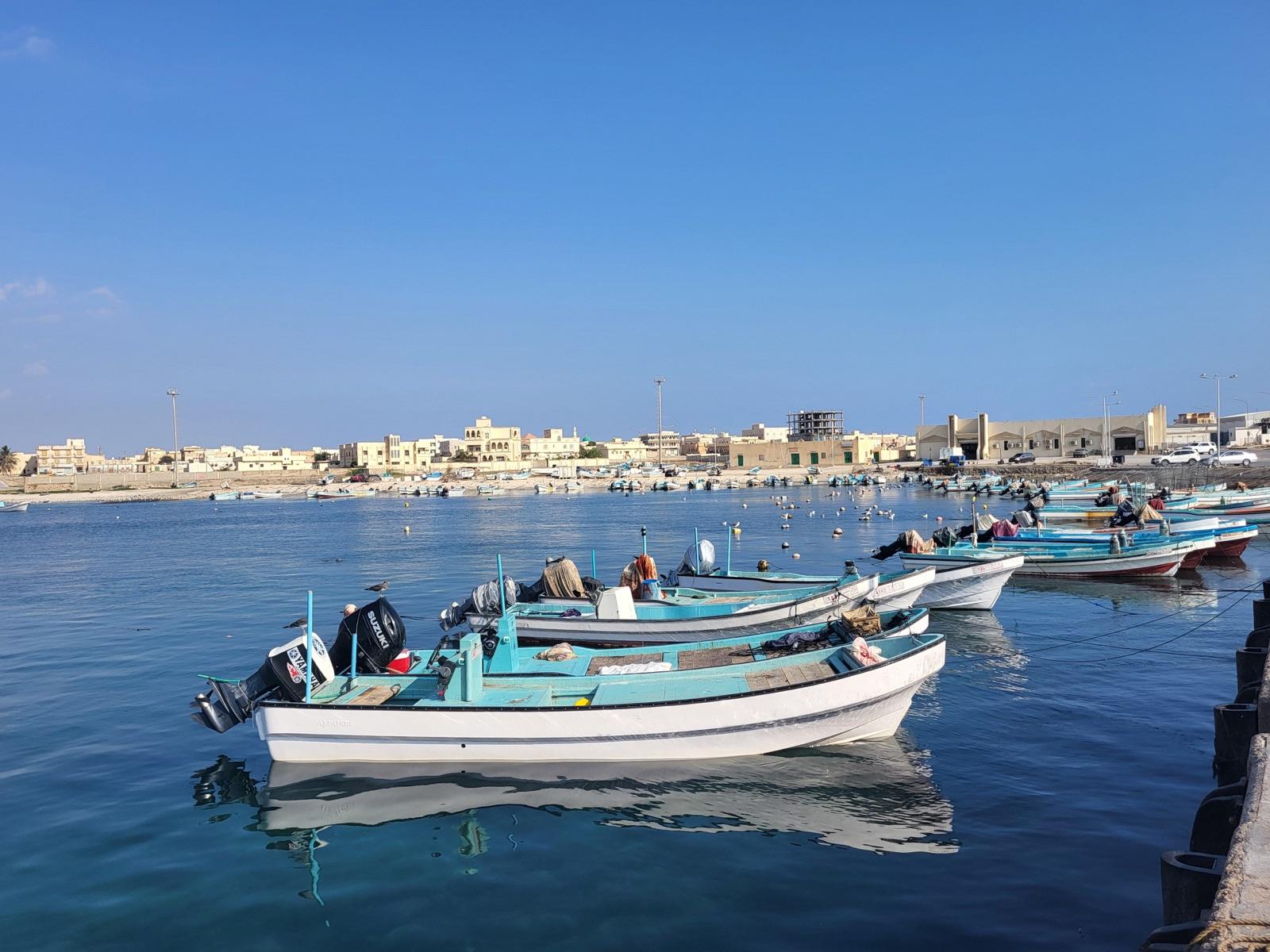
The harbour town about 70 kilometres east was for centuries an important port of Dhofar, known for frankincense and horse breeding. Today you find fishing boats, old merchants' houses, a fort, dive sites offshore and, on the edge of town, the white tomb of Bin Ali with its two onion domes.
Mughsail and the blowholes
About 40 kilometres west, the long sandy beach of Mughsail ends at a rock face. Under the overhang of Marneef the surf forces water up through holes in the limestone. In heavy khareef swell and at high tide the jets shoot metres high, while in the calm winter sea they are far smaller. Stay behind the barriers: in July 2022 waves swept visitors who had climbed over them into the sea.
Fazayah Beach
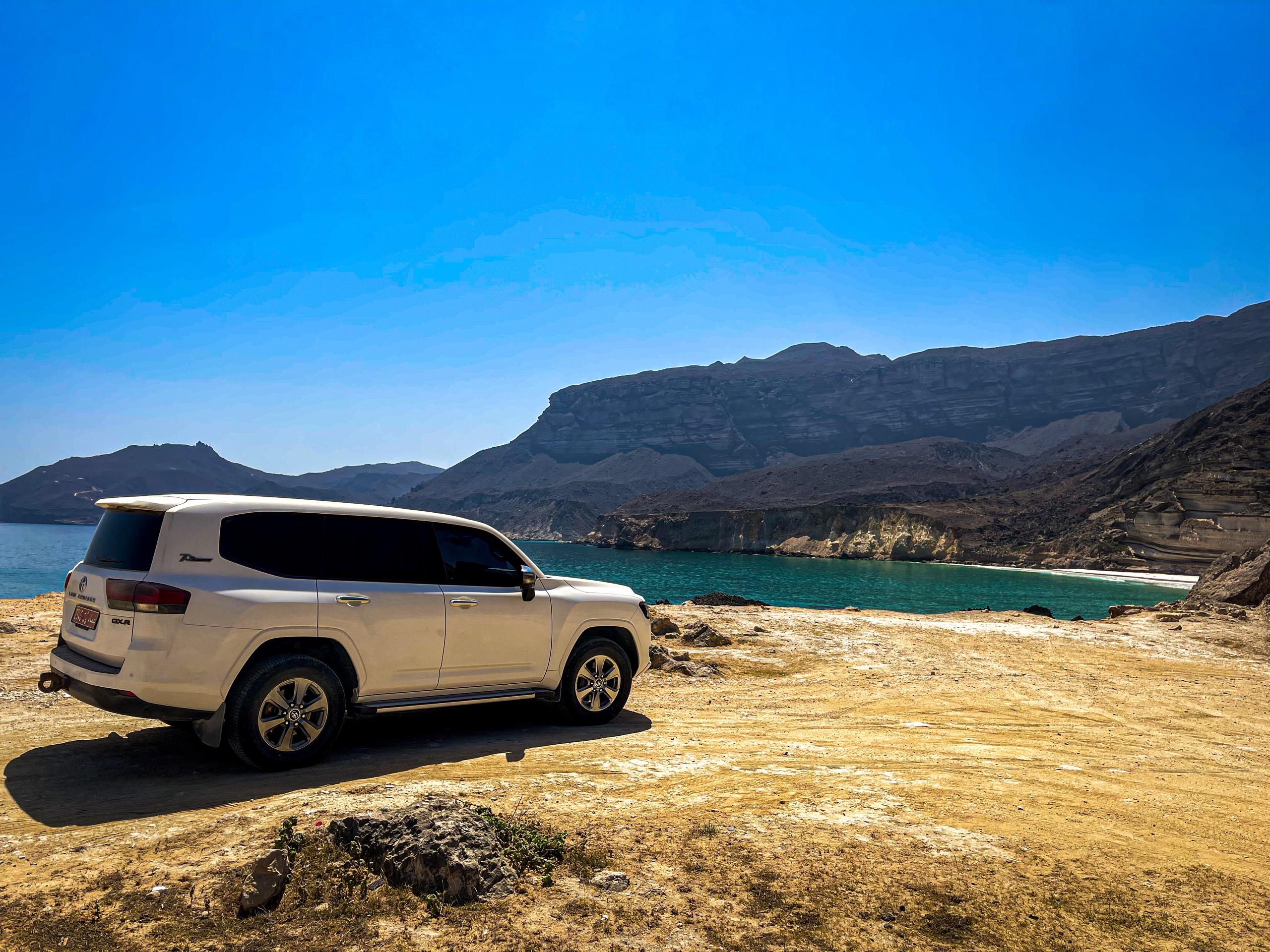
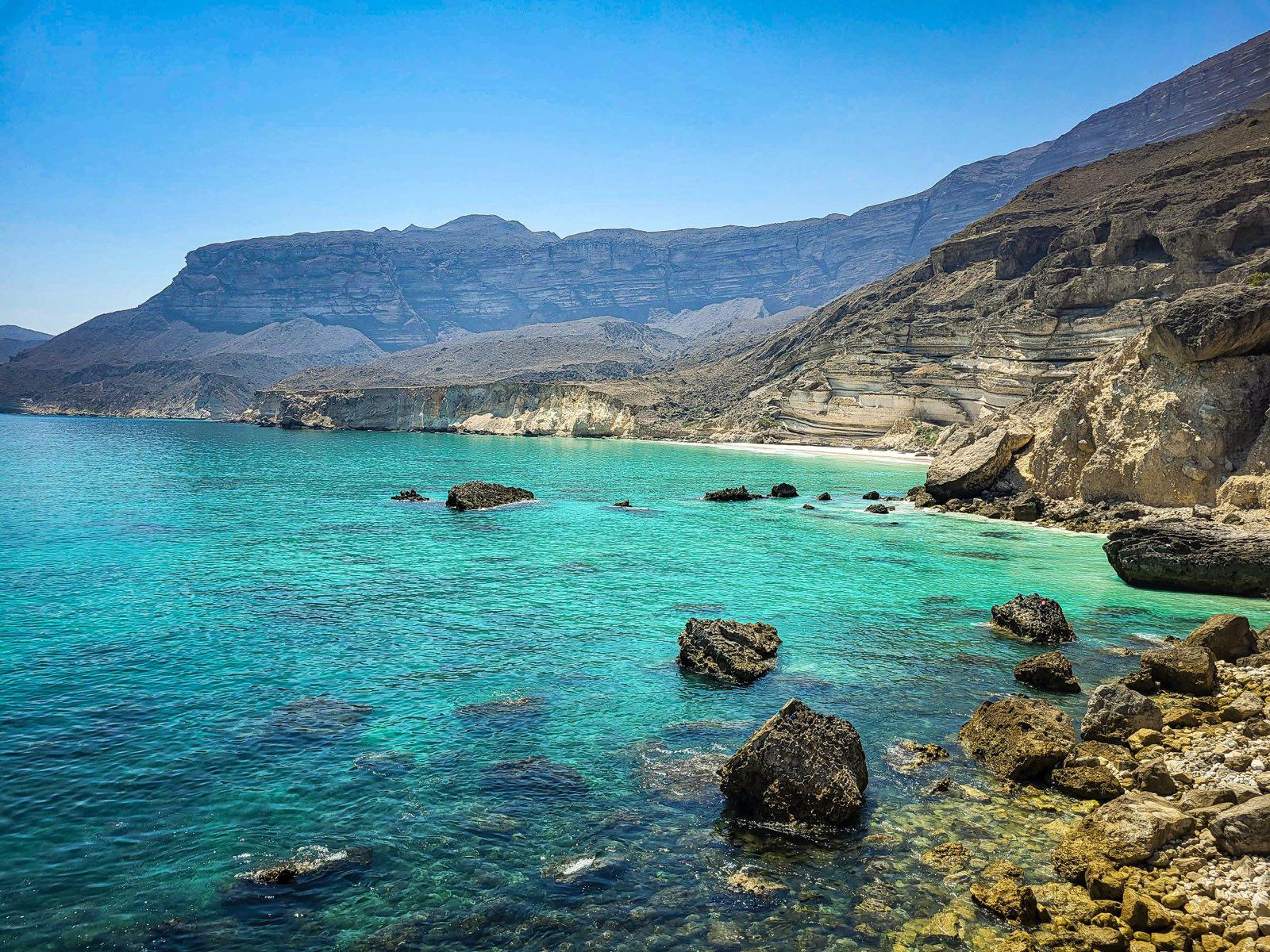
Beyond Mughsail the road climbs into the Jebel Qamar mountains in hairpin bends, past the Jebel Shaat viewpoint. About 60 kilometres from Salalah a steep gravel track covers the last few kilometres down to the white bays of Fazayah, safer in a 4x4. Take water and food.
Al Baleed, the frankincense museum and the souk
In the city, right by the sea, lie the ruins of Al Baleed, the medieval port of Zafar. In this UNESCO-listed park, the Museum of the Frankincense Land covers the frankincense trade and Omani seafaring. Allow two hours and check the seasonal opening hours and fees. The Al Haffa souk, also called the Al Husn souk, sells frankincense, clay burners and perfume.
Wadi Dawkah, Shisr and the Rub al Khali
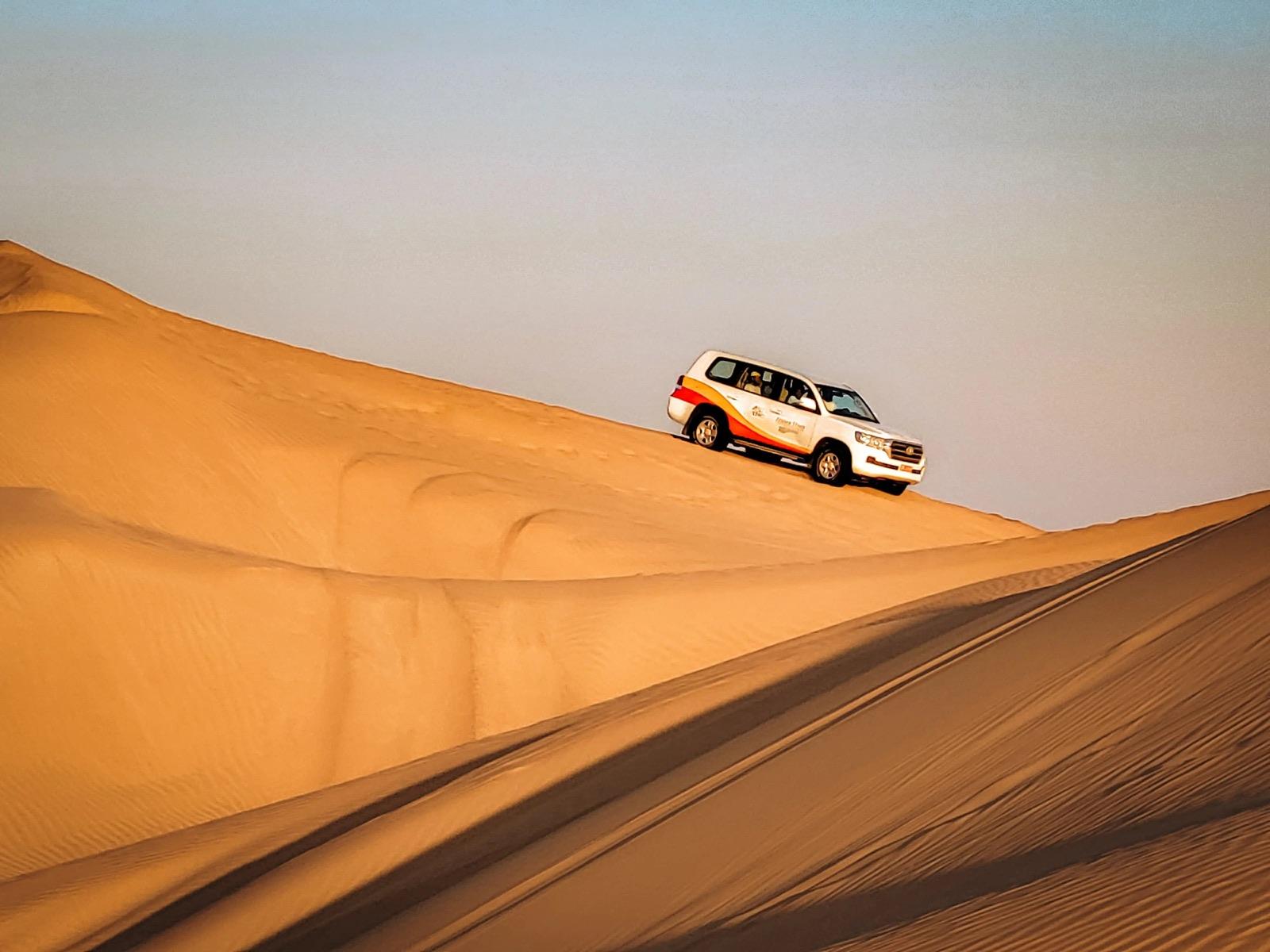
On the road to Thumrait, about 40 kilometres north, Wadi Dawkah is a UNESCO-listed valley of frankincense trees. Two and a half to three hours from Salalah lie the ruins of Shisr, a caravan post that satellite images helped identify in the early 1990s as a possible trace of the legendary city of Ubar. Beyond it begin the dunes of the Rub al Khali, the largest continuous sand desert in the world.
Salalah beaches: where and when to swim
For a beach holiday in Salalah, October to April is the time: the sea is usually calm and about 25 to 28 °C, while the khareef makes swimming dangerous.
- Al Haffa and the city beaches: long, palm-lined sands in front of the city.
- Hotel beaches: the only places where bikinis and swimming trunks are the norm.
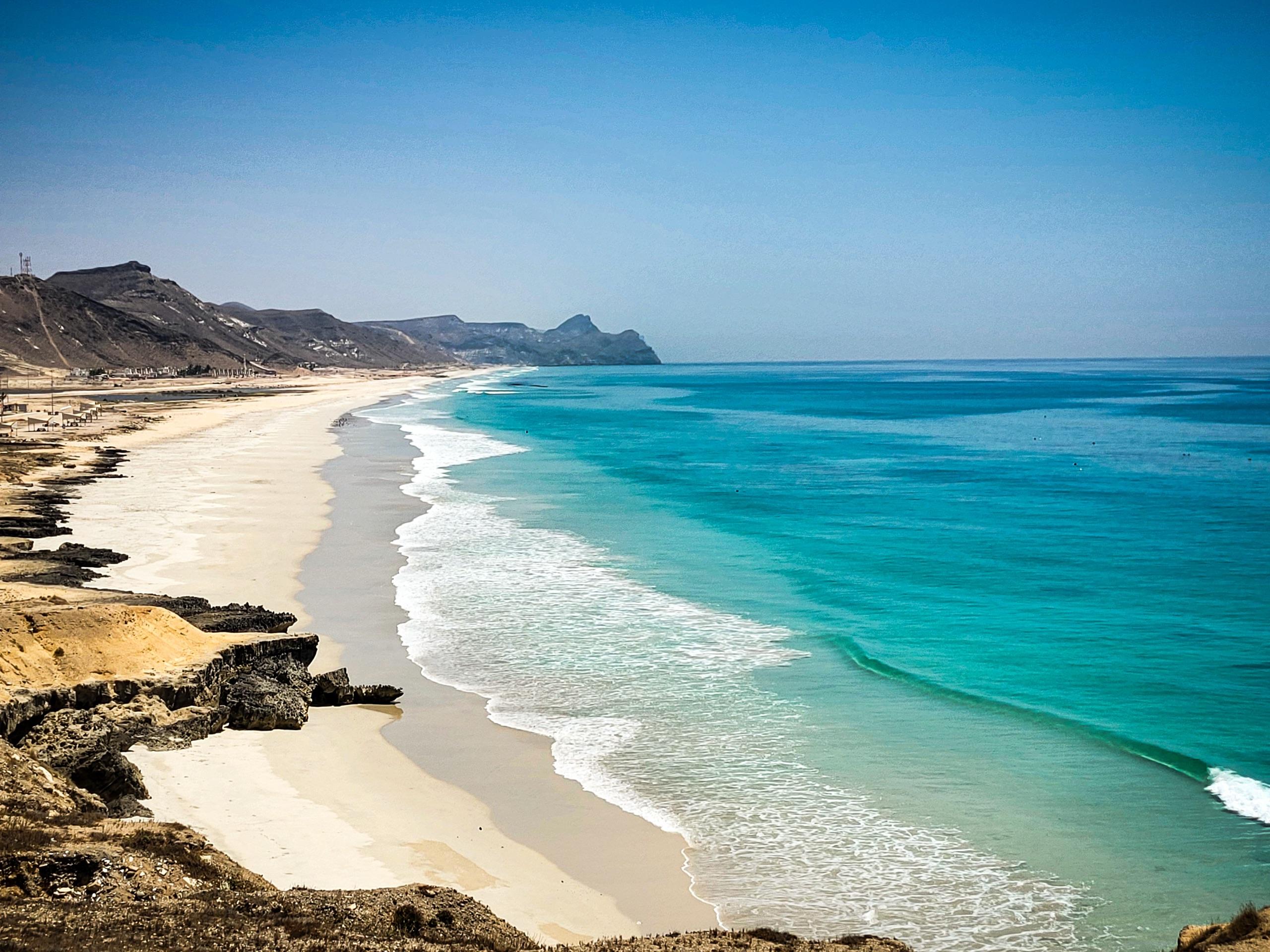
- Mughsail: a wide sandy beach below the mountains, calm in winter.
- Fazayah: bays between cliffs, clear water, no facilities.
In the khareef, police and civil defence warn every year against going into the sea. On public beaches, swim in a T-shirt and shorts. For all of Oman, see our beach holiday in Oman guide.
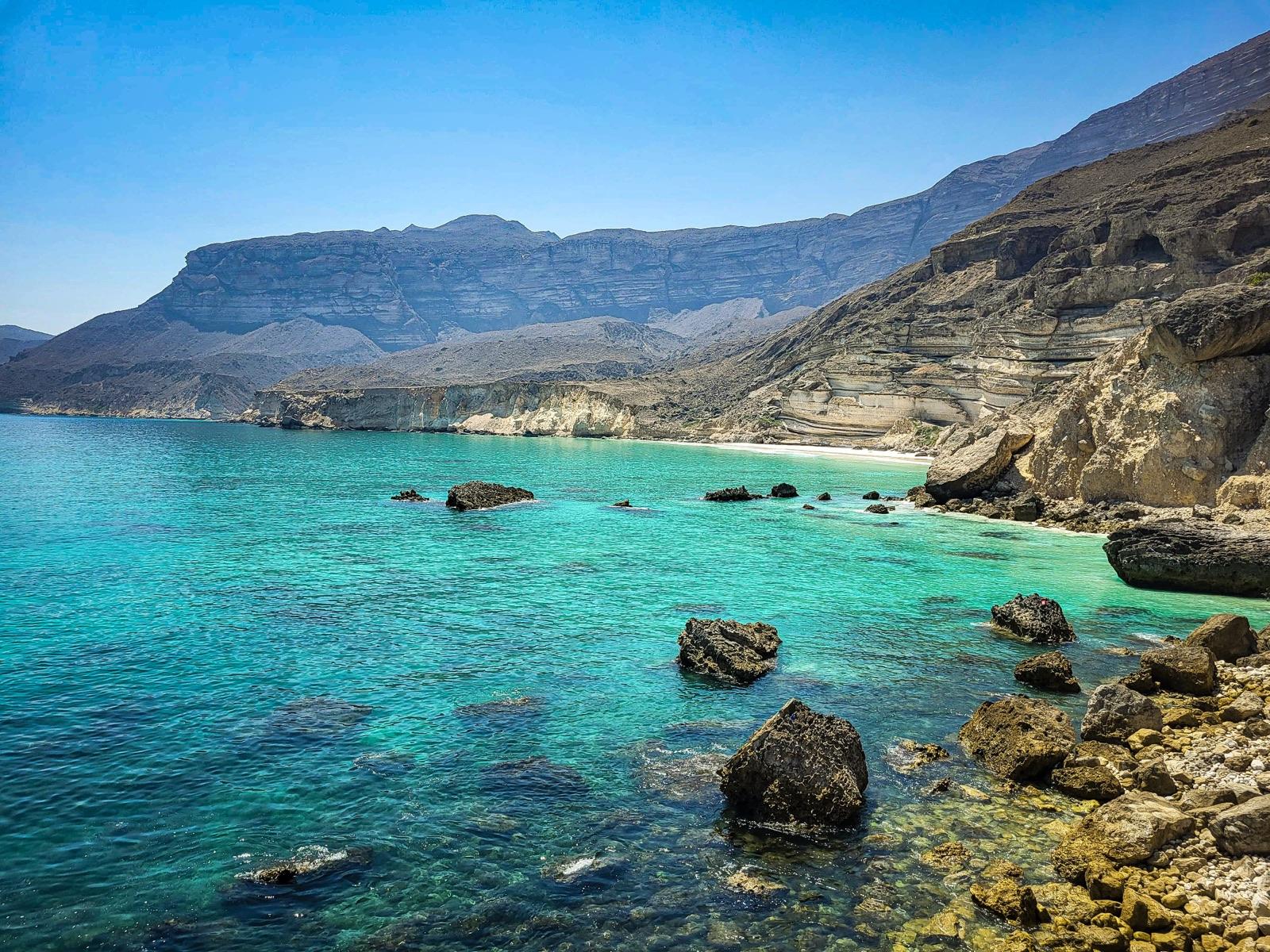
Salalah weather: winter or khareef?
Salalah is warm all year, at 27 to 33 °C (81 to 91 °F) by day. The seasons differ in sun, humidity and sea: in winter the sun shines for about 300 hours a month, in misty, drizzly July and August for only about 40.
| Feature | Winter (October to April) | Khareef (21 June to 21 September) |
|---|---|---|
| Daytime highs | 27 to 32 °C | 27 to 29 °C in July and August |
| Night-time lows | 19 to 24 °C | 24 to 25 °C |
| Sunshine | 260 to 315 hours a month | about 40 hours in July and August |
| Rain days | 0 to 2 a month | 7 to 8 in July and August, mostly drizzle |
| Sea | calm, about 25 to 28 °C | rough, swimming dangerous |
| Landscape | dry, brown slopes | green, misty, waterfalls |
| Crowds | quiet | peak season |
Salalah weather by month:
| Month | Day | Night | Sunshine hours |
|---|---|---|---|
| January | 27.5 °C | 18.7 °C | 290 |
| February | 28.4 °C | 20.0 °C | 257 |
| March | 30.2 °C | 21.9 °C | 298 |
| April | 31.8 °C | 24.4 °C | 308 |
| May | 32.8 °C | 26.6 °C | 335 |
| June | 32.0 °C | 27.3 °C | 200 |
| July | 28.5 °C | 24.8 °C | 44 |
| August | 27.1 °C | 23.7 °C | 42 |
| September | 29.3 °C | 24.3 °C | 188 |
| October | 31.0 °C | 22.6 °C | 315 |
| November | 31.3 °C | 21.6 °C | 305 |
| December | 29.1 °C | 20.3 °C | 297 |
Source: monthly averages from Oman's meteorological service for Salalah station via the WMO World Weather Information Service (1986 to 2009), sunshine hours from NOAA (1961 to 1990). Sea temperatures are a guide.
Best time to visit Salalah
The best time to visit Salalah is October to April for sun, beaches and a combined tour with the north, most comfortably November to March at 27 to 31 °C. For the green khareef, go in July or August, though the northern interior is then above 40 °C. October is the sweet spot: sun again, slopes often still green, few visitors. For every region and month, see the best time to visit Oman.
Getting to Salalah: flying or driving from Muscat
The quickest way to Salalah is the domestic flight from Muscat: Oman Air and SalamAir fly several times a day, taking 1 hour 30 to 1 hour 45 minutes depending on the schedule (as of October 2026). From the UK and the US you normally change in Muscat or at another Gulf hub.
Overland it is about 1,000 kilometres via Adam, Haima and Thumrait, 10 to 12 hours of driving. Driving only pays off on a coastal route with overnight stops, as on our 18-day tour.
How many days in Salalah?
You need at least three full days in Salalah, and four to five with Mirbat or a beach day. A three-day plan:
- East: Wadi Darbat, Jebel Samhan with Tawi Attair and the baobabs, Sumhuram or Taqah on the way back.
- Inland: Wadi Dawkah, the ruins of Shisr and sunset in the dunes of the Rub al Khali.
- West and city: Mughsail and the blowholes, Fazayah Beach, then Al Baleed and the Al Haffa souk.
Practical tips for Salalah
Car. A normal car will do for trips east and west. The Fazayah track and the Rub al Khali need a 4x4, and you only enter the dunes with a guide. Allow two to three hours of driving per day trip. In the khareef mist lies on the mountain roads, and at night camels wander onto the road. For licences, see international driving permit for Oman.
Dress. Dhofar is more traditional than Muscat. Cover shoulders and knees outside the hotel, and women wear a headscarf at the Bin Ali tomb and in mosques.
Safety. Advice differs by country (as of 16 October 2026). The UK FCDO does not advise against travel to any part of Oman. The US State Department rates the whole country Level 3, Reconsider Travel, and says do not travel to the Yemen border area. The Dutch and German governments advise against Musandam and the immediate Yemen border area. Salalah lies outside these areas, although drones hit the port of Salalah several times in March 2026. See is Oman safe?
Combining Salalah with a tour of the north
The easiest combination is the domestic flight: first Muscat, desert, mountains and wadis, then three to four nights in the south. Overland, only the east coast route from Ras al Jinz is worthwhile, with two driving days via Duqm to Mirbat. Two weeks in the north only? See our Oman itinerary for 14 days.
Want to add Salalah to your trip? With a tailor-made Oman tour we plan the season, nights and order with you.