Nizwa: the old capital in the heart of Oman
Oasis town in the interior · 1.5 hours' drive from Muscat
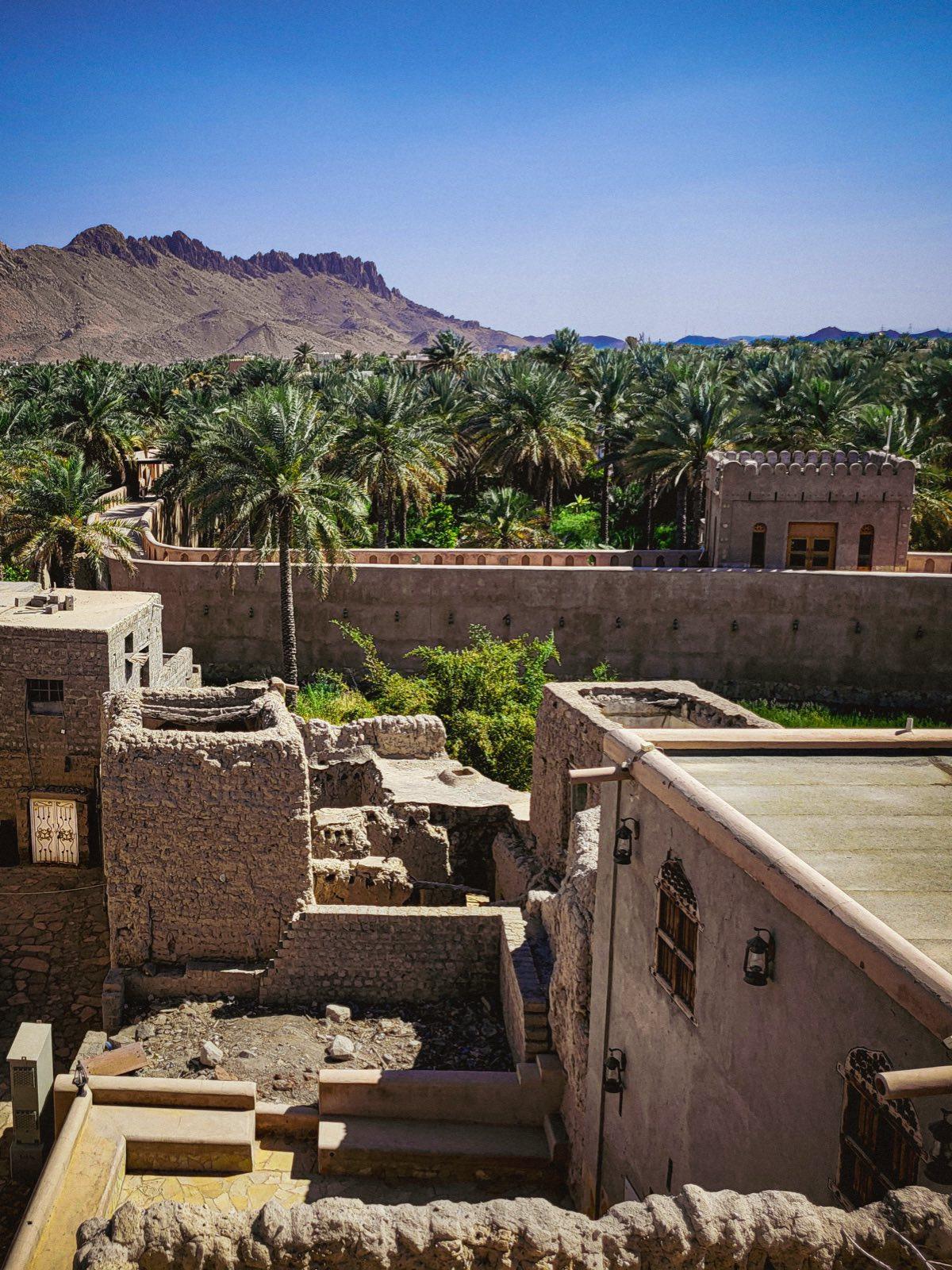
Nizwa is the historic capital of Oman and the main town of the interior. It lies about 140 kilometres from Muscat at the foot of the Hajar Mountains and is known for its seventeenth-century fort with its round tower, its souk with the Friday goat market and its centuries-old falaj irrigation. On almost every tour, Nizwa is the base for Jebel Akhdar, Jebel Shams and the forts of Bahla and Jabreen.
Compiled by Lars Janssen · updated September 2026
At a glance
- Region
- Ad Dakhiliyah, interior
- From Muscat
- approx. 140 km, 1.5 hours on the motorway
- Best time
- October to March
- Length of stay
- 2 nights
- Altitude
- approx. 500 metres
- Don't miss
- goat market on Friday morning
Free consultation, reply within 24 hours
Why Nizwa is on almost every Oman itinerary
Leave Muscat and drive inland and you will almost inevitably end up in Nizwa. The town sits at the junction of the routes to Jebel Akhdar, Jebel Shams and the forts of the Dakhiliyah, which makes it the natural base for the mountain section of a tour. But Nizwa is more than a convenient overnight stop. Until well into the twentieth century this was the religious and political centre of the imamate, and you can still feel it: the town is more conservative and quieter than the capital, the souk is a real market and the fort still dominates the skyline.
The contrast with Muscat is exactly what makes a journey through Oman interesting. Where the capital sits on the coast and looks modern, Nizwa is an oasis town among date palms, with mudbrick houses, water channels and mountains on every side.
What to do in Nizwa
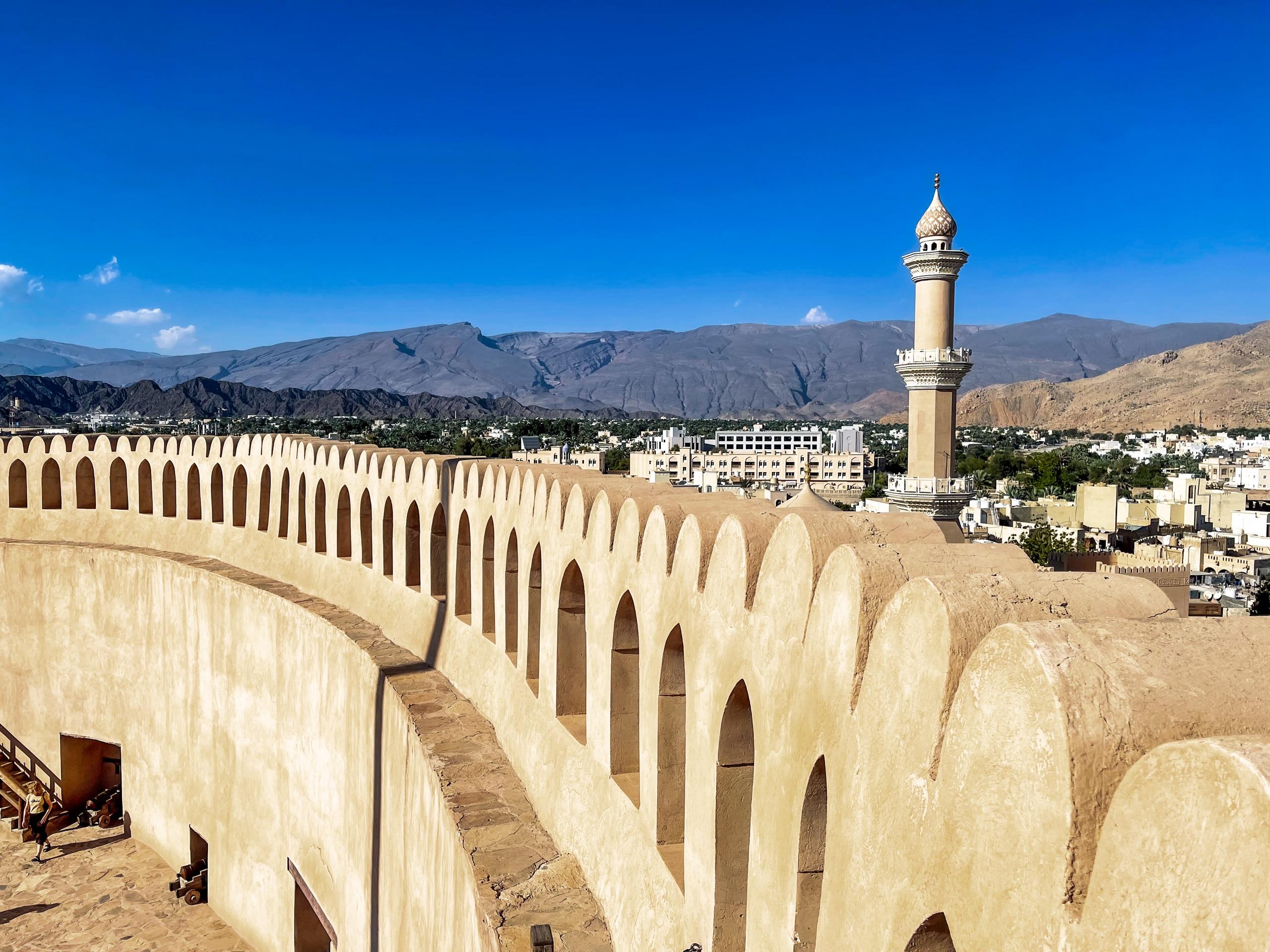
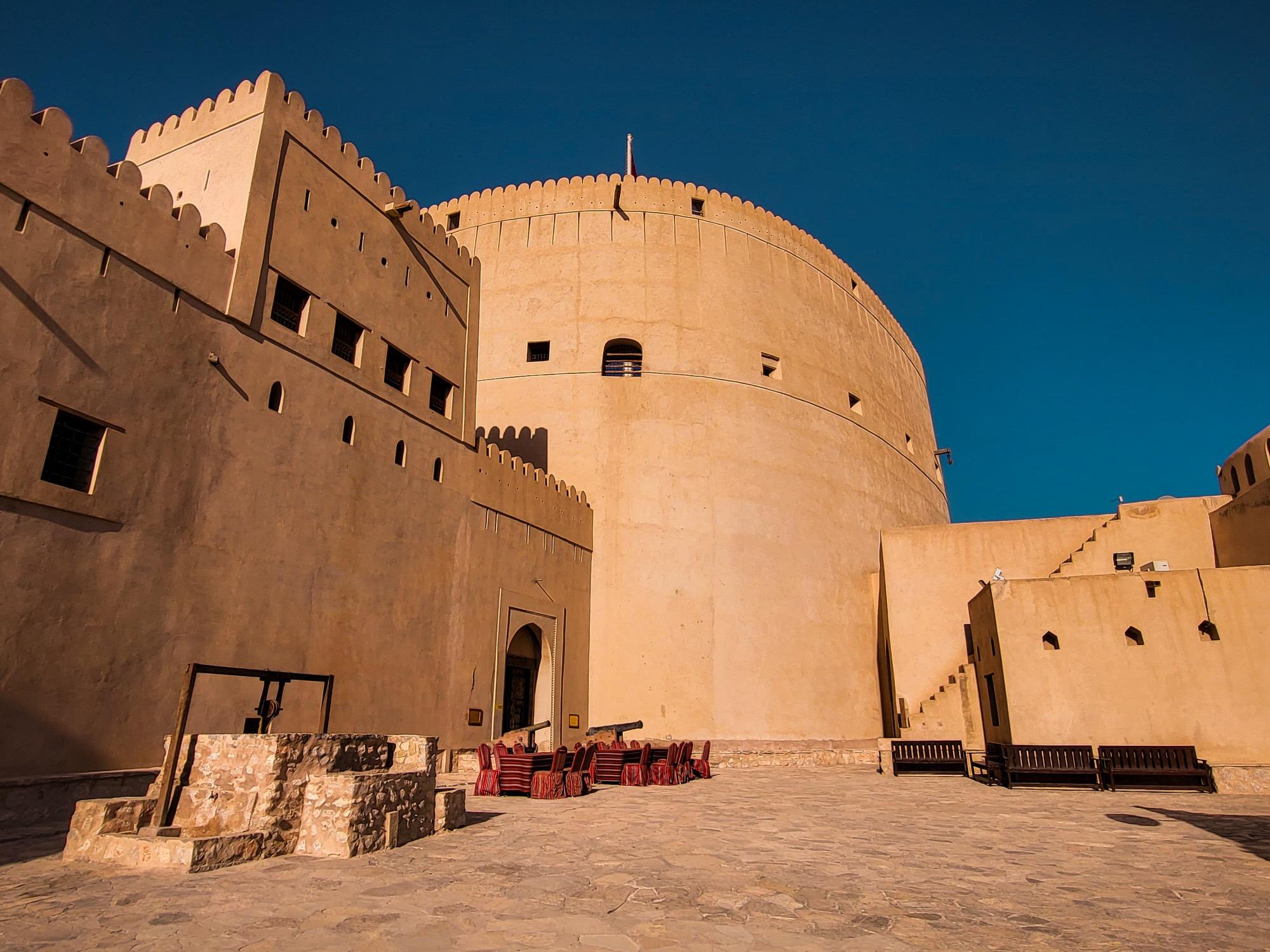
- Nizwa Fort: Oman's best-known fort, built around 1650 under Imam Sultan bin Saif. The round main tower is about 30 metres high and 36 metres across. From the top you look out over the palm oasis and the town to the mountains. Allow an hour and a half, including the museum section.
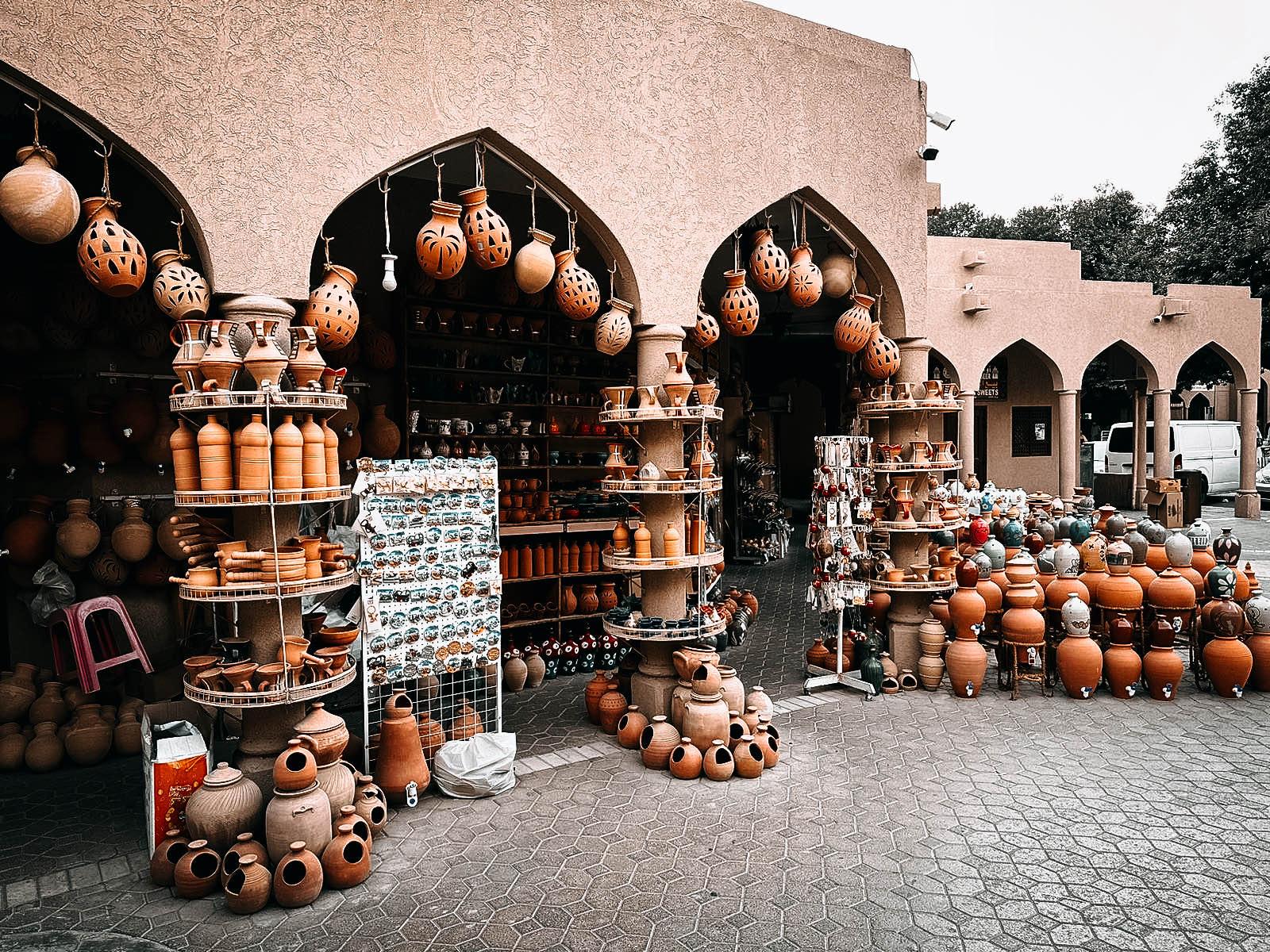
- The souk: right next to the fort. Dates in dozens of varieties, silver khanjars, pottery from Bahla, spices and Omani halwa. The halls have been renovated, but the trade is genuine.
- The goat market: every Friday morning from about seven o'clock, and over again by nine. Farmers from across the region walk goats, sheep and sometimes cattle in circles past the buyers. One of the most authentic mornings you can have in Oman.
- Falaj Daris: the largest falaj irrigation channel in Oman, just outside town, a UNESCO World Heritage Site since 2006. A small park and a short visit, but it explains why a town has been able to exist here for centuries.
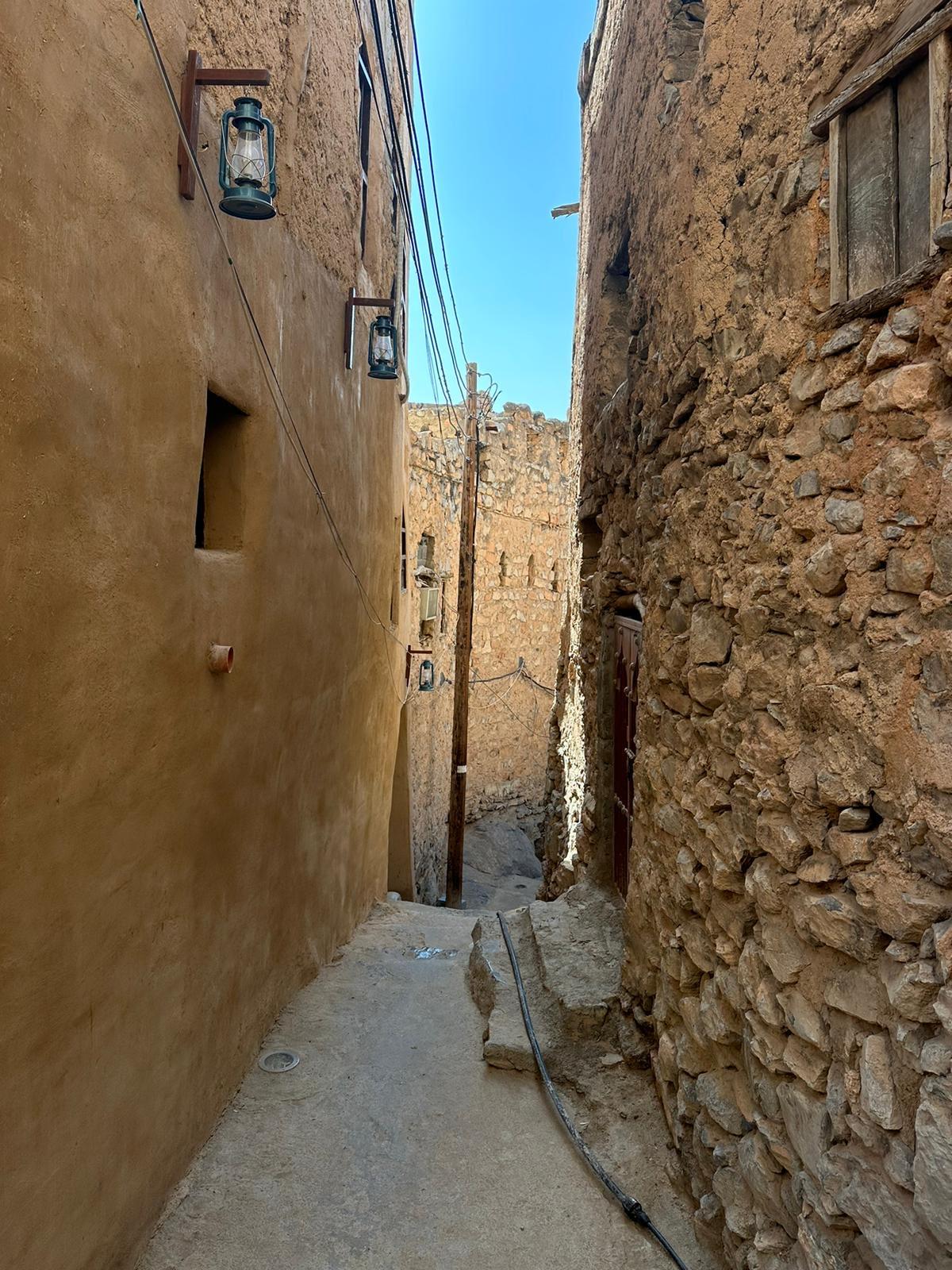
- Birkat Al Mouz: a half-abandoned mudbrick village with terraces and a falaj, 25 kilometres towards Jebel Akhdar. Ideal as a short stop on the way up.
- Bahla and Jabreen: the enormous Bahla Fort (UNESCO since 1987) and the refined Jabreen Castle with its painted ceilings lie 40 kilometres to the west. Half a day for both.
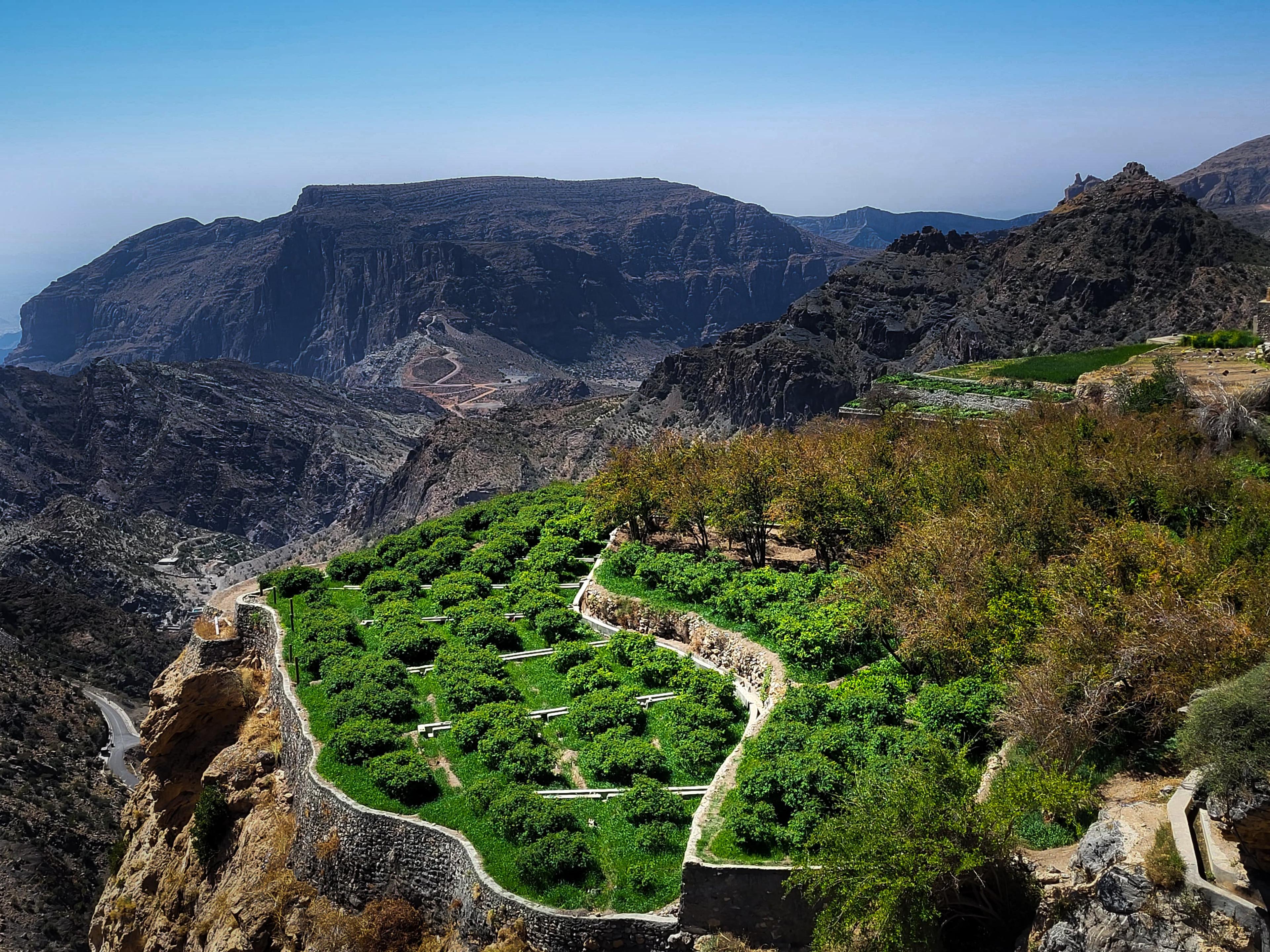
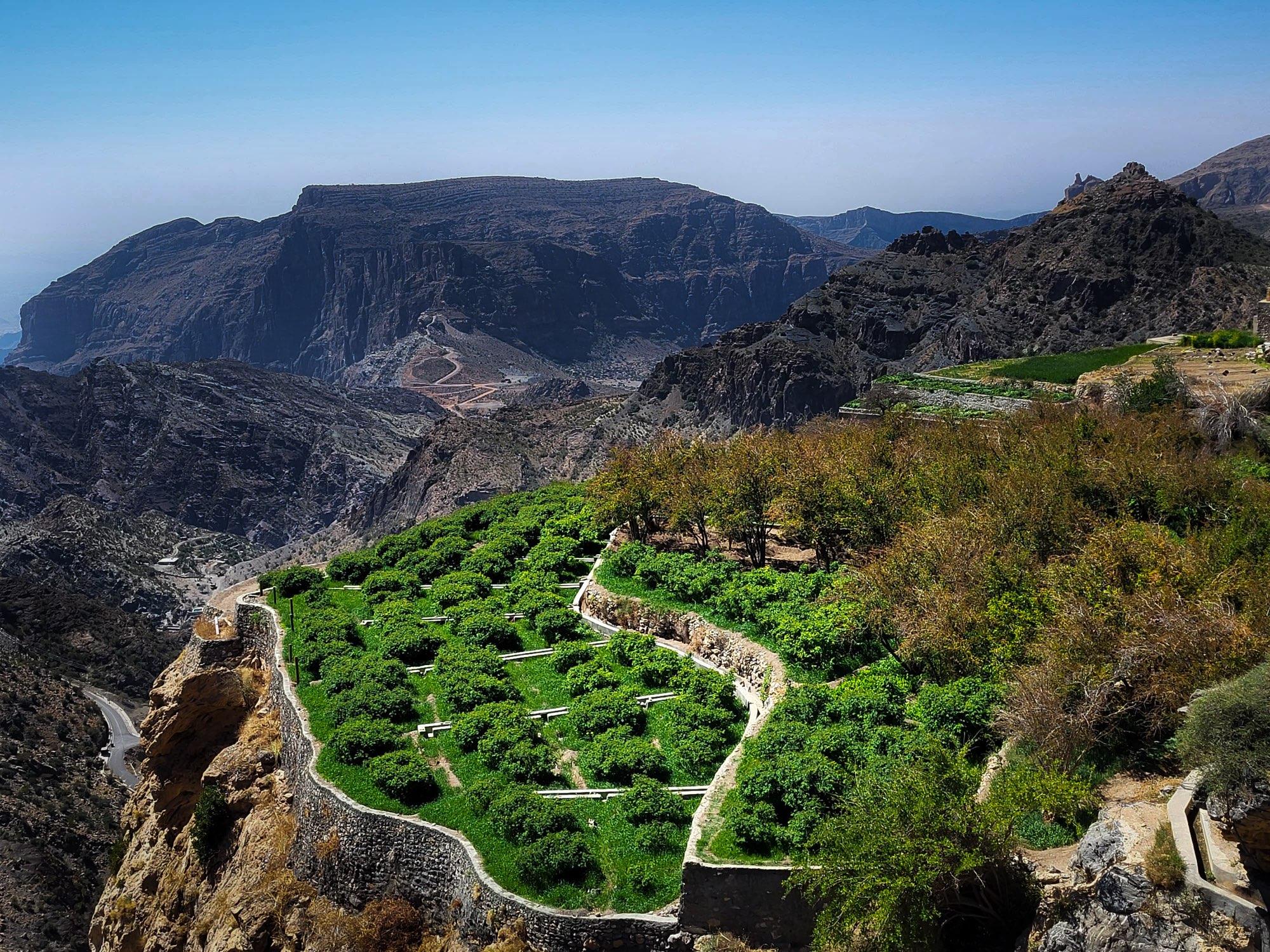
- Misfat al Abriyeen: a mountain village with terraced gardens, narrow lanes and houses built onto the rock, forty-five minutes' drive. Often combined with Jebel Shams.
- Oman Across Ages Museum: the modern national museum in Manah, twenty minutes from Nizwa, opened in 2023. Very well done and a pleasant counterpoint to all the mudbrick heritage.
Practical information
Getting there. From Muscat take Route 15, a wide motorway through the Sumail Gap. An hour and a half, with no tolls. A normal car is fine for Nizwa itself and the forts. If you want to go up Jebel Akhdar, a 4x4 is compulsory: at the police checkpoint at the foot of the mountain you will be turned back without one.
Dress. Nizwa is traditional. Covered shoulders and knees are the norm in the souk and the fort, for men and women alike. A light scarf is useful.
Climate. From October to March it is 22 to 30 degrees by day and pleasant in the evening. In summer it climbs well above 40 degrees, so plan the fort for early morning. Read more about the best time to visit Oman.
Combine with. Nizwa is central: Jebel Shams is an hour and a half away, Jebel Akhdar an hour, and the Wahiba Sands about two hours via the road past Ibra.