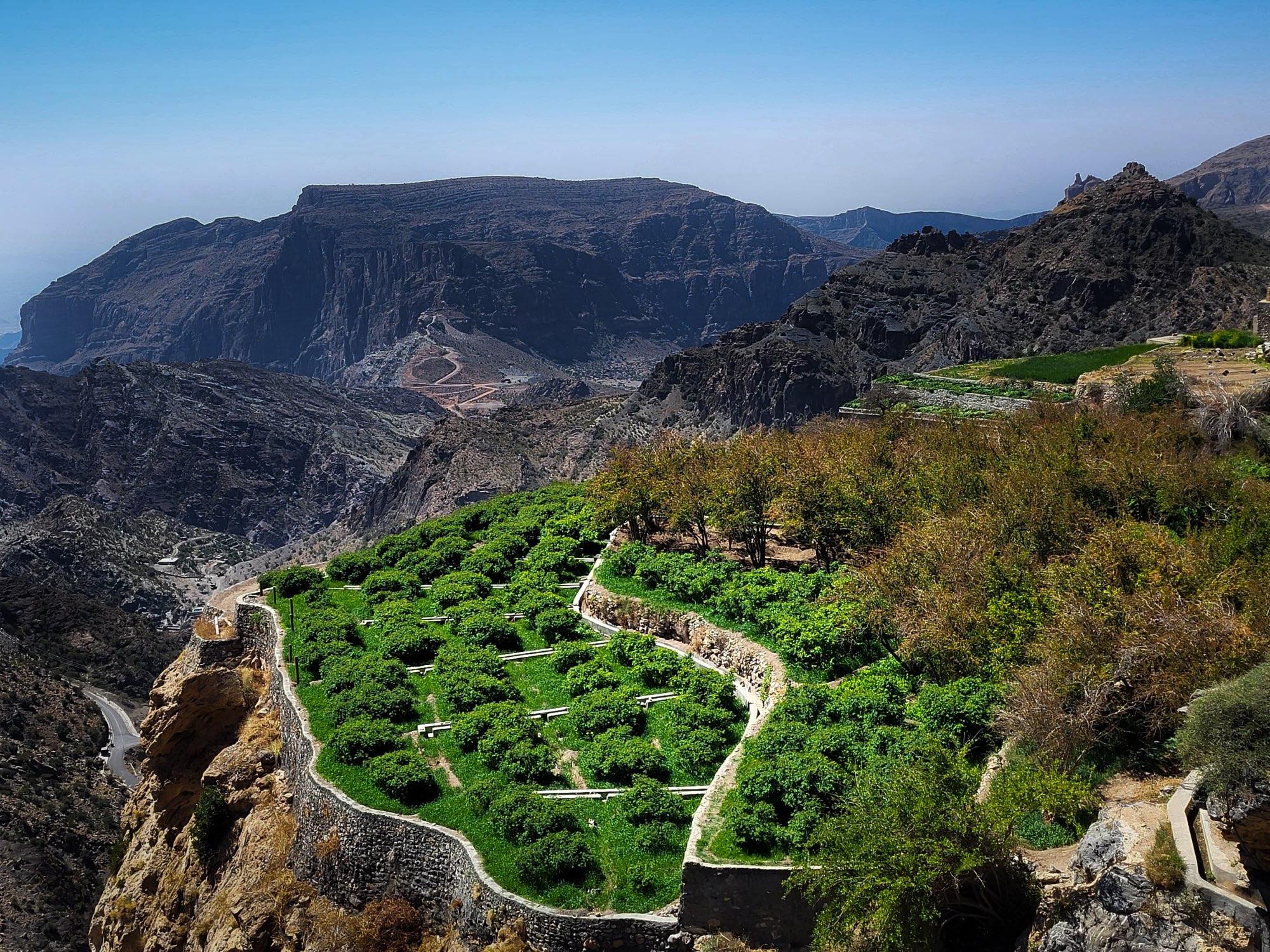
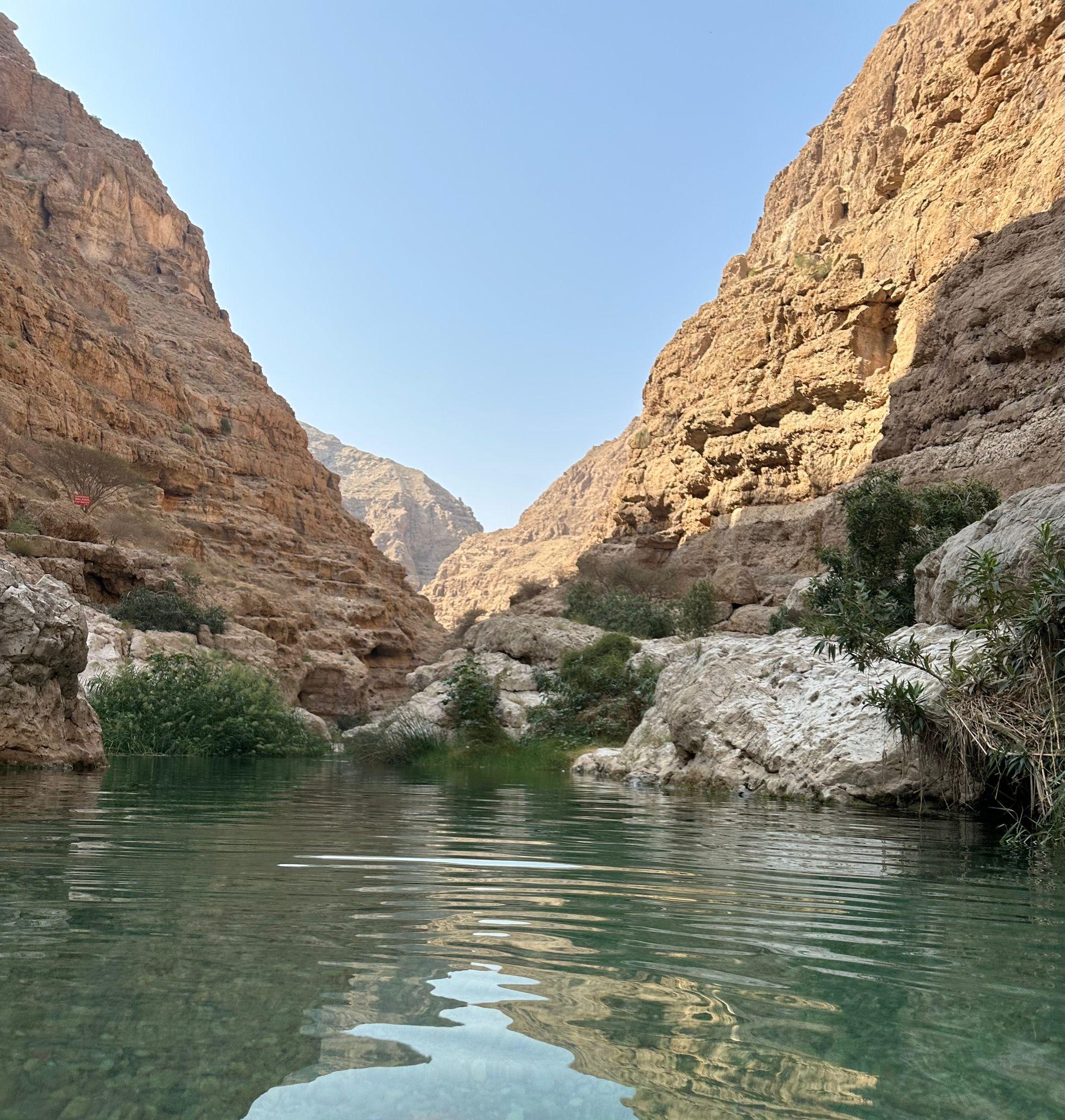
Wadi Shab: swimming through a gorge, just under two hours from Muscat
Coastal wadi near Tiwi · 1 hour 45 from Muscat
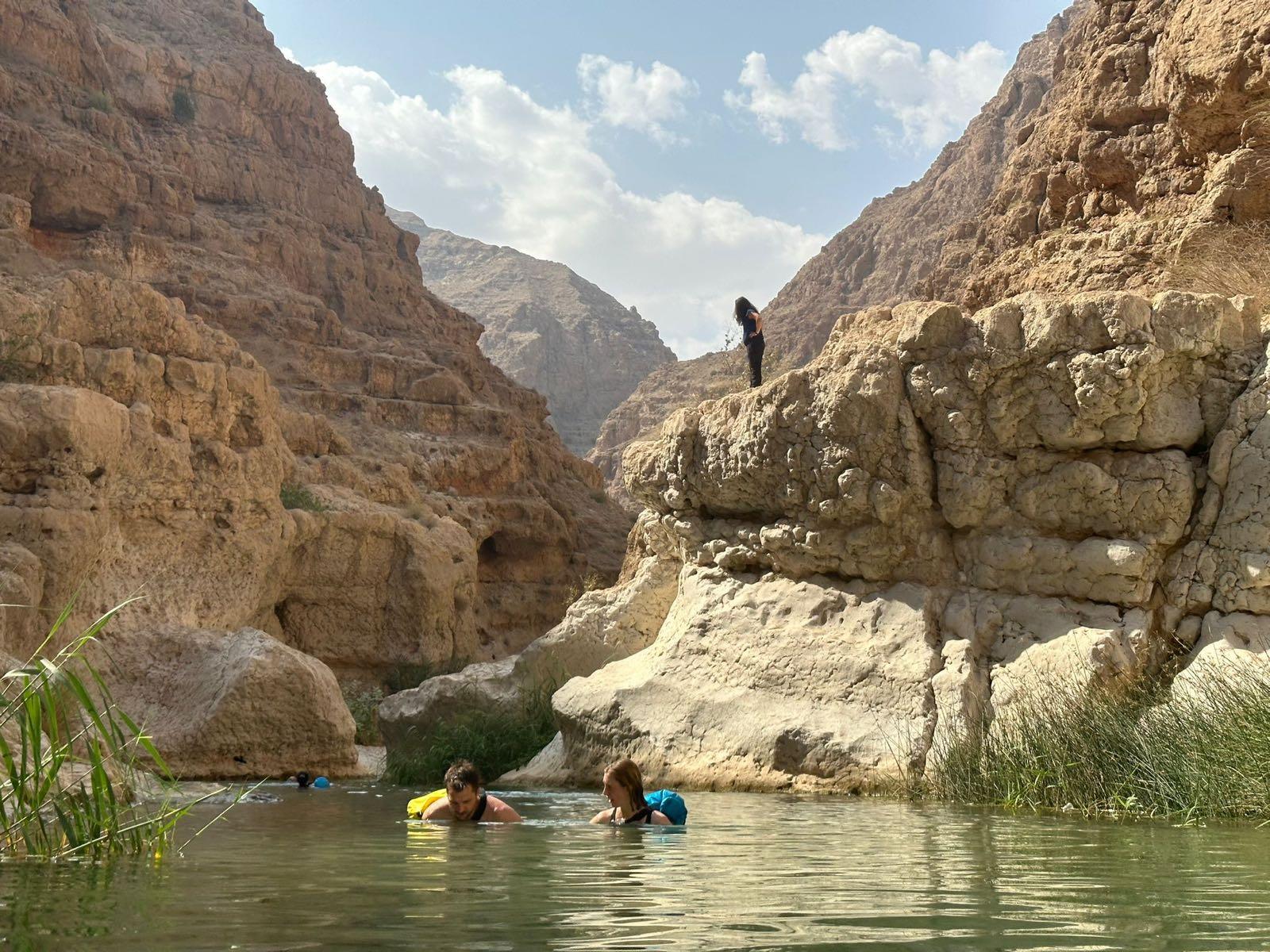
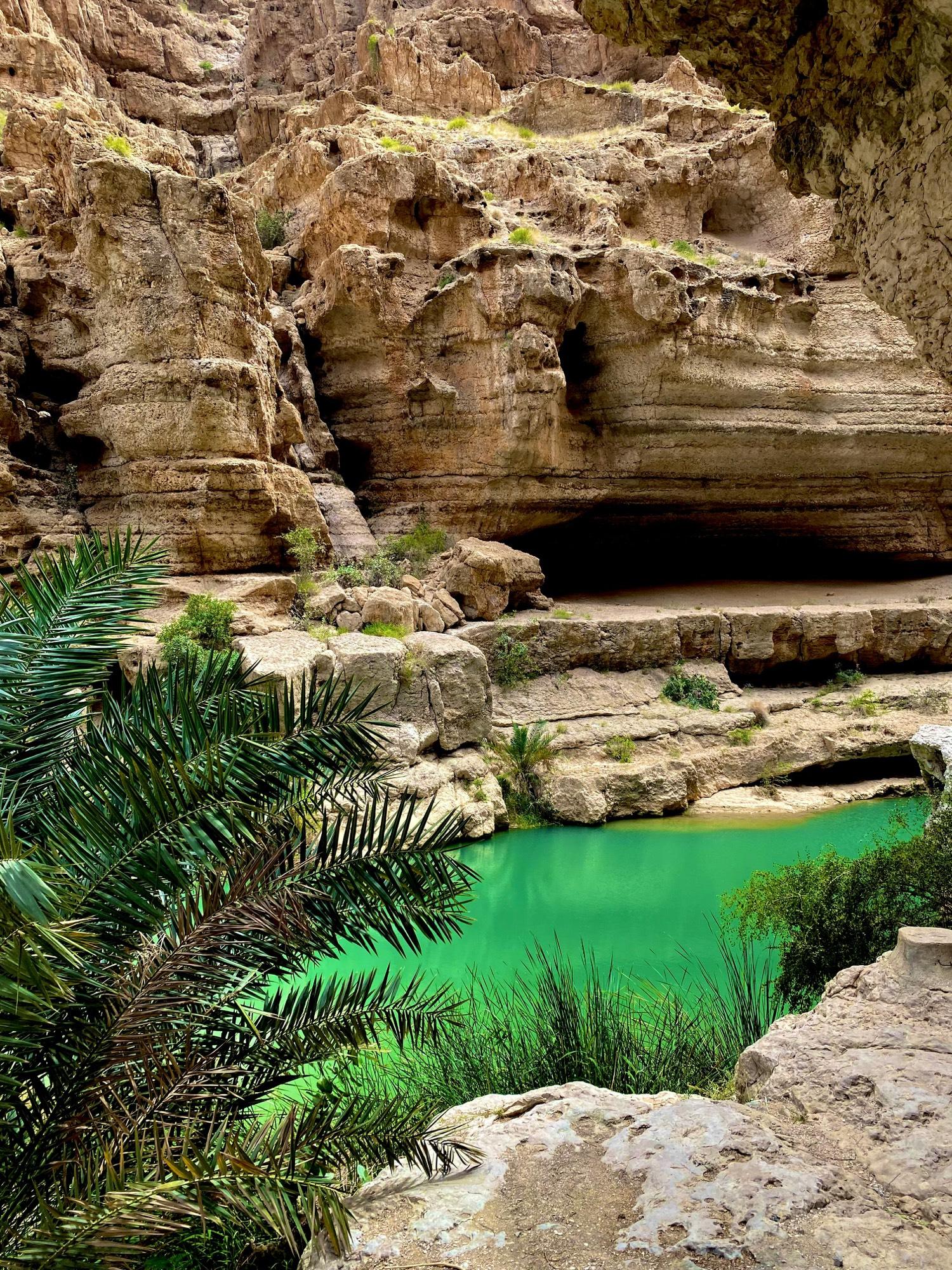
Wadi Shab is the best-known and most visited wadi in Oman, on the east coast near the village of Tiwi, a 1 hour 45 minute drive from Muscat. After a short boat crossing you walk for 45 minutes to an hour through a gorge of palms and rock walls to a series of turquoise pools, and if you swim on, you pass through a narrow slot into a cave with a waterfall. Together with Bimmah Sinkhole and neighbouring Wadi Tiwi, it makes up the classic nature day between Muscat and Sur.
Compiled by Lars Janssen · updated 10 October 2026
At a glance
- Region
- Ash Sharqiyah, east coast near Tiwi
- From Muscat
- approx. 140 km, 1 hour 45 on the coast road
- Best time
- October to April, early in the morning
- Duration
- 3 to 4 hours including swimming
- Walk
- approx. 2.5 km each way, 45 to 60 minutes
- Boat
- approx. 1 rial pp return, runs until about 17:00 (2026)
- Bring
- water shoes, dry bag, a shirt over your swimwear
Free consultation, reply within 24 hours
Why Wadi Shab is so popular
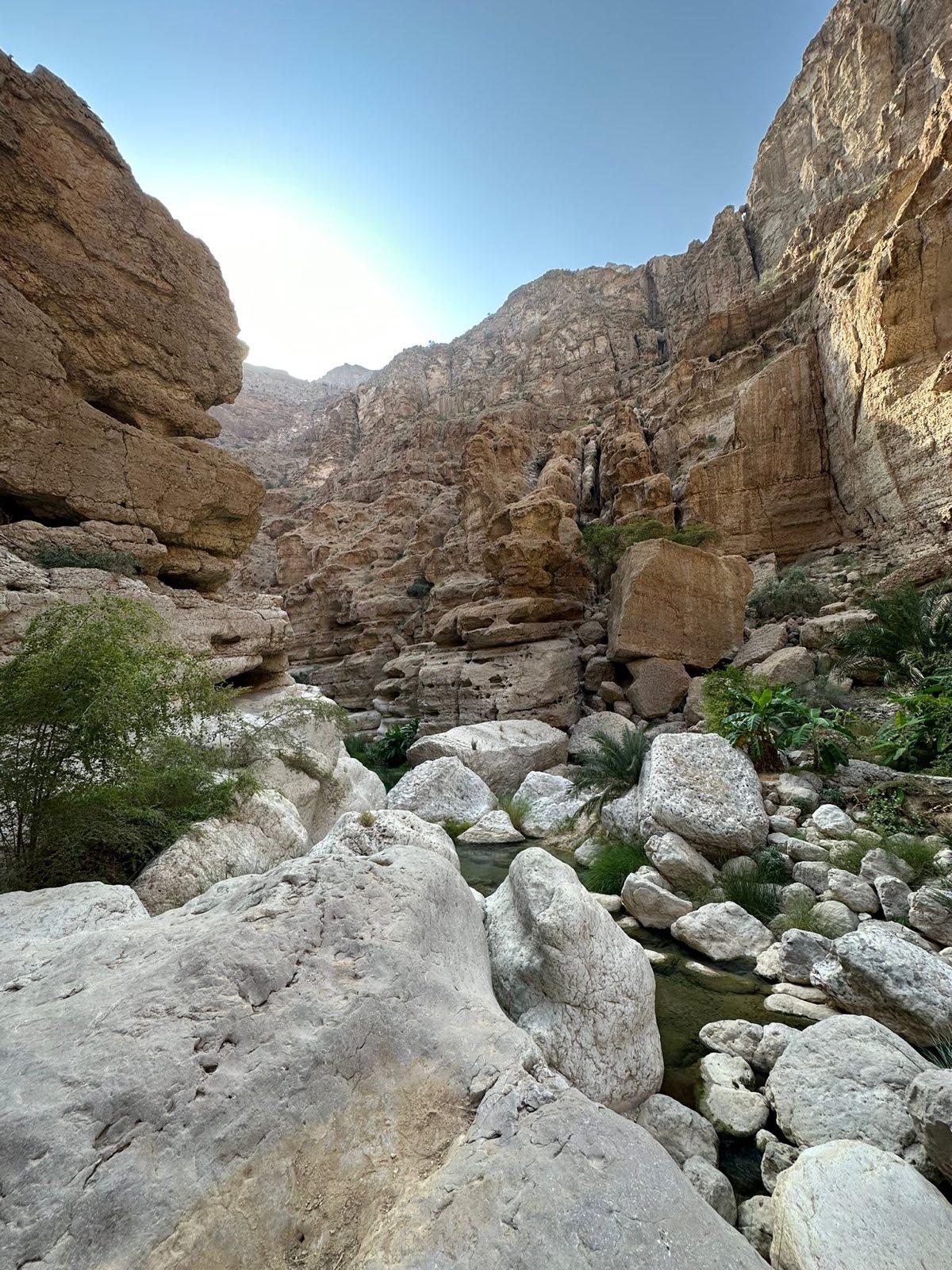
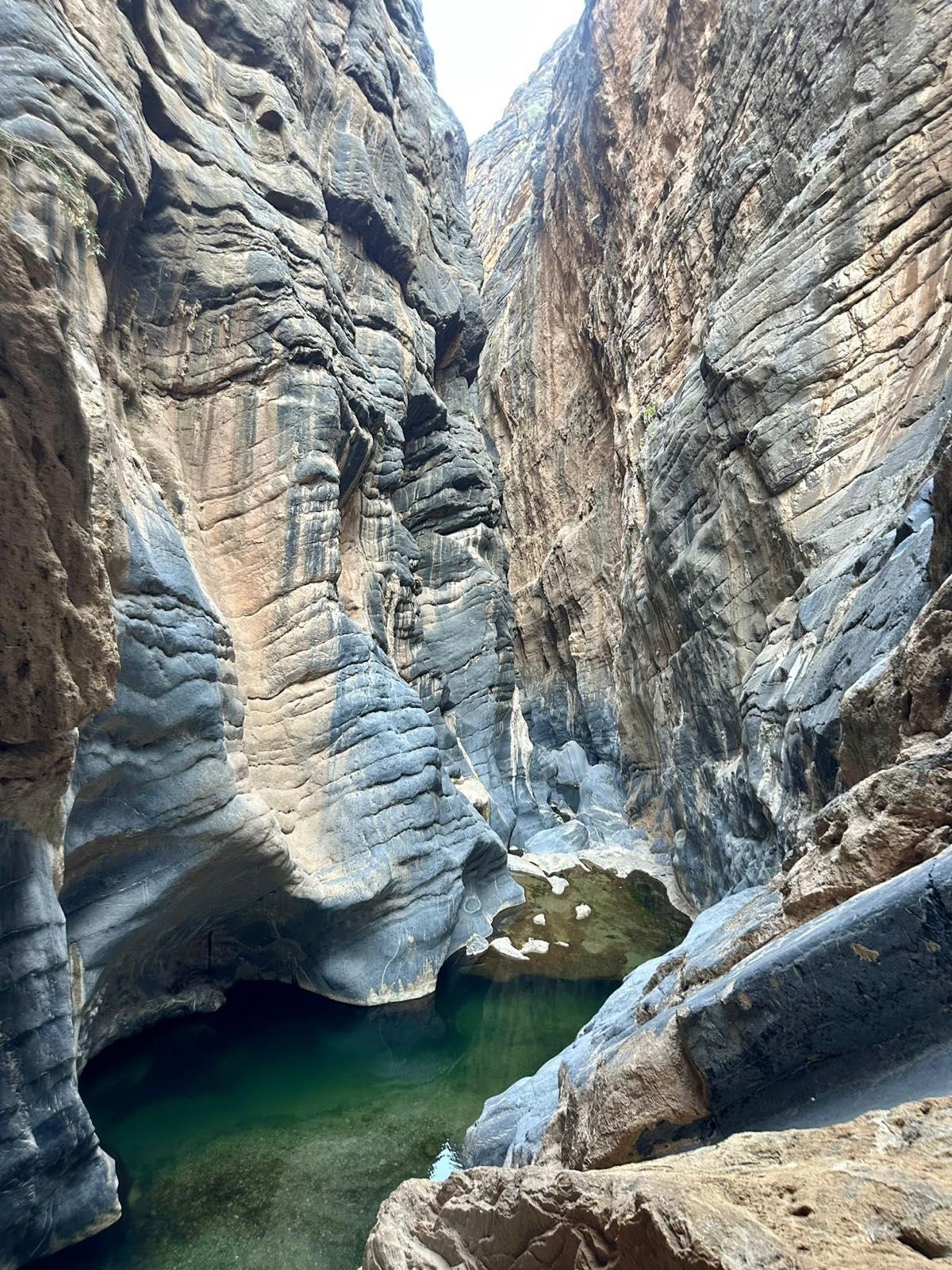
Oman has countless wadis, but Wadi Shab has the combination everyone is looking for: a walk short enough for any age, water that is clear and turquoise, and a real reward at the end. You start under the coast-road bridge, get ferried across for a rial per person and follow the path past plantations, a falaj and ever-higher rock walls. After 45 minutes to an hour you reach the first pool. From there you continue swimming, three pools in a row, to a slot in the rock just wide enough for your head. Behind it lies a cave with a waterfall, lit by an opening above.
If you picture Oman as mostly dunes, Wadi Shab comes as a surprise: a green gorge with date palms and running water. The route runs over narrow paths and boulders, with some scrambling but nothing extreme.
Popular also means busy. By mid-morning the tour groups from Muscat arrive and the first pool gets as crowded as a public swimming pool. If you are at the boat by eight, you have the gorge to yourself for an hour. On the Omani weekend, Friday and Saturday, it is busier still.
What to do around Wadi Shab
Around Wadi Shab you can combine the hike with Bimmah Sinkhole, Wadi Tiwi and Fins Beach, all within half an hour's drive.
- The walk and the pools: 45 minutes to an hour on the way in, on a path with some scrambling, then swimming to the cave. Allow three to four hours in total. The swimming section is for confident swimmers; if you prefer not to swim, enjoy the first pool.
- Bimmah Sinkhole: half an hour's drive back towards Muscat, a collapsed limestone cave twenty metres deep with turquoise water, reached by a staircase. A short visit of half an hour, ideal as a warm-up.
- Wadi Tiwi: the neighbouring valley, with a narrow road winding ten kilometres up past villages, banana plantations and pools. Quieter than Wadi Shab and largely drivable in a 4x4; on foot, the upper villages are the finest.
- Fins Beach: white sand and rock, a few kilometres back towards Muscat. For a break or a picnic after the wadi.
- Tiwi: the fishing village between mountains and sea where you stay if you do the coast in two days.
The route through Wadi Shab step by step
A visit to Wadi Shab takes 3 to 4 hours, about two of them on foot.
| Section | Distance or time | What to expect |
|---|---|---|
| Boat across the creek | a few minutes | approx. 1 rial pp return, cash |
| Walk to the first pool | approx. 2.5 km, 45 to 60 minutes | flat at first, then boulders and slippery rock |
| Swim through three pools | 15 to 30 minutes | shallow start, then deep water |
| Slot and cave | a few metres | sideways through the slot, a waterfall in the cave |
The boat and the car park
The car park under the bridge is free but fills up on peak days. There are toilets and a small café by the car park, and no facilities at all beyond the crossing. The boat costs about 1 rial per person return, in cash. There is no official timetable: according to visitors in 2025 and 2026 the first boat leaves between 7:00 and 8:00 and the last around 17:00, and none run when the water is high after rain. A small shop at the landing sells dry bags and water shoes and rents out life jackets, but do not count on it and bring your own if you can. Since May 2025 the state-owned OMRAN has been developing the wadi into a tourist destination. In early October 2026 no entry fee had been announced, but prices and facilities may change.
The cave with the waterfall
At the end of the third pool you swim sideways through a slot a few metres long, with your head above water at normal levels. There is nowhere to stand in the cave and only a few spots where you can hold on to the rock wall. If you are claustrophobic, it is better to skip the slot.
Is Wadi Shab safe? The risks and how to manage them
For confident swimmers who go in dry weather and start early, Wadi Shab is a manageable outing, but it is not risk-free. The risks come down to four things: deep water, slippery rock, flash floods after rain and heat.
- Deep water. The third pool and the cave are deep, with nowhere to stand. Weaker swimmers should bring a life jacket or stay at the first pool, and children should only swim to the cave if they swim well, and then with a life jacket. The rope beside the waterfall, which visitors climb to jump into the water, is not an official fixture: we advise against it.
- Slippery rock. The algae-covered rocks around the second and third pools and the wet stretches of path are the most slippery. Wear water shoes with grip, not flip-flops.
- Flash floods. After rain in the mountains a wadi can fill within minutes, even when it is dry on the coast, so do not go when rain is forecast. After heavy rain the water often stays murky for days, the route can be impassable and the boat may not run. In October 2024, after tropical depression Al Sayyal, the Ministry of Heritage and Tourism asked people not to organise trips to Wadi Shab until the end of the month because of the high water and damage in the valley (Times of Oman, 17 October 2024).
- Heat. From May to September daytime temperatures on the coast reach 36 to 40 °C with high humidity, and there is little shade, so start as early as possible.
For safety in the rest of the country, see is Oman safe.
What to bring
- water shoes with grip
- a dry bag for your phone and car key
- at least a litre of water each, more in the warm months
- sunscreen, a hat and a shirt over your swimwear
- a life jacket if you are not a confident swimmer
- cash for the boat
Practical information
Getting there. From Muscat on Route 17, the coast road towards Sur: about 140 kilometres and 1 hour 45 minutes. The car park is under the bridge at Tiwi, and the access road is paved. On maps and in official notices the wadi also appears as Wadi Ash Shab or Wadi Al Shab. Take only what fits in your dry bag and leave nothing visible in the car.
Dress and behaviour. Wadis are also where Omani families come to picnic, so rather than swimming in just a bikini or trunks, wear a shirt or shorts over them. That is the norm, and it is appreciated.
Best time of day. October to April, before nine in the morning. In summer the water is wonderful but the walk is hot, so go even earlier. Early starters walk mostly in the shade, and the water looks most turquoise when the sun reaches it around 10:00 to 11:00, on your way back. More on seasons in the best time to visit Oman.
Combine with. Sur and Ras al Jinz: Sur is an hour further along the coast, and the turtles of Ras al Jinz another 45 minutes beyond. Inland lie Wadi Bani Khalid and the Wahiba Sands, and Muscat is 1 hour 45 back.