Jebel Akhdar: the Green Mountain at two thousand metres
High plateau in the Hajar · 2 hours' drive from Muscat
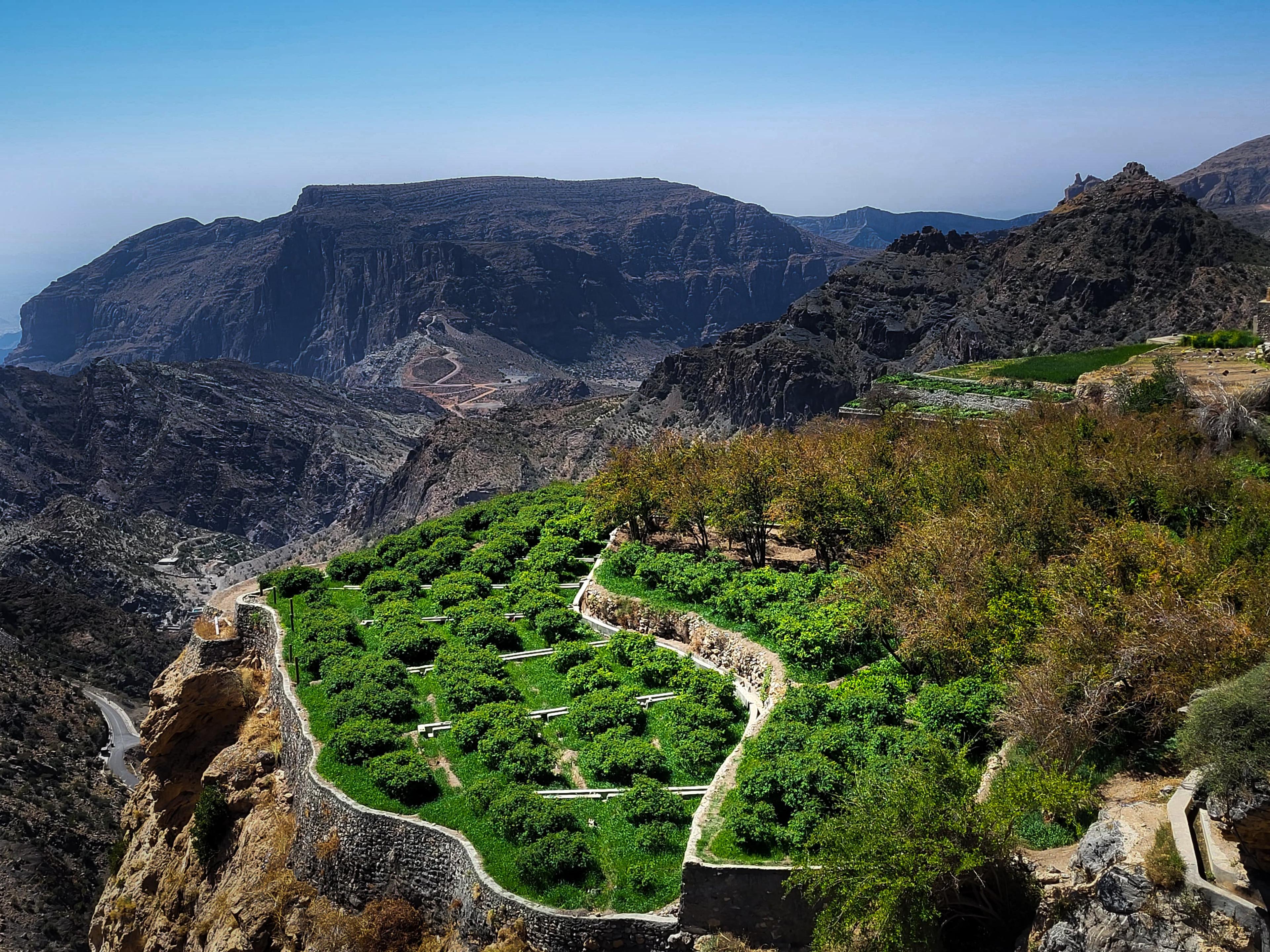
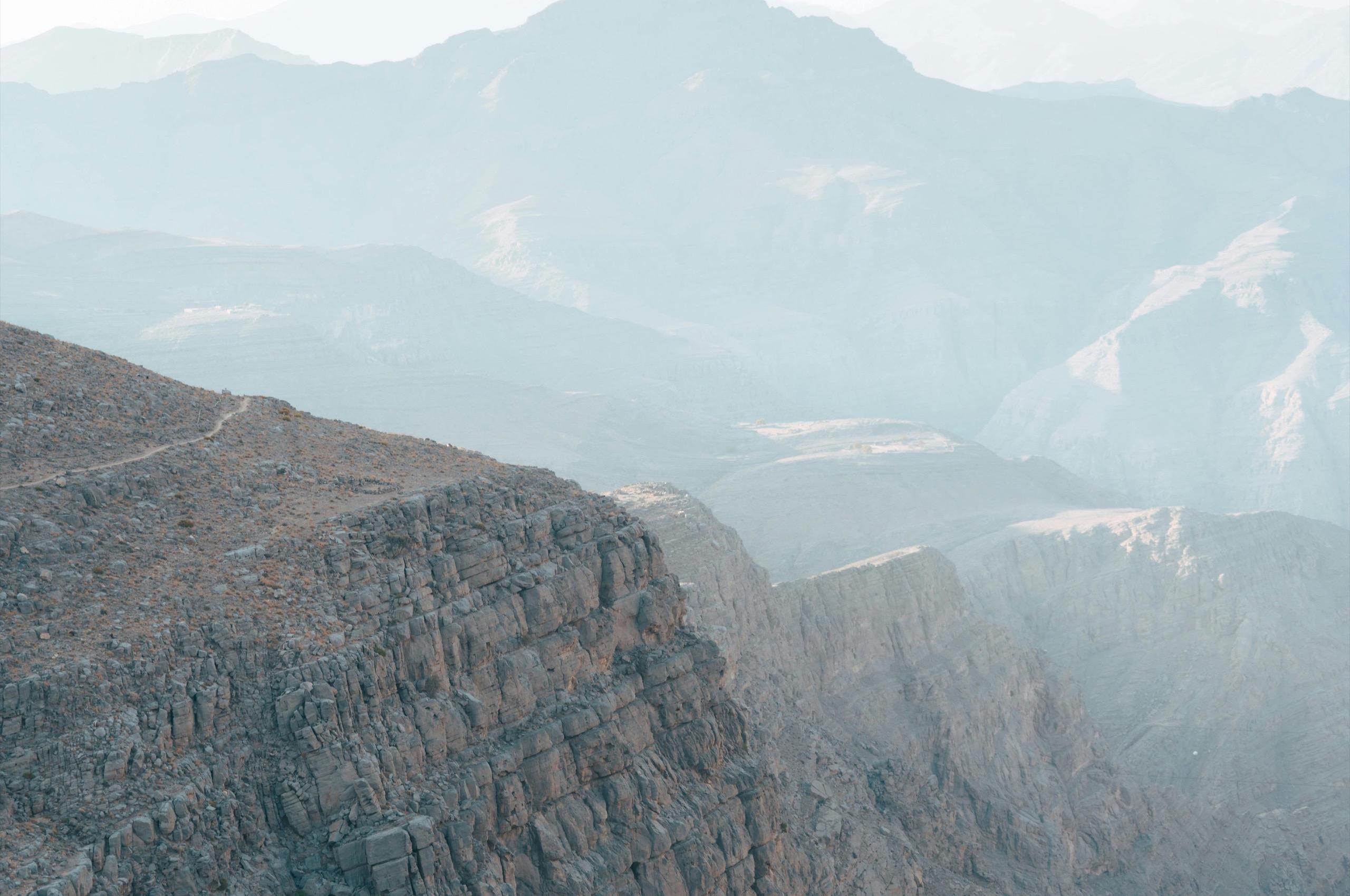
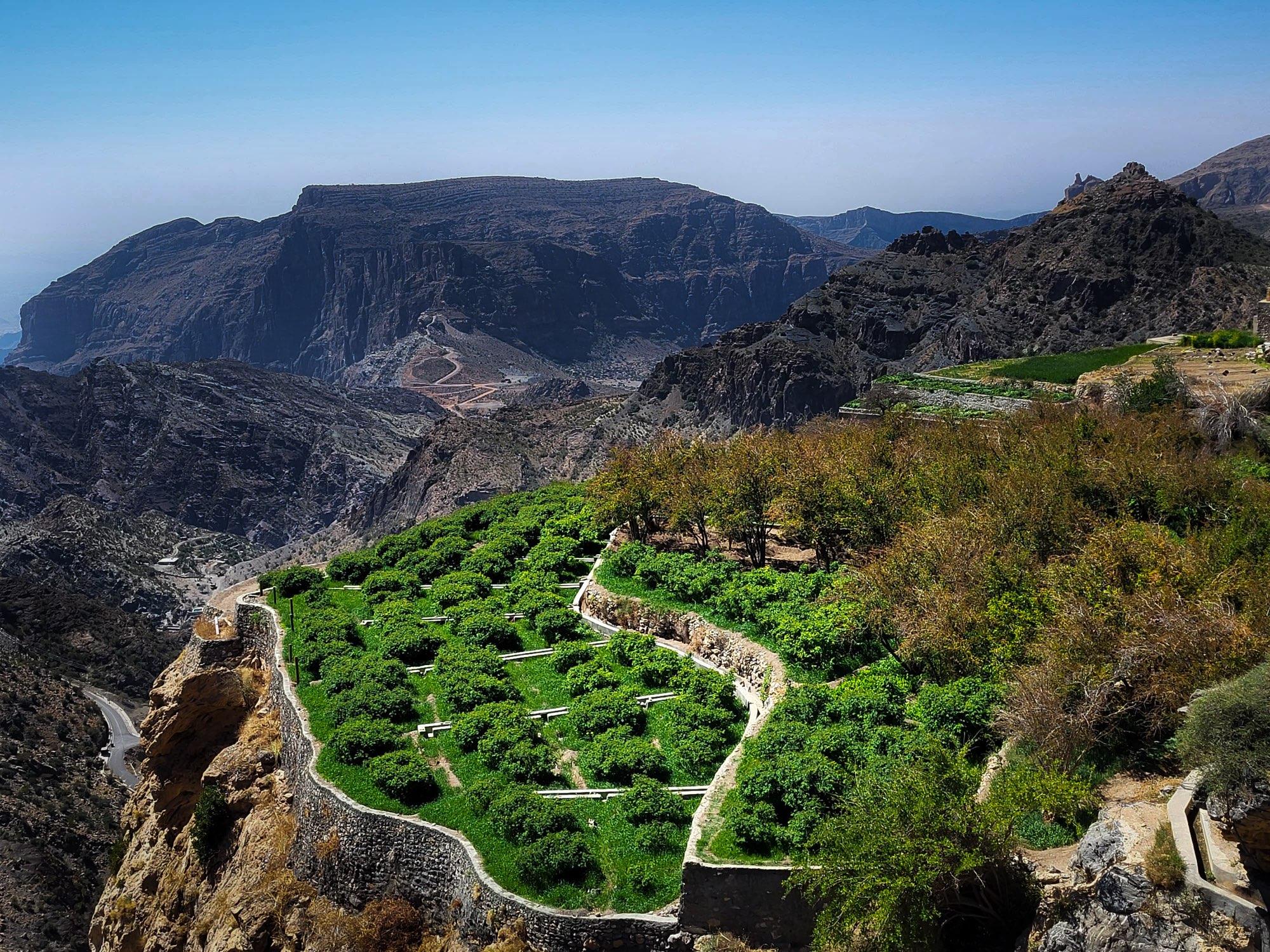
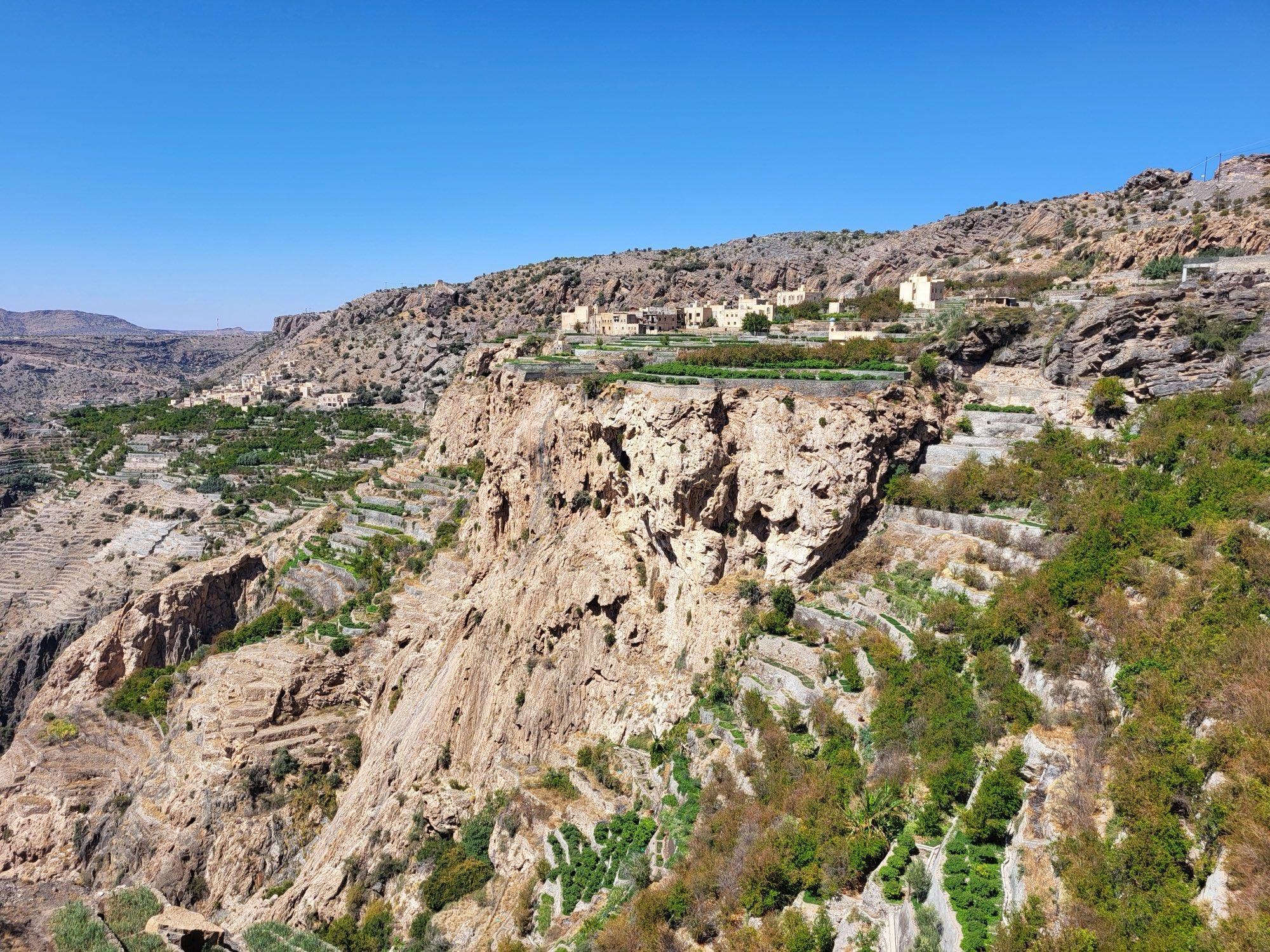
Jebel Akhdar, the Green Mountain, is the high plateau of the Hajar Mountains at around two thousand metres, an hour's drive above Nizwa. The name refers not to forests but to the terraces: centuries-old stepped gardens on the mountainside where pomegranates, walnuts, apricots and the famous Damask roses grow. The climate is ten to fifteen degrees cooler than on the coast, the villages sit on the edge of a gorge, and the Three Village Walk along those terraces is one of the finest short hikes in Oman.
Compiled by Lars Janssen · updated October 2026
At a glance
- Region
- Ad Dakhiliyah, Saiq plateau
- From Muscat
- approx. 150 km, 2 hours; from Nizwa 1 hour
- Best time
- October to April; roses late March to mid-April
- Length of stay
- 1 night or a day trip from Nizwa
- Altitude
- approx. 2,000 metres
- Compulsory
- 4x4, checked at the police post
Free consultation, reply within 24 hours
Why Jebel Akhdar feels so different
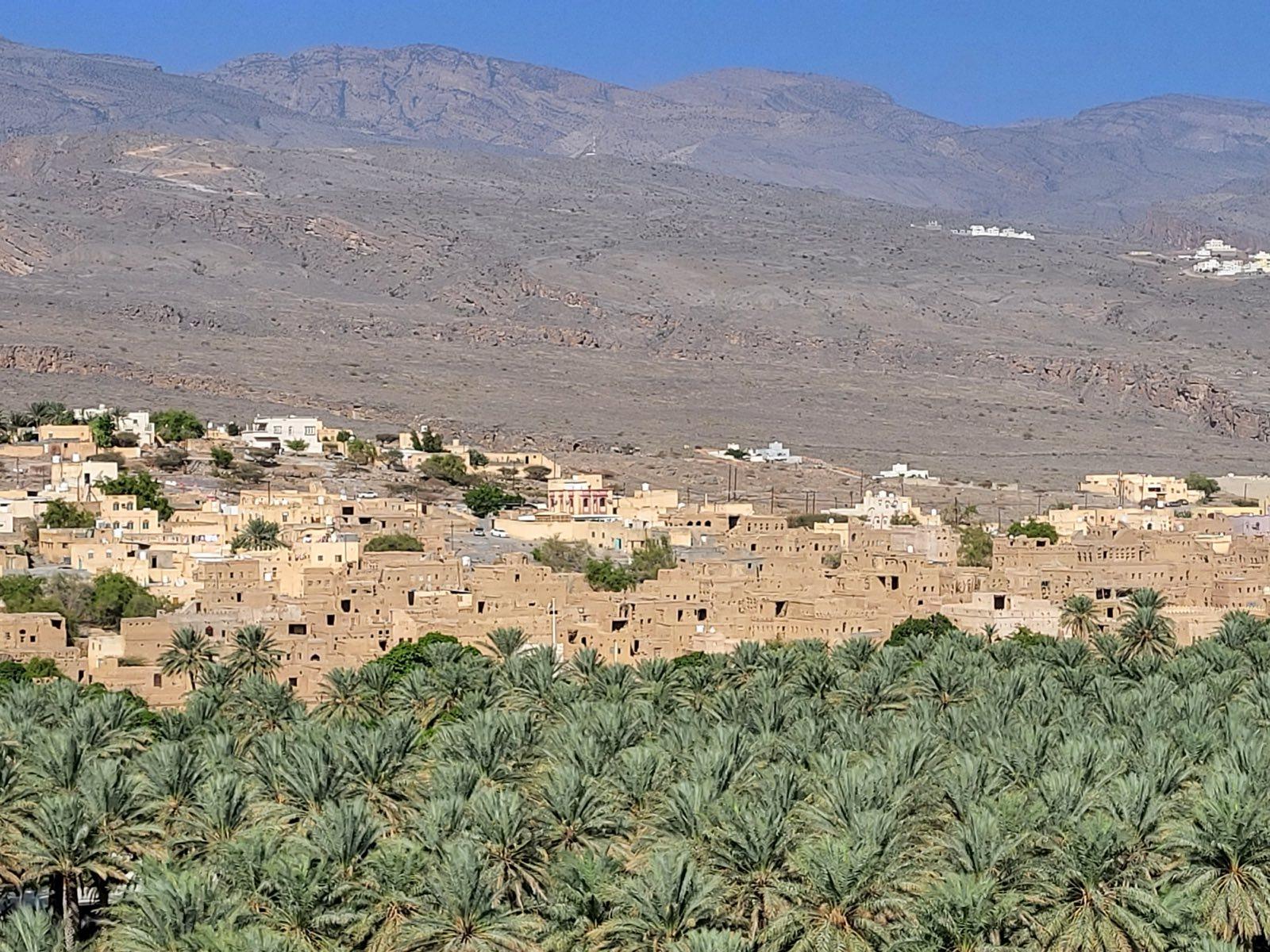
After the heat of Muscat and the sand of the desert, Jebel Akhdar is a shock in the best sense: cool air, terraces full of fruit trees and villages hanging like swallows' nests on the edge of a gorge. The plateau is high enough for a temperate climate, and the inhabitants have made use of that for centuries. Spring water is channelled along the terraces through falaj canals, and so pomegranates, walnuts, peaches and apricots grow on a mountain that looks bare and brown from below.
The roses are the best known. From late March to mid-April the Damask roses bloom on the terraces of Al Aqr and Ash Shirayjah, and in the villages the rosewater is distilled that goes into coffee, sweets and perfume all over Oman. But the plateau is worth it outside the rose season too: in autumn the pomegranates hang on the trees, in winter the views are at their clearest.
What to do on Jebel Akhdar
- The Three Village Walk (W18b): the path along the gorge rim links the villages of Al Aqr, Al Ayn and Ash Shirayjah. About four kilometres, one and a half to two hours, always past terraces, falaj channels and abandoned mudbrick houses. The finest part of the mountain, and manageable for everyone.
- Wadi Bani Habib: an abandoned village on the floor of a gorge, with walnut trees among the houses. You descend by a staircase and walk through the empty buildings.
- Diana's Point: the viewpoint on the edge of the plateau where Princess Diana stood in 1986. From here you look straight into the gorge and across the terraces.
- The rose gardens: from late March to mid-April the roses are picked early in the morning. In the villages you can see how the rosewater is distilled in clay ovens.
- Birkat Al Mouz: at the foot of the mountain, a half-abandoned mudbrick village with a UNESCO-listed falaj and a palm oasis. The regular stop on the way up.
- Stars and silence: the nights on the plateau are clear and cold. Stay here and you see the sun rise over the gorge.
Practical information
Getting there. Two hours from Muscat, one from Nizwa. The tarmac road up starts at Birkat Al Mouz and is good but steep, up to twelve per cent in places. At the police post at the bottom, vehicles without four-wheel drive are turned back regardless of the driver. Use engine braking on the descent.
Temperature. Expect ten to fifteen degrees less than in Muscat. In winter it is 15 to 20 degrees by day and around freezing at night; a warm layer is needed, including in the hotel. In summer the plateau at 25 to 30 degrees is one of the few places in the north that stays pleasant.
Hiking. The Three Village Walk is waymarked and needs only sturdy shoes and water. If you want more, continue to Diana's Point or descend into Wadi Bani Habib. Start before ten and you have the terraces to yourself.
Rose season. Late March to mid-April, a week earlier or later depending on the year. If you want to see it, say so when you enquire and we build the route around it. More on seasons in the best time to visit Oman.
Combine with. Nizwa as your base, Jebel Shams for the canyon and the Balcony Walk, and the Wahiba Sands for the contrast between mountain and dune.