Omani food: what to eat in Oman, from shuwa to halwa
By Lars Janssen · Co-Founder & CEO ·
What is Omani food actually like? Milder and more varied than many visitors expect: slow-cooked meat, fragrant spiced rice, a Gulf coffee ritual built around dates, and a sweet, saffron-scented dessert that locals buy by the kilo. Oman's position on the old trade routes between the Arabian Peninsula, East Africa, Persia and India shows up on every plate. This guide covers the dishes to look for, the country's national dish, where to actually find Omani cooking rather than the international hotel menu, how mealtimes change during Ramadan, and what a meal costs.
In short
- The national dish: shuwa, meat slow-cooked underground for a day or more, traditionally for Eid and other celebrations.
- The everyday dish: majboos, a spiced rice dish with meat or fish, Oman's answer to biryani.
- The drink: qahwa, a pale, cardamom-scented coffee served with dates, poured from a long-spouted pot.
- The souvenir: Omani halwa, a sticky, nutty sweet sold by weight in the souqs, famously in Nizwa.
- Ramadan: eating, drinking and smoking in public during daylight hours is not allowed, including in the car, but hotels still serve food to guests.
- Cost: a simple local meal runs about €4.60 per person, a three-course meal for two in a mid-range restaurant about €35.
What is Omani food?
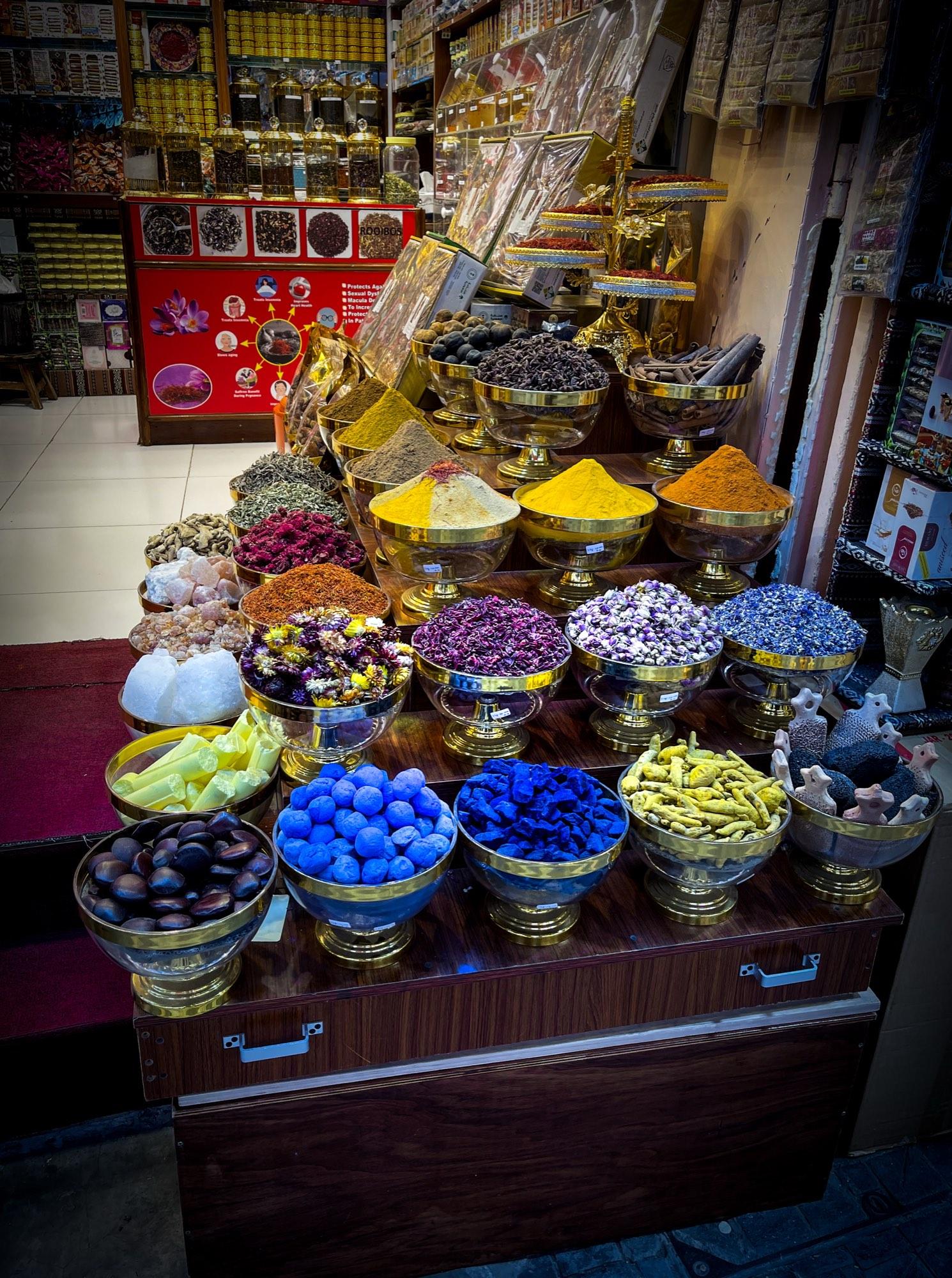
Omani cuisine sits at a crossroads. Centuries of maritime trade with India, East Africa and Persia, alongside the shared culture of the Arabian Gulf, shaped a kitchen built on rice, slow-cooked meat, fish and dates rather than the heavier use of chilli found in South Asian cooking. Spices such as cardamom, cumin, turmeric, cinnamon and dried lime (loomi) flavour most savoury dishes, but the result is fragrant rather than fiery. Dates and dairy appear everywhere, from breakfast to the coffee ritual described below. Fish and seafood dominate along the coast, especially around Muscat and in the south near Salalah, while the interior leans more on meat, rice and bread.
Shuwa: Oman's national dish
Shuwa is the dish most associated with Oman, and the one saved for celebrations such as Eid and weddings rather than an everyday lunch. Meat, usually lamb or goat and sometimes camel, is rubbed with a spice paste built on garlic, chilli, cumin and other ground spices, wrapped in banana or palm leaves, and lowered into a pit lined with hot coals. The pit is sealed and the meat is left to cook slowly underground, often for the best part of a day, until it falls apart at the touch of a fork. The result is smoky, tender and deeply savoury, a world away from a quick barbecue. Smaller desert camps and some restaurants prepare a faster version over coals rather than underground, so what you are served as "shuwa" can vary; ask if you want the traditional pit-cooked style.
Five Omani dishes to try
| Dish | What it is | Where you will come across it |
|---|---|---|
| Shuwa | Spiced meat, wrapped in leaves and slow-cooked in an underground pit | Eid, weddings, desert camps |
| Majboos (machboos) | Spiced rice with meat, chicken or fish, flavoured with loomi and saffron | Family restaurants, home cooking, hotel buffets |
| Mashuai | A whole spit-roasted kingfish served with lime rice | Coastal towns, especially around Muscat and Salalah |
| Rukhal bread | A thin, round flatbread baked on a domed griddle | Breakfast, served with honey, date syrup or cheese |
| Halwa with qahwa | A sticky, nutty sweet made from sugar, ghee, rosewater and saffron, served alongside Omani coffee | Souqs, as a welcome snack in homes and hotels |
Where to eat Omani food
Hotel restaurants cook mostly international menus, with Omani dishes appearing more often around Friday brunches and during Eid. For the real thing, look for small, local restaurants away from the tourist strip, often simply signed "Omani cuisine" or "Arabic restaurant", where majboos and grilled meats are the daily staple. In Muscat, the lanes around Muttrah Souq mix spice stalls with small eateries, and the Muttrah Fish Market nearby is worth an early visit to see the morning catch that ends up on local menus. In Nizwa, the souq next to the fort sells Omani halwa by the kilo alongside dates, silver and pottery, a good stop to buy some to take home. Desert camps in the Wahiba Sands usually serve shuwa, dates and qahwa around the campfire as part of the overnight experience. Along the coast and in Salalah, look for fresh fish and the coconut that grows throughout Dhofar.
Etiquette and eating during Ramadan
Omani hospitality often starts with qahwa and dates offered the moment you sit down, poured from a long-spouted pot called a dallah into small, handleless cups. It is polite to accept at least one cup; when you have had enough, gently shake the cup from side to side as you hand it back rather than leaving it full. Traditional meals are sometimes eaten seated on the floor around a shared platter, using the right hand only, though restaurants catering to visitors provide cutlery as standard.
Ramadan changes mealtimes across the country. Ramadan 2027 is expected to run from about 8 February to 9 March, depending on the sighting of the moon. During daylight hours, eating, drinking, smoking and chewing gum in public are not allowed, including in your car, and restaurants outside hotels generally stay closed until sunset. Hotels continue to serve food to their guests, often discreetly, and the evening iftar meal that breaks the fast is widely available in restaurants and makes for a lively time to be out. Alcohol is only served in licensed hotel restaurants and bars, never in standalone local restaurants.
What does a meal in Oman cost?
Food is one of the cheaper parts of a trip to Oman. According to Numbeo's cost of living data for Muscat, a meal at an inexpensive restaurant costs around OMR 2, about €4.60, and a three-course meal for two at a mid-range restaurant comes to around OMR 15, about €35. A cappuccino is about OMR 1.95, around €4.50. Prices in smaller towns such as Nizwa tend to run a little lower than in Muscat, and a desert camp dinner is usually included in the camp's overnight rate rather than charged separately. Restaurants and cafés in tourist areas add a 4% tourism tax on top of the standard 5% VAT, so a menu price is not always the final bill; see our guide on what a trip to Oman costs for the wider picture.
How this fits into our tours
Food comes up naturally on every one of our tours rather than as a separate stop. On the 10-day Oman Highlights tour you pass through Nizwa's souq, where halwa is worth tasting and buying. The 14-day north and south tour adds Salalah, where coconuts and fresh fish feature more heavily on the menu, following the route set out in our 14-day Oman itinerary. On the 18-day Grand Oman journey a desert camp night brings shuwa, dates and qahwa around the fire, much as described in our article on desert nights in Oman. Lars and the team travel through Oman regularly themselves and work with a trusted local partner who knows which small restaurants are worth a detour, and your proposal can always point out where to eat along your specific route.
➤ Free trip planning call | GoTravelOman.com Sister sites: urlauboman.de · omanreis.nl