Salalah weather and the khareef season: when to go
By Lars Janssen · Co-Founder & CEO ·
The khareef is the reason Salalah has a second, completely different season from the rest of Oman: while Muscat and the interior bake above 40 °C, the south-west monsoon wraps the mountains of Dhofar in mist and drizzle and turns the bare slopes green. The official khareef season runs from 21 June to 21 September, with the greenest, wettest weeks in July and August. This guide sets out what the khareef actually means for a visit, what there is to do in it, how it compares to Salalah's other season, and when to go if misty mountains are not what you are after.
The khareef in Salalah: dates and what it means
Khareef is Arabic for autumn, and in Dhofar it refers to the tail end of the south-west monsoon that reaches no further than the far south of the Arabian Peninsula. The official season runs from 21 June to 21 September, though the clearest effects, cloud clinging to the hills, daily drizzle and a carpet of green grass, are concentrated in July and August. Salalah city itself often only catches the edge of the mist, while the escarpment just inland, around Wadi Darbat and Jebel Samhan, sits inside the cloud for days at a time.
The khareef does not bring tropical downpours. Rain falls on seven to eight days a month in July and August, almost always as fine drizzle rather than a storm, but the cloud cover is near constant and the sea turns rough. It is a different kind of weather experience from anywhere else in Oman, closer to a cool, damp highland climate than to a monsoon elsewhere in Asia.
Khareef, winter or shoulder season: a quick comparison
Salalah effectively has three faces. The table below lines them up so you can see what each one actually feels like.
| Season | When | Day / night | Sea | Crowds |
|---|---|---|---|---|
| Khareef | 21 June to 21 September, peak in July and August | 27 to 29 °C / 24 to 25 °C | rough, swimming dangerous | peak season, mostly Gulf visitors |
| Shoulder (late Sept/early Oct) | late September to early October | 29 to 31 °C / 23 to 24 °C | calming down | quiet, often still green |
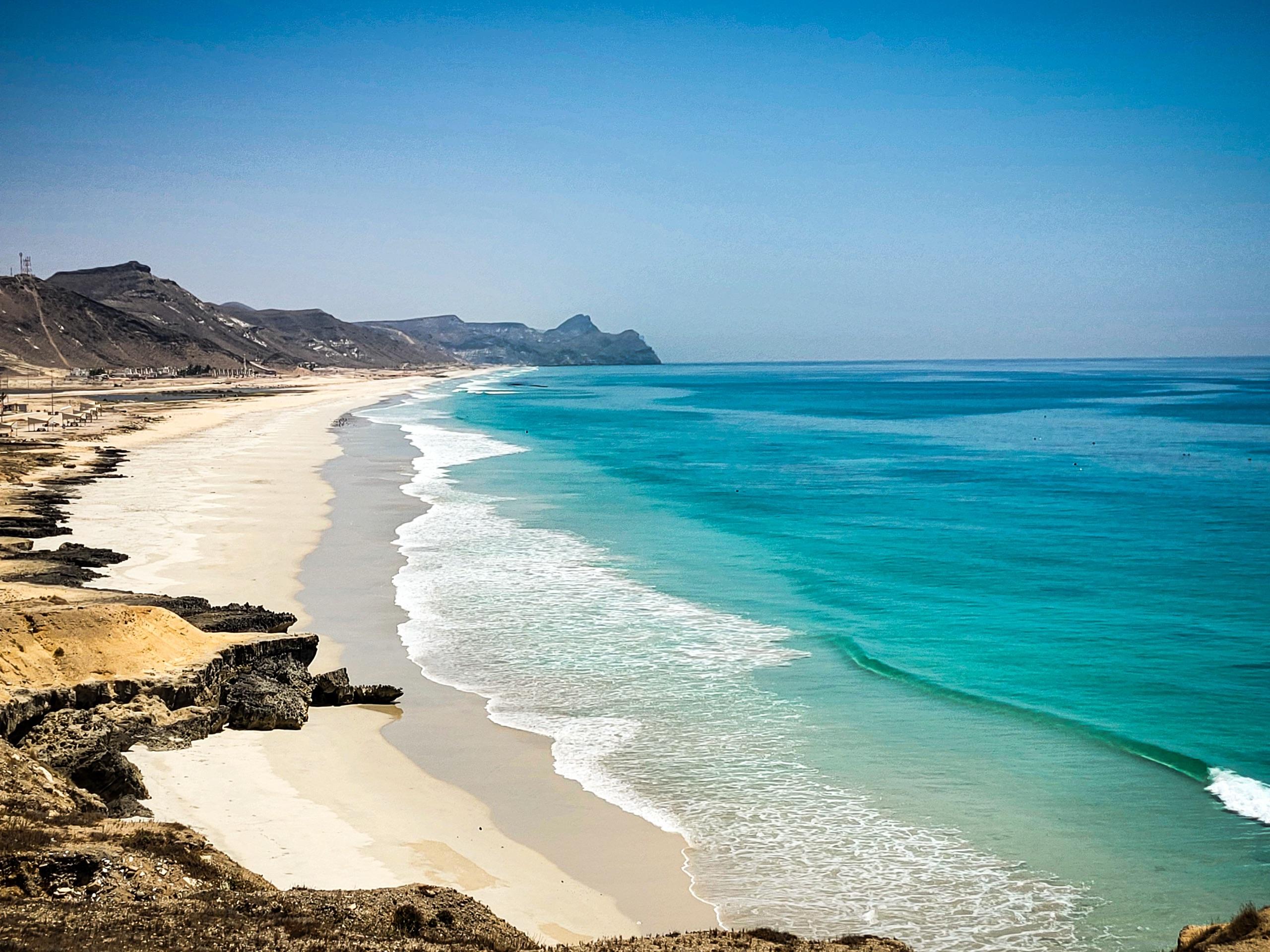
| Winter | November to April | 27 to 32 °C / 19 to 24 °C | calm, 25 to 28 °C | quiet, best for beaches and touring |
The temperatures barely move across the year, which is the counterintuitive part: Salalah is warm in every season, and it is cloud cover, rain days and sea conditions that actually change, not the thermometer.
What to do in Salalah during the khareef
A misty, drizzly Dhofar is not a reason to stay indoors. The khareef is in fact when several of the area's best-known sights are at their most dramatic:
- Wadi Darbat. The valley's seasonal waterfalls only run during and just after the khareef, fed by the rain collecting on the plateau above. Boat trips on the lake also operate in this window.
- Mughsail's blowholes. The rough khareef swell forces water metres into the air through the limestone overhang at Mughsail, far more dramatic than the gentle winter sea, though visitors must stay well behind the barriers.
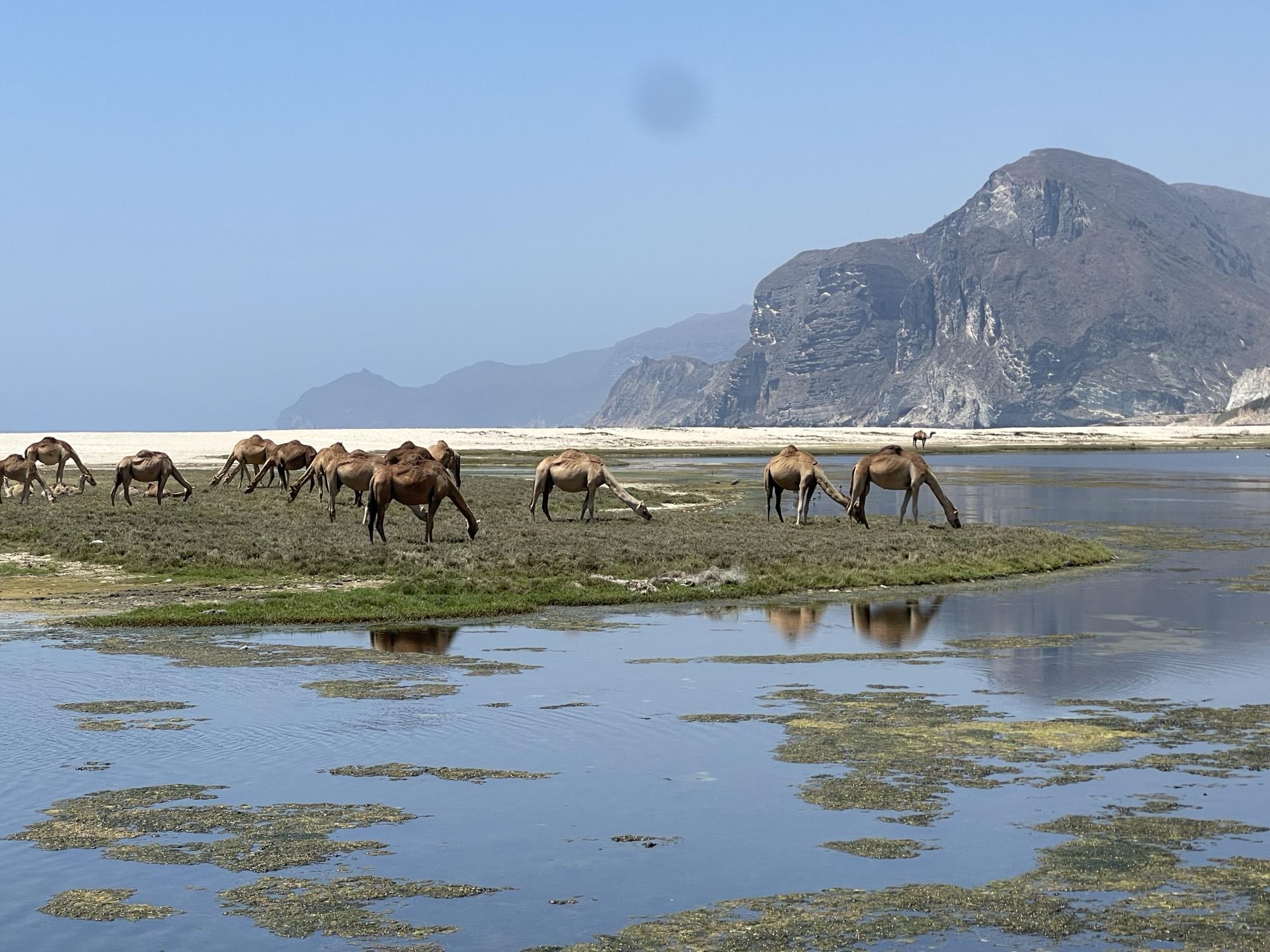
- The green escarpment. Drive up towards Jebel Samhan or along the road to Taqah to see slopes that are brown for nine months of the year turn fully green, with cattle and camels grazing on fresh grass.
- Tawi Attair and the baobabs. The route up from the coastal plain passes through the thickest cloud, which makes the sinkhole and the old baobab trees feel more remote than they do in the dry season.
Pack a light waterproof and expect grey skies rather than sunshine; the appeal of the khareef is the green landscape and the cool air, not photogenic blue skies.
Best time to visit Salalah outside the khareef
If mist and drizzle are not what you are looking for, the rest of the year is dry and considerably sunnier. From October to April, Salalah sits at 27 to 32 °C by day with a calm sea around 25 to 28 °C, ideal for beaches and for combining with a tour of the north. October itself is a sweet spot: the slopes are often still green from the khareef that has just ended, the sun is back, and the crowds have gone home. For a month-by-month breakdown across the whole country, see our guide to the best time to visit Oman.
The khareef season and how busy it gets
The khareef is Dhofar's high season, not its quiet one. Visitors from the Gulf states, where summer temperatures are similarly extreme, travel to Salalah specifically for the cool, green relief it offers, and hotels, rental cars and desert-adjacent roads are at their busiest from July through August. If you are drawn to Salalah for the khareef itself, book well ahead for that window; if you would rather avoid the crowds while still catching some green, aim for the shoulder weeks just after 21 September.
Getting to Salalah and how many days to plan
The quickest way in is the domestic flight from Muscat, taking around an hour and a half with Oman Air or SalamAir. Driving instead takes 10 to 12 hours over roughly 1,000 kilometres, which only makes sense as part of a longer coastal route with overnight stops. Plan at least three full days in Salalah to cover the east (Wadi Darbat and the mountains), the inland desert fringe, and the west (Mughsail and the coast); four to five days leave room for Mirbat or a beach day. For the fuller picture of Salalah's sights, beaches and getting around, see our complete Salalah guide.
How this fits into our tours
Salalah is a fixed stop on our longer routes, built around the domestic flight so you see both the north and the south without the long overland drive.
- 14-day Oman tour. After the north and the Wahiba Sands, you fly south on day ten for three days in Dhofar, timed outside the khareef unless you specifically want the green season.
- As an extension. We can add Salalah and the khareef or winter season on request to the 7-day Oman tour, for travellers who want the north in a shorter trip and the south as a separate add-on.
- Tailor-made. If the khareef dates matter to your plans either way, whether you want to catch the green season or avoid its crowds, we build the itinerary around your travel window.
Not sure whether the khareef fits your trip? In a free call about a tailor-made Oman tour we help you weigh the green season against the quieter, sunnier months.